Comment simplifier la complexité au travail ?
TL;DR
Pour améliorer la productivité et l'engagement en entreprise, il est crucial de réévaluer les approches de gestion obsolètes. La solution réside dans des règles simples, qui favorisent la coopération et réduisent la complexité organisationnelle. En renforçant les intégrateurs et en supprimant les couches inutiles, les entreprises peuvent mieux gérer la complexité et améliorer simultanément la satisfaction au travail.
Transcript
I have spent the last years trying to resolve two enigmas: Why is productivity so disappointing in all the companies where I work? I have worked with more than 500 companies. Despite all the technological advances -- computers, I.T., communications, telecommunications, the Internet. Enigma number two: Why is there so little engagement at work? Why ... Read More
Key Insights
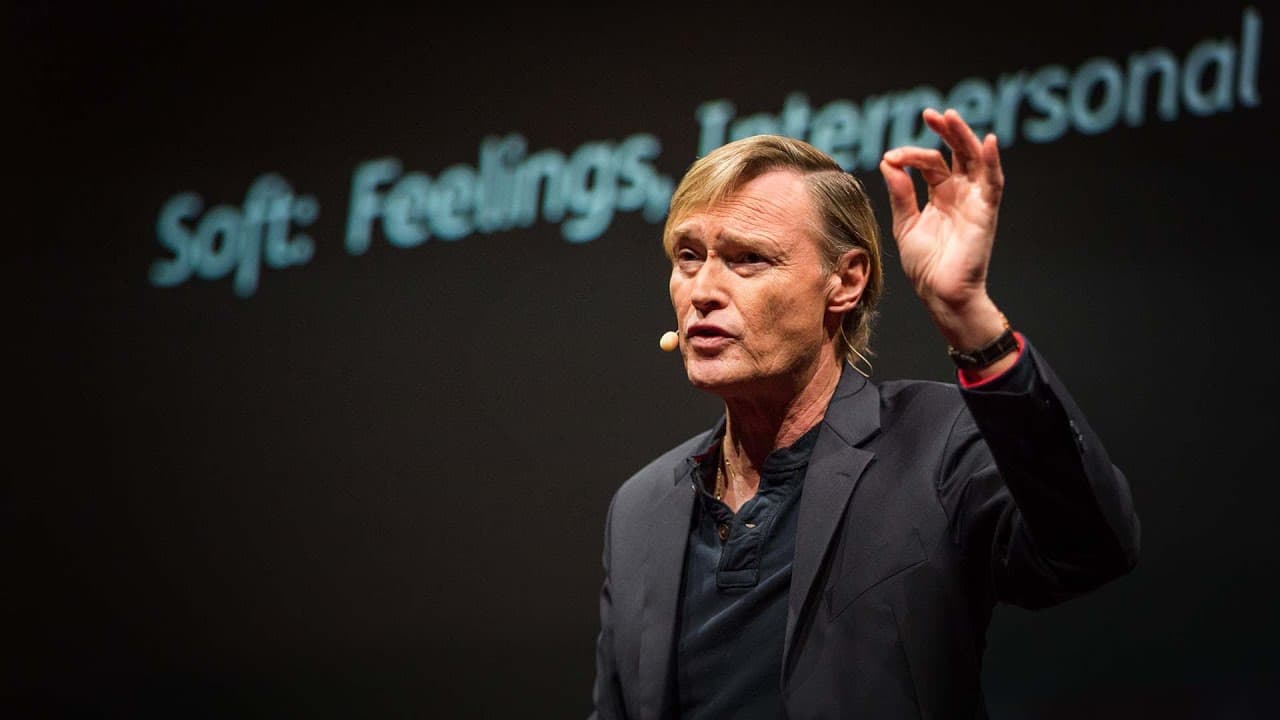
- 💡 Despite technological advances, productivity and engagement remain low in companies. These issues are rooted in the outdated pillars of management: hard (structure, processes) and soft (feelings, relationships). The hard approach creates complexity and doesn't foster cooperation. The soft approach, based on interpersonal feelings, also fails to promote cooperation. To address complexity, the smart simplicity approach emphasizes simple rules, understanding others' work, reinforcing integrators (managers), removing layers and rules, increasing empowerment, creating feedback loops, increasing reciprocity, and rewarding cooperation and blame. This approach improves performance and satisfaction without adding complexity. Business leaders should focus on tackling their own complicatedness.
Install to Summarize YouTube Videos and Get Transcripts
Explore YouTube Video Summarizer or Get YouTube Transcript Extractor
Questions & Answers
Q: Why are productivity levels disappointing in many companies?
Productivity levels are disappointing in many companies despite technological advancements because the traditional approach to management is obsolete. Companies rely on a "hard" approach that focuses on structures, processes, systems, and metrics. This approach creates complexity and complicatedness within the organization, hindering productivity.
Q: Why do people feel disengaged at work?
People feel disengaged at work because the traditional management approach does not foster cooperation and collaboration. The "soft" approach, which focuses on feelings, interpersonal relationships, and personality, wrongly assumes that people will cooperate more if they like each other. In reality, liking each other can lead to avoiding tough tradeoffs and not pushing for true cooperation, resulting in disengagement.
Q: What is the common root cause of low productivity and engagement?
The common root cause of low productivity and engagement is the obsolete pillars of management - the "hard" and "soft" approaches. These approaches rely on rigid structures, processes, and metrics that add complicatedness to the organization. They also focus on fostering interpersonal relationships instead of cooperation. This common root cause needs to be addressed to improve productivity and engagement.
Q: How can companies enhance productivity and engagement in the face of complexity?
To enhance productivity and engagement in the face of complexity, companies need to adopt a smart simplicity approach based on simple rules. This approach involves understanding the real work beyond job descriptions, reinforcing integrators (existing managers) who can facilitate cooperation, reducing layers and rules, empowering individuals to use their judgment, creating feedback loops that expose people to the consequences of their actions, increasing reciprocity, and rewarding cooperation while holding accountable those who don't cooperate. By implementing these strategies, companies can better manage complexity and improve performance and satisfaction at work.
Summary & Key Takeaways
-
The author has spent years trying to understand why productivity is low and engagement is lacking in the companies they have worked with.
-
The author believes that the root cause of these issues lies in the outdated pillars of management, which focus on structure and processes, rather than adaptiveness and cooperation.
-
The author proposes a smart simplicity approach, based on simple rules, understanding others' work, reinforcing integrators, removing layers and rules, empowering individuals, increasing feedback loops and reciprocity, and rewarding cooperation. This approach aims to manage complexity without adding unnecessary complicatedness.
Read in Other Languages (beta)
Share This Summary 📚
Summarize YouTube Videos and Get Video Transcripts with 1-Click
Try YouTube Summary with ChatGPT & Claude or YouTube Transcript Generator
Explore More Summaries from TED 📚





Summarize YouTube Videos and Get Video Transcripts with 1-Click
Try YouTube Summary with ChatGPT & Claude or YouTube Transcript Generator