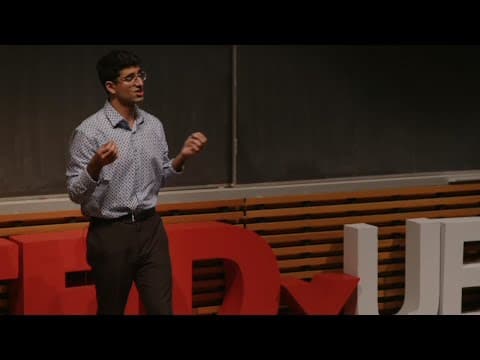
How to Overcome Academic Perfectionism | Rusa Zirakadze | TEDxIBEuropeanSchool

TL;DR
Academic perfectionism becomes healthier when you normalize mistakes, face the fear of failure gradually, and replace impossible standards with realistic goals. Rusa Zirakadze identifies three central problems, unrealistic expectations, fear of judgment, and procrastination, and explains how they increase stress and prevent growth. Her practical examples show how to reduce perfectionism’s pressure even if it cannot disappear immediately, so read on for specific ways to start changing.
Transcript
Transcriber: Hao In Kam Reviewer: Walaa Mohammed Have you ever found yourself rewriting your work on a new piece of paper because the one you wrote had too many crossed out words or correction? Or have you ever been procrastinating to do a task because it seemed difficult to cope with? Or have you ever done more work than demanded because you found... Read More
Key Insights
- 😘 Unhealthy perfectionism stems from unrealistic expectations and a fear of judgment, leading to increased stress and low self-esteem.
- 💯 Procrastination is a common behavior among perfectionists, driven by the pressure to be perfect.
- ❓ Embracing fallibility and learning from mistakes is essential for personal growth and development.
- 😨 Overcoming a fear of failure requires gradually facing and challenging it.
- 😫 Setting realistic goals and focusing on the process rather than just the outcome can help reduce stress and increase enjoyment.
- 🥺 Unhealthy perfectionism can hinder personal and social growth, leading to isolation and frustration.
- 🥶 Breaking free from unhealthy perfectionism is a gradual process that requires mindset shifts and conscious effort.
Install to Summarize YouTube Videos and Get Transcripts
Explore YouTube Video Summarizer or Get YouTube Transcript Extractor
Questions & Answers
Q: How can students overcome unhealthy academic perfectionism?
Students can normalize mistakes, become more willing to fail, and gradually confront their fear of failure. They can also act immediately when they notice procrastination and redefine success with realistic targets, such as aiming to finish an assignment by 9 p.m.
Q: What is unhealthy perfectionism?
Unhealthy perfectionism combines intense striving with concern about failing to meet personal standards. When perfectionists fall short, they may berate themselves, experience strong self-disparagement, and find both the work and its outcome stressful or depressing.
Q: What three problems does Rusa Zirakadze associate with academic perfectionism?
Rusa Zirakadze highlights unrealistic expectations, fear of being judged, and procrastination. Together, these problems can make students feel inadequate, avoid challenges, and struggle to start or complete their work.
Q: Why do unrealistic expectations harm perfectionists?
Perfectionists may believe they can perform every task perfectly, even though the speaker says this is technically impossible. Because the goal keeps shifting as they improve, they can feel that they are never enough and experience frustration, low self-esteem, self-criticism, and hatred.
Q: How does fear of judgment limit academic growth?
Fear of judgment can make perfectionists avoid activities where they may not perform at a perfect level. Zirakadze describes refusing math, physics, and chemistry competitions, which illustrates how avoiding mistakes can also prevent skills from developing.
Q: Why does perfectionism cause procrastination?
The pressure to perform perfectly can make necessary tasks feel difficult to begin or finish. The speaker illustrates this with repeatedly delaying homework from 5:00 to 5:30 and eventually to 8:00.
Q: Why is making mistakes important for overcoming perfectionism?
Mistakes provide experience that books and advice alone cannot supply. Zirakadze argues that people develop skills by failing and learning afterward, and she encourages students to normalize mistakes as a gradual path toward improvement.
Q: How can fear of failure be confronted in daily schoolwork?
The speaker recommends treating fear of failure like a phobia and becoming accustomed to it through direct exposure. Examples include submitting a paper with crossed-out words, starting a delayed task immediately, and stopping after the required work is complete instead of polishing unimportant details.
Summary & Key Takeaways
-
Unhealthy perfectionism is characterized by unrealistic expectations, leading to frustration and disappointment with oneself.
-
Fear of judgment causes perfectionists to avoid challenging themselves and participating in competitions.
-
Procrastination is a common problem among perfectionists who struggle to start or finish projects due to the pressure to be perfect.
Read in Other Languages (beta)
Share This Summary 📚
Summarize YouTube Videos and Get Video Transcripts with 1-Click
Try YouTube Summary with ChatGPT & Claude or YouTube Transcript Generator
Explore More Summaries from TEDx Talks 📚





Summarize YouTube Videos and Get Video Transcripts with 1-Click
Try YouTube Summary with ChatGPT & Claude or YouTube Transcript Generator