What Are Mercury's Unique Characteristics and Secrets?
TL;DR
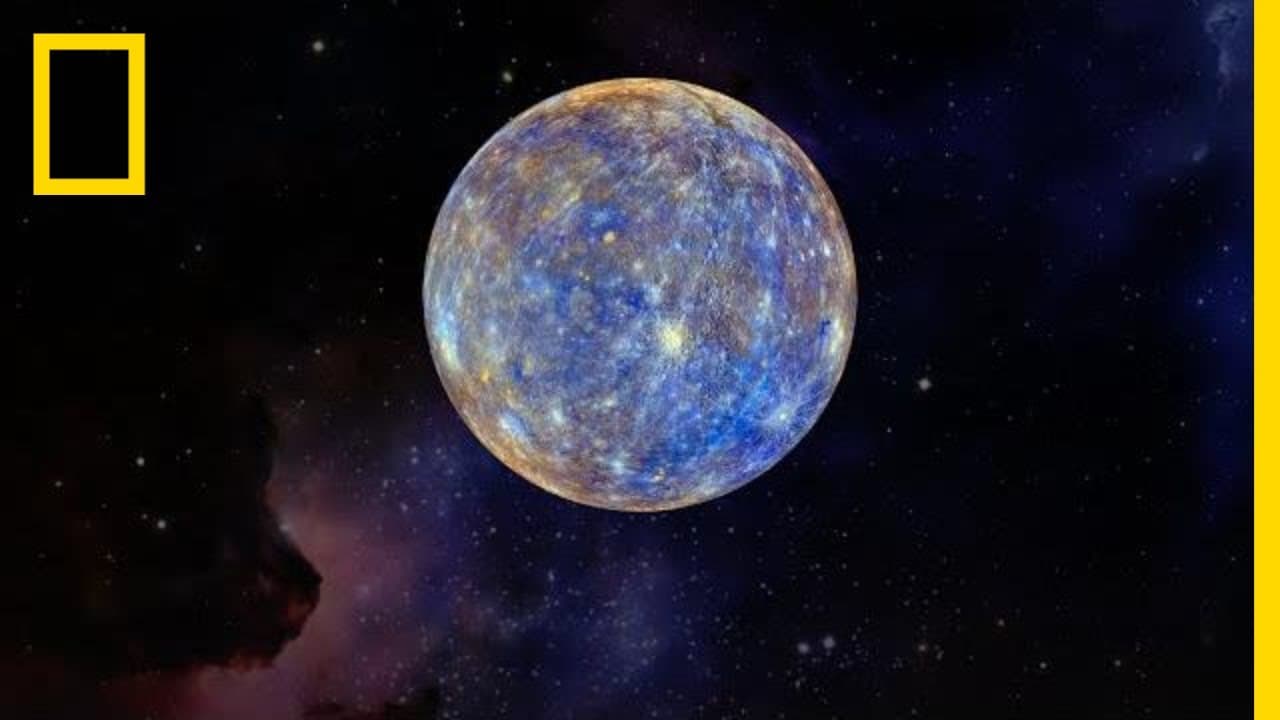
Mercury, the smallest planet in our solar system, has a large iron core that makes up 85% of its radius and is causing it to shrink over time. Its proximity to the sun leads to extreme temperature variations, with daytime highs reaching 800°F and nighttime lows dropping to -290°F, while its thin exosphere is created by solar winds.
Transcript
- [Narrator] The planet Mercury is named after the messenger of the Roman gods, because even the ancients could see how swift and fleeting it is in the sky. But it wasn't until recently that scientists began unraveling Mercury's many mysteries. Mercury is the smallest planet in our solar system. It's diameter currently measures just over 3,000 mile... Read More
Key Insights
- 🥃 The name "Mercury" was derived from the planet's swiftness and fleeting appearance in the sky.
- 💯 Mercury's core is unusually large, accounting for 85% of its radius.
- 💯 The planet's surface has been shrinking radially due to the cooling and contracting of its iron core.
- 🤔 Mercury's atmosphere consists of a thin exosphere generated by solar winds.
- 💦 Extreme temperature variations occur on Mercury, with daytime temperatures reaching 800 degrees Fahrenheit and dropping to -290 degrees at night.
- 🚄 Mercury's proximity to the sun affects its orbit, causing it to move at incredibly high speeds.
- 😎 Observing Mercury is challenging from Earth due to its proximity to the sun.
Install to Summarize YouTube Videos and Get Transcripts
Explore YouTube Video Summarizer or Get YouTube Transcript Extractor
Questions & Answers
Q: What is the size of Mercury compared to other planets?
Mercury is the smallest planet in our solar system, with a diameter slightly larger than the continental United States.
Q: Why is Mercury's core significant?
Mercury's core is larger compared to other planets, making up 85% of its radius. This exceptional size has caused the planet to shrink over time.
Q: What is the atmosphere like on Mercury?
Mercury has a very thin exosphere consisting of elements like oxygen, sodium, hydrogen, helium, and potassium. The lack of a significant atmosphere is due to its close proximity to the sun.
Q: How does Mercury's proximity to the sun influence its orbit?
The sun's gravity pulls harder on Mercury than any other planet, causing it to travel in an elliptical orbit. It speeds up as it gets closer to the sun and slows down when farther away.
Summary & Key Takeaways
-
Mercury is the smallest planet in our solar system, with a diameter slightly larger than the continental United States.
-
It has a unique composition with a large iron core, causing the planet to shrink radially over time.
-
Mercury's proximity to the sun results in extreme temperature fluctuations and a thin exosphere.
Read in Other Languages (beta)
Share This Summary 📚
Summarize YouTube Videos and Get Video Transcripts with 1-Click
Try YouTube Summary with ChatGPT & Claude or YouTube Transcript Generator
Explore More Summaries from National Geographic 📚




Summarize YouTube Videos and Get Video Transcripts with 1-Click
Try YouTube Summary with ChatGPT & Claude or YouTube Transcript Generator