Why Does Physical Media Still Matter Today?
TL;DR
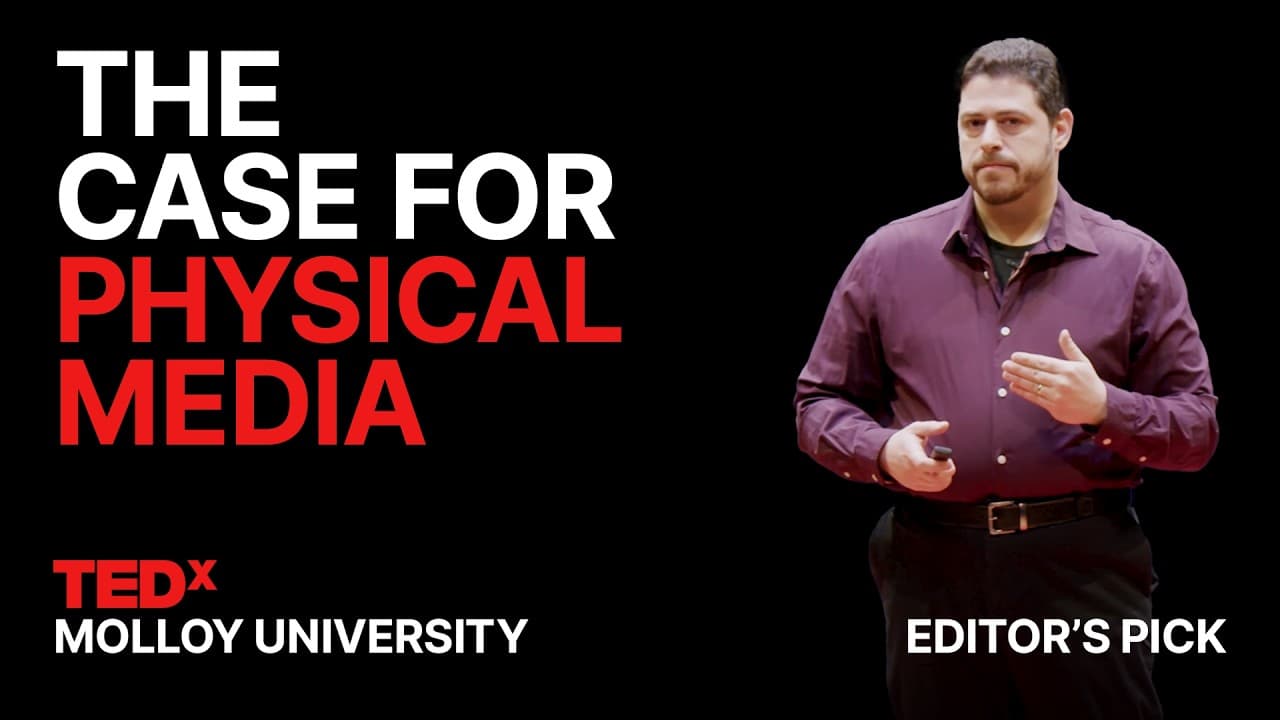
Physical media preserves access because owners retain copies even when governments, courts, or streaming companies try to suppress or remove content. Streaming offers extraordinary convenience and global discovery, but it concentrates control over availability. Keeping CDs, DVDs, records, cassettes, VHS tapes, and similar formats in circulation can protect culturally important works from disappearing.
Transcript
[snorts] What you're looking at right now is called bone music. Bone music is a relic of a very interesting time in world history. A time when the governments of the Soviet Union restricted access to American music like jazz and rock and roll so tightly that in many cases they wouldn't even let their citizens own or listen to this music. Now, the y... Read More
Key Insights
- Physical media is harder to eliminate because copies can remain in many independent hands. Unlike centrally controlled streaming access, mass-produced records, CDs, DVDs, cassettes, and VHS tapes cannot all be withdrawn through a single platform decision.
- Bone music is recorded sound cut into discarded X-ray plates. Young people in the Soviet Union used this improvised format to obtain, own, and distribute American jazz and rock and roll that their government had tightly restricted.
- Streaming is valuable because it makes music from around the world and across genres immediately accessible. The concern is not that streaming should disappear, but that it should not become the only mechanism through which people encounter and retain media.
- Platform access is not equivalent to permanent possession. When media remains exclusively on streaming services, governments, companies, or other powerful decision-makers may be able to remove public access instantly for reasons involving control, concealment, or censorship.
- Nosferatu survived because some physical copies escaped a court-ordered destruction campaign. The film had been found to have copied Bram Stoker's Dracula, yet overlooked copies allowed later audiences to continue watching, studying, and interpreting the silent horror work.
- Media is a source of inspiration that can help people imagine society differently. The talk connects American music heard by Soviet youth with their ability to envision social change, while acknowledging that many other important forces also contributed to historical transformation.
- Physical collections create experiences beyond simple playback. Searching for an item, acquiring it, keeping it, and showing it to friends can give media a tangible social and personal significance that streaming libraries do not fully reproduce.
- Physical preservation should remain part of the evolving media landscape. The precise solution is unresolved, but it could involve cooperation between creators and media companies or independent efforts resembling the underground distribution of Soviet bone music.
Install to Summarize YouTube Videos and Get Transcripts
Explore YouTube Video Summarizer or Get YouTube Transcript Extractor
Questions & Answers
Q: Why can streaming not fully replace physical media?
Streaming cannot fully replace physical media because convenient access depends on platforms controlled by governments, media companies, or a small number of decision-makers. Those parties can remove a work quickly, while a physical copy remains with its owner. Distributed CDs, DVDs, records, cassettes, VHS tapes, and similar objects therefore offer a stronger practical promise of continued access.
Q: What is bone music and why was it created?
Bone music is recorded music reproduced by cutting sound grooves into discarded X-ray plates, often while preserving the original medical image. Young people in the Soviet Union created and circulated these recordings because their government tightly restricted access to American jazz and rock and roll. The records sounded poor, but they enabled people to hear, possess, and share prohibited music.
Q: How can physical media resist censorship?
Physical media resists censorship by distributing possession across many individuals rather than leaving access under one centralized authority. A government or company can block a stream or remove an item from a platform instantly, but eliminating a mass-produced physical work requires locating and destroying every copy. Surviving copies can still be played, shared, preserved, and interpreted.
Q: Why is Nosferatu an example of media preservation?
Nosferatu demonstrates how physical copies can preserve a work even after authorities attempt to eliminate it. The production was taken to court because it copied Bram Stoker's Dracula, and the Stoker family won. The resulting decision required every copy to be destroyed. Some copies were missed, however, so the silent horror film survived for later audiences to examine.
Q: What advantages does streaming media provide?
Streaming provides immediate access to music from around the world and across genres, greatly reducing the problem of hard-to-find recordings. It also supports movies, television, and podcasts through convenient digital delivery. The argument does not call for eliminating streaming, which is described as valuable. It calls for preserving physical media alongside it to reduce the risk of permanent loss.
Q: Why is owning media different from streaming it?
Owning physical media places a durable copy directly in a person's hands. Streaming usually provides access through a platform whose catalog can change according to decisions made by companies, governments, or other controlling parties. A physical copy can remain available even after official distribution ends, allowing its owner to keep, display, share, revisit, and potentially preserve the work.
Q: What cultural experiences are lost without physical media?
A fully streaming-based culture can lose the experiences associated with searching for hard-to-find works, obtaining a particular object, building a collection, and showing that collection to friends. These activities give media a tangible personal and social dimension. Physical objects also carry visible history, as bone music does through recordings embedded in discarded X-ray images.
Q: How should physical media be preserved in the future?
Physical media should remain an intentional part of the media landscape alongside streaming, although the talk does not prescribe a single method. Preservation could come from coordinated efforts involving creators and media companies, or from independent and underground activity resembling Soviet bone music. The central priority is preventing a few powerful parties from unilaterally erasing potentially important art.
Summary & Key Takeaways
-
Bone music demonstrates how physical objects can preserve and circulate prohibited culture. Young people in the Soviet Union cut grooves into discarded X-ray plates to reproduce restricted American jazz and rock and roll. Although these recordings sounded poor, they let listeners possess, share, and retain music despite government controls on access.
-
Streaming makes music, movies, television, and podcasts instantly accessible, including material from different countries and genres. However, access through a platform is not the same as ownership. A small number of decision-makers at large media companies can remove works quickly, leaving audiences unable to preserve, revisit, or distribute them independently.
-
The survival of Nosferatu illustrates the resilience of widely distributed physical copies. A court ordered every copy destroyed after the production was found to have copied Bram Stoker's Dracula, but some copies escaped destruction. Physical preservation therefore complements streaming by keeping art available for future interpretation, cultural inspiration, and social reflection.
Read in Other Languages (beta)
Share This Summary 📚
Summarize YouTube Videos and Get Video Transcripts with 1-Click
Try YouTube Summary with ChatGPT & Claude or YouTube Transcript Generator
Explore More Summaries from TEDx Talks 📚

Summarize YouTube Videos and Get Video Transcripts with 1-Click
Try YouTube Summary with ChatGPT & Claude or YouTube Transcript Generator