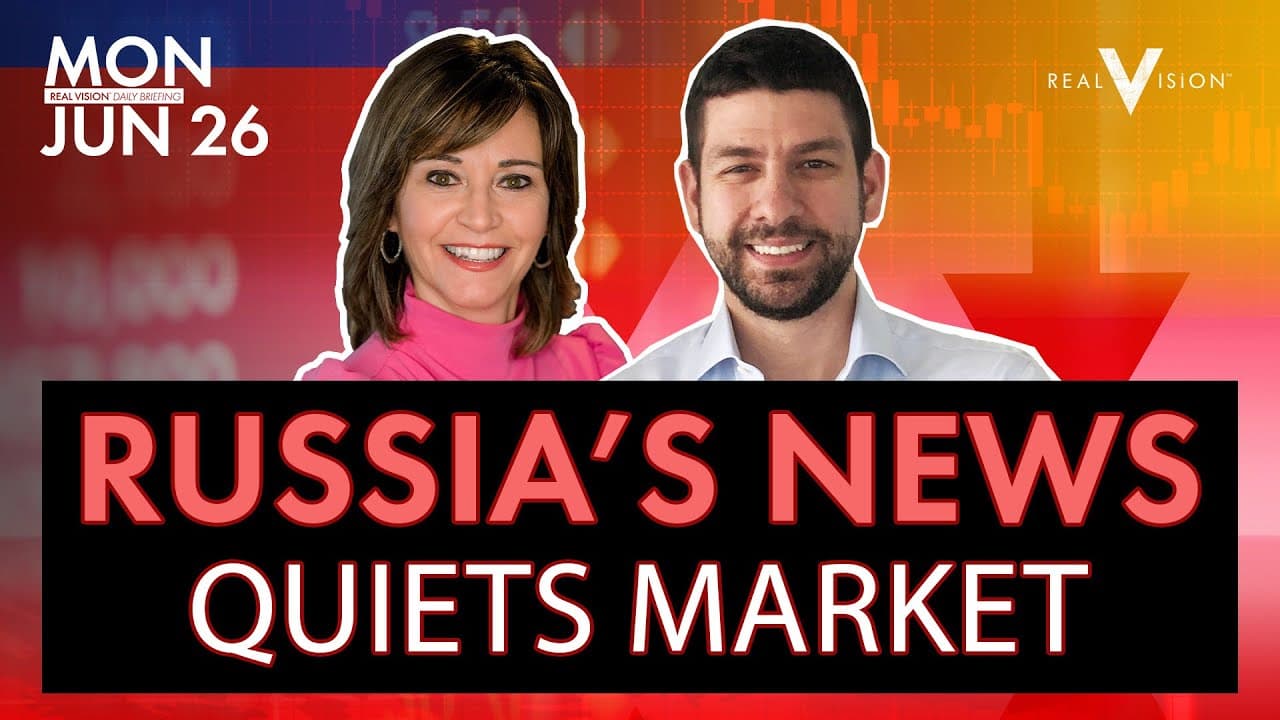
What Happens Next in Russia? With Marko Papic
TL;DR
Russia is likely to face prolonged instability because Marko Papic views the failed coup as a symptom of chronic political illness, not an isolated event. The Ukraine conflict has strained the state, while private military companies and regional leaders increasingly fill gaps in Moscow’s authority. Markets remain focused on nearer-term forces such as the Fed and Chinese stimulus, but Russia’s instability could eventually disrupt commodity supplies. Read on for the geopolitical and investment implications.
Transcript
what happens next in Russia hi everyone Welcome to the Real Vision Daily Briefing with me today is Marco Papik Chief strategist at Clock Tower Group hi Marco it's great to see you so great to be with you Maggie uh and we we've been looking forward to talking to you all day because I think all of us I mean what happens in Russia next it's the millio... Read More
Key Insights
- 🇷🇺 The crisis in Russia is a symptom of the country's chronic political illness, rather than an isolated event. This chronic instability will continue to affect Russia in the long term.
- 🇷🇺 The conflict in Ukraine has strained Russia and caused significant material losses, which were not initially anticipated. The impact of the conflict on Russia's stability and geopolitical position is a major concern.
- ✋ The Chinese government is concerned about the destabilizing effects of the crisis in Russia and is preparing for potential outcomes. However, their main focus is on managing domestic economic challenges, particularly high levels of leverage.
- 🍉 The market has been relatively muted in response to the events in Russia due to the uncertainty and long-term nature of the crisis. Short-term concerns and macro factors such as Chinese stimulus have a more immediate impact on market behavior.
- ✳️ Europe may face further downside risks if the conflict in Ukraine escalates or if there is increased destabilization in Russia. The geopolitical risk premium has dissipated, but there is a potential for renewed volatility in European markets.
Install to Summarize YouTube Videos and Get Transcripts
Explore YouTube Video Summarizer or Get YouTube Transcript Extractor
Questions & Answers
Q: What happens next in Russia according to Marko Papic?
Papic says Russia’s immediate path is impossible to predict, but its longer-term instability is likely to persist. He views the failed coup as a symptom of chronic political illness caused partly by weakened central control and the outsourcing of military authority.
Q: Why was the market reaction to the failed coup muted?
Papic says the market reaction was muted because the coup failed and the longer-term consequences remain difficult to process. Investors were giving more attention to immediate drivers such as the Fed and Chinese stimulus.
Q: How do private military companies reflect Russia’s political crisis?
Russia outsourced law enforcement and strategic military operations to private companies and regional power brokers. Papic argues that this is abnormal for a major power and indicates that parts of the military chain of command have moved outside direct government control.
Q: Does Russia’s instability mean Vladimir Putin will soon lose power?
Papic does not claim that Putin will necessarily leave power soon and says he could remain in office for a long time. His concern is that the Russian state itself may be shrinking as other actors fill gaps in Moscow’s authority.
Q: How has the conflict in Ukraine strained Russia?
Papic says the conflict has inflicted extraordinary material losses that Russia did not expect. He connects that strain to visible breaks within the regime and the broader destabilization of the country.
Q: Why could regional leaders weaken Moscow’s authority?
Papic points to pockets of resistance to Moscow’s direction, including the Chechen leader’s refusal to allow citizens to be mobilized because his special forces were already operating in the war. Such resistance suggests that regional actors can increasingly limit the reach of the central government.
Q: How could instability in Russia affect commodity markets?
Papic argues that governments are redesigning supply chains away from China while also investing heavily in green energy. Both priorities require large amounts of commodities, so instability in a major commodity supplier such as Russia could become especially important for markets and asset returns.
Q: Why does Papic consider Russia a major long-term geopolitical risk?
He believes the country’s destabilization could be more consequential than other prominent geopolitical tensions. Russia’s internal political weakness, wartime strain, and importance to commodity supply could drive markets and asset returns over an extended period.
Summary & Key Takeaways
-
The recent events in Russia, including the failed coup and the role of private military companies, highlight the country's state of political crisis and the outsourcing of military operations.
-
The market is focusing on short-term concerns such as the Federal Reserve's actions and Chinese stimulus, but the long-term implications of Russia's chronic political illness are significant.
-
The unresolved conflict in Ukraine and its strain on Russia, coupled with the country's potential instability, could have far-reaching geopolitical and market consequences.
Read in Other Languages (beta)
Share This Summary 📚
Summarize YouTube Videos and Get Video Transcripts with 1-Click
Try YouTube Summary with ChatGPT & Claude or YouTube Transcript Generator
Explore More Summaries from Real Vision Daily Briefing 📚

Summarize YouTube Videos and Get Video Transcripts with 1-Click
Try YouTube Summary with ChatGPT & Claude or YouTube Transcript Generator