What Is the Thermal Boundary Layer in Circular Pipes?
TL;DR
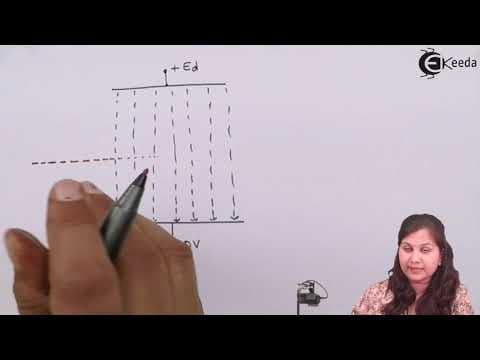
The thermal boundary layer in circular pipes varies depending on the relationship between surface and fluid temperatures. If the surface temperature is higher, the maximum temperature occurs at the wall; if lower, the temperature profile is parabolic and gradients are highest at the boundary, decreasing towards the center. Understanding these conditions is crucial for analyzing heat transfer in flowing fluids.
Transcript
click the bell icon to get latest videos from equator hello friends we have seen in conviction that there are velocity boundary layer and thermal boundary layer now let us consider the thermal boundary layer in case of a internal flow that is pipe the thermal boundary layer in circular pipe there are two cases that one must consider first case wher... Read More
Key Insights
- 😘 The thermal boundary layer in a circular pipe varies depending on whether the surface temperature is higher or lower than the fluid temperature.
- ✋ In both cases, the temperature gradients are higher at the boundary and decrease towards the center of the pipe.
- 💁 A fully developed thermal boundary layer is formed at a certain distance from the entry of the pipe.
- 💠 The temperature profile follows a parabolic shape when the surface temperature is lower and a decreasing exponential shape when the surface temperature is higher.
Install to Summarize YouTube Videos and Get Transcripts
Explore YouTube Video Summarizer or Get YouTube Transcript Extractor
Questions & Answers
Q: How does the temperature profile look like in a circular pipe when the surface temperature is lower than the fluid temperature?
When the surface temperature is lower, the temperature gradients are higher at the boundary and decrease towards the center of the pipe. The temperature profile follows a parabolic shape, with the maximum temperature at a certain point.
Q: What happens to the temperature profile in a circular pipe when the surface temperature is higher than the fluid temperature?
In this case, the fully developed flow has higher temperature at the wall of the pipe and decreases towards the center. The temperature profile forms a decreasing exponential shape, with a minimum temperature reached at a certain point.
Q: What is the thermal entry length in a circular pipe for laminar flow?
The length of the thermal entry region in laminar flow can be determined using the empirical relationship le = 0.0575 RdT * PRd, where Rd is the Reynolds number and PRd is the Prandtl number.
Q: How is the thermal entry length calculated in turbulent flow?
For turbulent flow, the length of the thermal entry region is given by le = 0.0575 Re D * D, where Re is the Reynolds number and D is the diameter of the pipe.
Summary & Key Takeaways
-
The video discusses the thermal boundary layer in circular pipes, focusing on two cases: surface temperature higher than fluid temperature and surface temperature lower than fluid temperature.
-
In the first case, before the entry of the pipe, the velocity profile remains constant while the temperature varies. As we move towards the thermal entry region, the temperature gradients increase at the boundary and decrease towards the center of the pipe. At a certain distance, a fully developed thermal boundary layer is formed with a parabolic temperature profile.
-
In the second case, the temperature profile initially has lower temperature gradients at the boundary, but as the flow becomes fully developed, the temperature at the wall of the pipe increases while it decreases towards the center. A minimum temperature is reached at a certain point.
Read in Other Languages (beta)
Share This Summary 📚
Summarize YouTube Videos and Get Video Transcripts with 1-Click
Try YouTube Summary with ChatGPT & Claude or YouTube Transcript Generator
Explore More Summaries from Ekeeda 📚


Summarize YouTube Videos and Get Video Transcripts with 1-Click
Try YouTube Summary with ChatGPT & Claude or YouTube Transcript Generator