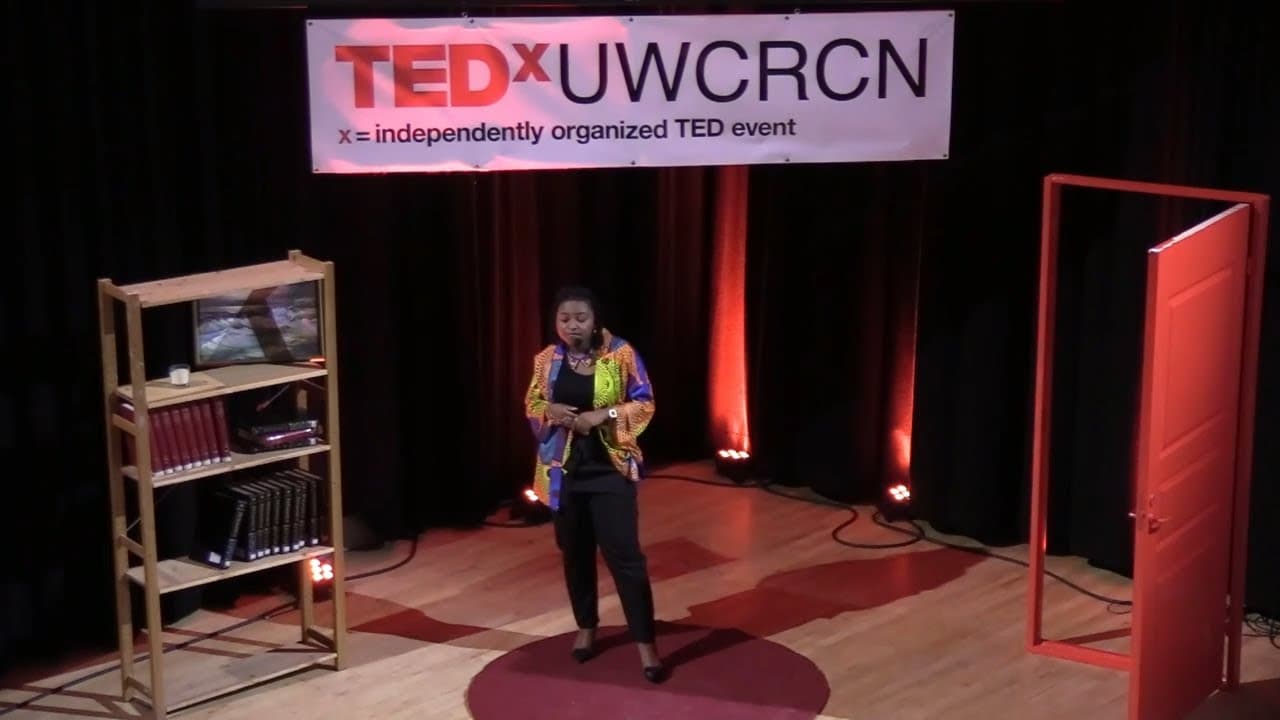
Creating the Africa We Want | Nongcebo Nsingwane | TEDxUWCRCN
TL;DR
Africa can pursue economic advancement by strengthening peace and security, expanding high-quality education, fostering cultural tolerance, involving the state in development, and supporting local businesses. The talk connects underdevelopment to colonialism, political instability, rapid population growth, educational barriers, and health inequalities, noting that more than 3 million children in Somalia are out of school. Read on for the speaker’s specific proposals for collaborative action.
Transcript
foreign 19 outbreak I stayed at home for the whole year without school because my home country is swatini Queen are four Technologies to Aid in online learning whilst developed countries like the United States of America closed schools for only eight weeks because they could afford to use an agent-based model to simulate communities across the U.S ... Read More
Key Insights
- 👋 Colonialism, political instability, and reliance on imported goods have hindered Africa's economic growth.
- 🌍 Rapid population growth in Africa has resulted in poverty and limited access to education.
- ☠️ Inequalities in health and healthcare contribute to high unemployment rates and slow economic growth.
- ✋ Peace and security, cultural tolerance, and high-quality education are crucial for Africa's economic advancement.
Install to Summarize YouTube Videos and Get Transcripts
Explore YouTube Video Summarizer or Get YouTube Transcript Extractor
Questions & Answers
Q: What is needed to create the Africa we want?
The speaker prioritizes peace and security, cultural tolerance, accessible high-quality education, and a more involved developmental state. Local businesses can also contribute through research, new products and services for local needs, and sustainable practices.
Q: What factors does Nongcebo Nsingwane identify as causes of Africa’s underdevelopment?
Nsingwane identifies colonialism, political instability, rapid population growth, poor access to quality education, and health inequalities. These factors contribute to insecurity, unskilled labor, low production, unemployment, and slow economic growth.
Q: How did colonialism hinder Africa’s economic growth?
The talk says colonial policies forced Africa to rely on imported goods while its natural resources were exploited by wealthy Western nations. Africa’s struggle to recover economically has been compounded by political turmoil and insecurity.
Q: Why are peace and security essential to Africa’s development?
Internal and external security are presented as crucial conditions for pursuing development. The speaker calls for curbing internal conflict and transitioning from a military state toward a developmental state.
Q: How can high-quality education support a prosperous Africa?
Accessible, high-quality education can equip people with skills for high-paying jobs, competitive work, and business. The urgency is illustrated by the claim that more than 3 million children in Somalia are out of school, while others face overcrowded classrooms and shortages of trained teachers and books.
Q: Why does cultural tolerance matter for Africa’s development?
The speaker argues that misunderstanding and intolerance cause considerable turmoil in Africa. Treating diversity as a basis for engagement rather than conflict can improve relationships among people from different backgrounds, cultures, and traditions.
Q: What role should African states play in economic advancement?
African states should formulate relevant economic and social development strategies and ensure they are implemented. The talk points to Japan, Korea, and Singapore as examples of states using disciplined planning and a developmental-state approach to guide economic transformation and sustain growth over three decades.
Q: How can individuals and local businesses contribute to Africa’s development?
Individuals can donate to or volunteer with nonprofit organizations working to improve education in rural African communities. Local businesses can invest in research and development, create products and services addressing local needs, reduce waste, and lower greenhouse gas emissions.
Summary & Key Takeaways
-
Africa's economic growth was hindered by colonialism, leading to reliance on imported goods and political instability.
-
Rapid population growth in Africa contributes to poverty, limited access to education, and slow economic growth.
-
Inequalities in health and healthcare lead to the spread of diseases and high unemployment rates, further stifling economic development.
Read in Other Languages (beta)
Share This Summary 📚
Summarize YouTube Videos and Get Video Transcripts with 1-Click
Try YouTube Summary with ChatGPT & Claude or YouTube Transcript Generator
Explore More Summaries from TEDx Talks 📚



Summarize YouTube Videos and Get Video Transcripts with 1-Click
Try YouTube Summary with ChatGPT & Claude or YouTube Transcript Generator