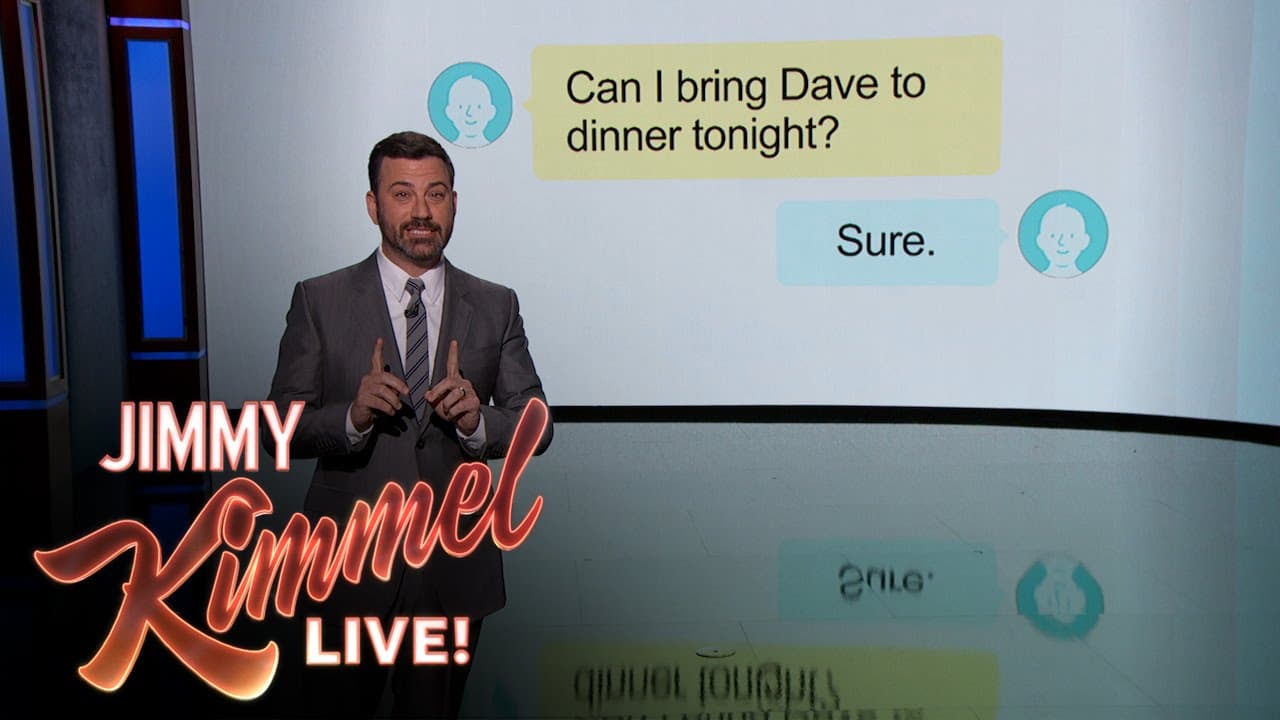
Jimmy Kimmel Explains Passive Aggressive Texts
TL;DR
Passive aggressive text messages can convey hidden meanings through punctuation and word choices.
Transcript
I want to carve some time out of tonight's show to share something I figured out over the break you know we all experience and engage in passive aggressive behavior but thanks to the way we use technology now there's a new way to be passive aggressive that's not as easy to understand it's the passive aggressive text message now if you don't know wh... Read More
Key Insights
- ❓ Passive aggressive behavior can manifest in digital communications, complicating interactions.
- 💱 Subtle changes in punctuation can convey entirely different emotional responses within text messages.
- 🥌 The interpretation of common phrases or responses requires attention to context and tone for accurate understanding.
- 🥺 The evolution of text communication has led to new forms of passive aggression that can lead to conflict in relationships.
- ❓ Recognizing and interpreting these nuanced responses is essential to preventing misunderstandings.
- 💁 Communication preferences vary greatly, and clarity remains important in all forms of dialogue.
- 🔑 The advice to avoid certain words and punctuation could help maintain healthier communication habits.
Install to Summarize YouTube Videos and Get Transcripts
Explore YouTube Video Summarizer or Get YouTube Transcript Extractor
Questions & Answers
Q: What is a passive aggressive text message?
A passive aggressive text message is one that conveys hidden frustration or resentment through subtle cues, such as punctuation or word choice. This method of communication can be confusing because it often masks the true feelings behind a simple message, leading to misunderstandings in relationships.
Q: How does punctuation affect the interpretation of text messages?
Punctuation significantly alters how a message is perceived. For instance, an exclamation point indicates enthusiasm, while a period can suggest annoyance or indifference. Understanding these nuances is critical for interpreting the sender's emotions and avoiding miscommunication in conversations.
Q: What does the response "k" imply in a text?
The response "k" often implies reluctance or annoyance, similar to a teenager rolling their eyes. It suggests that the sender may comply with the request but feels dissatisfied or put upon, making it less than an enthusiastic affirmation.
Q: Why does the speaker suggest avoiding certain phrases like "yup" and "ha" in texts?
The speaker suggests avoiding these phrases as they can convey passive aggressive tone rather than genuine agreement or humor. For instance, "yup" may seem friendly, while "yup" with a u can express irritation. Similarly, a simple "ha" can indicate recognition without appreciation, which can be dismissive.
Summary & Key Takeaways
-
The video discusses how technology has evolved passive aggressive behavior, particularly through text messaging, making interpretations more complex and subtle.
-
Various examples illustrate how slight changes in wording or punctuation, like using a period instead of an exclamation point, can dramatically alter the perceived emotional tone of text communications.
-
The speaker emphasizes the importance of recognizing these nuances to avoid misunderstandings in relationships, advising against certain phrases and punctuation in texting.
Read in Other Languages (beta)
Share This Summary 📚
Summarize YouTube Videos and Get Video Transcripts with 1-Click
Try YouTube Summary with ChatGPT & Claude or YouTube Transcript Generator
Explore More Summaries from Jimmy Kimmel Live 📚

Summarize YouTube Videos and Get Video Transcripts with 1-Click
Try YouTube Summary with ChatGPT & Claude or YouTube Transcript Generator