How to Use Obsidian Graph Filters for Better Notes
TL;DR
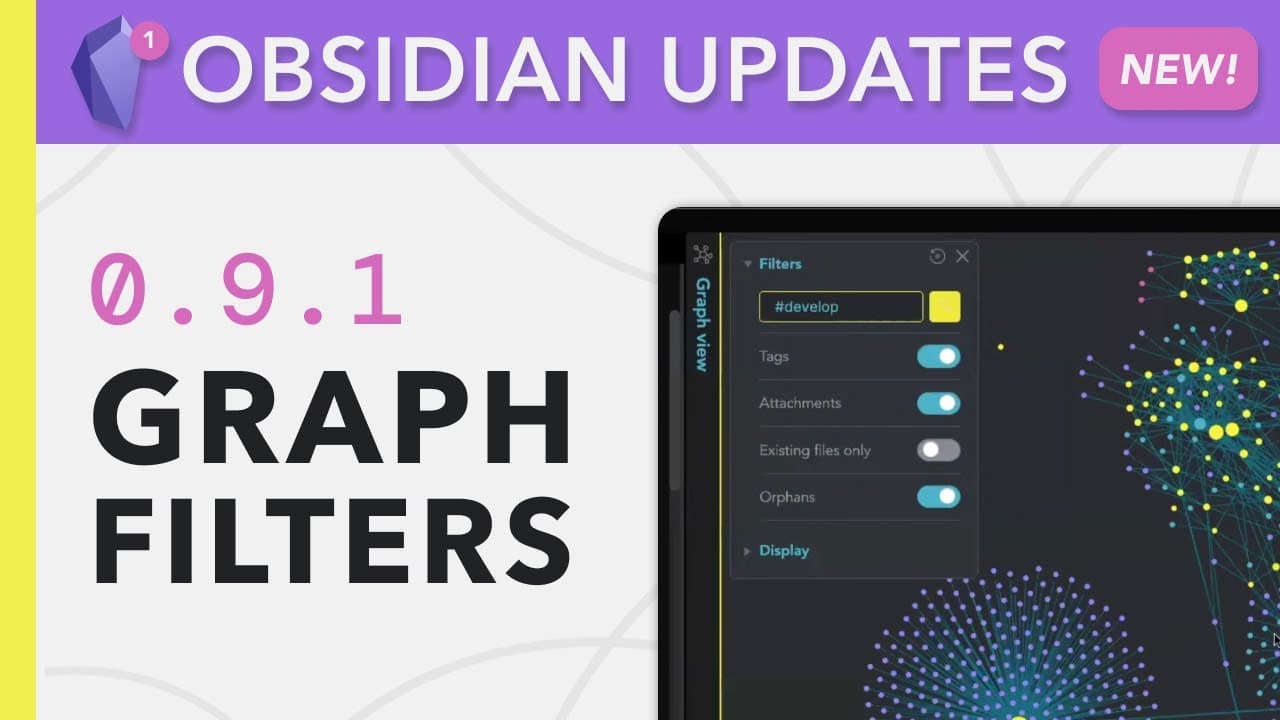
Use Obsidian’s graph filters to reveal unfinished links and isolated notes, giving you immediate ideas for what to develop next. Search by words or tags, toggle existing files and orphan notes, then open a promising node to continue writing. Layout controls can improve readability, while arrows expose the direction of links between notes.
Transcript
i'll be straight with you for the past several months i could care less about the graph you in in linked networking uh note-taking apps i mean to me it was just kind of a gravy on top the icing on the cake right like how are we really using the graph view but in version 0.9.0 the game is subtly changed once again the developers have added a lot ... Read More
Key Insights
- Obsidian version 0.9.0 adds graph filters and layout controls that can support active writing rather than merely displaying a note network. These additions increase the usefulness of graph view by helping users find specific notes, unfinished links, and disconnected ideas.
- The graph search field finds a term within notes, including occurrences in note bodies rather than only titles. Combining a search with visible tags makes it possible to inspect a focused cluster and understand the weaker relationships represented through shared tags.
- The existing-files filter distinguishes completed note files from links pointing to notes that have not been created. Turning the filter off reveals gray nodes, which represent potential notes and provide practical starting points for developing ideas already implied by the library.
- Orphan notes are isolated notes without connections to the surrounding network. The presenter describes many of them as boat notes, meaning blocks of atomic thought floating independently until they are developed, connected, or incorporated into a larger structure.
- Directional arrows make the origin and destination of links explicit. Although links can be navigated bidirectionally, the original link is technically created from one note toward another, and graph arrows reveal whether a relationship points in one direction or both directions.
- Layout controls adjust node size, line thickness, center force, repel force, link force, and link distance. These settings change the graph’s visual density and spacing, but the presenter suggests finding a readable configuration once rather than repeatedly adjusting it.
- Tag-based searches create focused workspaces for creative review. Searching for tags such as habit, concept, or develop limits the visible network, allowing users to explore relevant existing notes and discover uncreated linked notes that fit their current area of attention.
- Graph view becomes actionable when it identifies the next note to write or connect. Toggling filters can expose easy wins, reduce uncertainty about where to begin, and keep users in note-making mode instead of encouraging undirected browsing across the full library.
Install to Summarize YouTube Videos and Get Transcripts
Explore YouTube Video Summarizer or Get YouTube Transcript Extractor
Questions & Answers
Q: How do you use Obsidian graph filters to find notes to develop?
Search for a relevant word or tag, then turn off the existing-files-only option. The graph will reveal gray nodes representing linked notes that have not yet been created. Review those nodes for an idea that fits your current focus, open it, and begin adding content. This creates several immediate starting points and reduces the friction of deciding what to develop next.
Q: What does the existing-files filter show in Obsidian graph view?
The existing-files filter controls whether the graph includes links to notes that do not yet exist as files. When it is enabled, uncreated linked notes disappear. When it is disabled, they appear as gray nodes. Those nodes expose ideas mentioned elsewhere in the library but not yet developed, making them useful candidates for new notes and focused writing sessions.
Q: How can orphan notes improve an Obsidian workflow?
Displaying orphan notes reveals ideas that remain isolated from the rest of the note network. The presenter often treats these as boat notes, or blocks of atomic thought floating without connections. Reviewing them creates an opportunity to expand their content, connect them with related material, or decide how they belong within a broader map of notes and concepts.
Q: How does search work inside Obsidian graph view?
The graph search field filters the displayed network according to a term entered by the user. Matching is not limited to note titles because the term can also appear within a note’s body. This makes it possible to isolate notes related to subjects such as linking, habits, or concepts, then inspect their connections, tags, and unfinished neighboring notes.
Q: Why should tags remain visible in an Obsidian graph?
Tags represent a weaker relationship among notes than direct note links, and displaying them makes those associations visible. After filtering for a term, users can turn on tags to see which matching notes share particular categories. The transcript argues that this is one reason not to replace every tag with a direct note link, since tags provide a distinct and useful relationship.
Q: What do arrows mean in Obsidian graph view?
Arrows show the direction in which a link was originally created. Obsidian links can be navigated as bidirectional relationships, but the underlying reference still points from one note toward another. Enabling arrows makes that direction explicit, revealing relationships that point only one way as well as cases where two notes contain links pointing toward each other.
Q: Which layout settings can be adjusted in the Obsidian graph?
The demonstrated layout options include node size, link thickness, center force, repel force, link force, and link distance. Center force pulls nodes closer together, repel force pushes them apart, and link distance changes the space between connected nodes. The presenter recommends adjusting these controls until the graph is readable, then spending more time on practical filtering and note development.
Q: How can tags create focused graph workflows in Obsidian?
Searching for a tag limits graph view to notes associated with a particular working context. A habit tag can expose notes and unfinished ideas about habits, while a concept tag can reveal conceptual relationships. A develop tag can collect material intentionally marked for further work. Toggling existing files within each filtered graph then identifies specific linked ideas that are ready to become fuller notes.
Summary & Key Takeaways
-
Obsidian version 0.9.0 adds graph filters and layout controls that make the graph useful for active note development. Users can search note titles and bodies, display tags and attachments, distinguish existing files from uncreated linked notes, reveal orphan notes, and show arrows that indicate the direction of links.
-
The first workflow uses the existing-files filter to uncover linked notes that have not yet been created. These gray nodes can serve as easy starting points for writing. Filtering around subjects such as habits, concepts, or notes tagged for development narrows the graph and highlights promising ideas that can be expanded immediately.
-
The second workflow reveals orphan notes, described as blocks of atomic thought that remain disconnected from the wider library. Reviewing these floating notes helps identify ideas that need development or links. Together, filters turn graph exploration into an actionable creative practice instead of an aimless tour through the entire note collection.
Read in Other Languages (beta)
Share This Summary 📚
Summarize YouTube Videos and Get Video Transcripts with 1-Click
Try YouTube Summary with ChatGPT & Claude or YouTube Transcript Generator
Explore More Summaries from Linking Your Thinking with Nick Milo 📚



Summarize YouTube Videos and Get Video Transcripts with 1-Click
Try YouTube Summary with ChatGPT & Claude or YouTube Transcript Generator