Prelaunch News Conference for NASA Mission Studying Earth's Atmosphere and Oceans (Feb. 5, 2024)
TL;DR
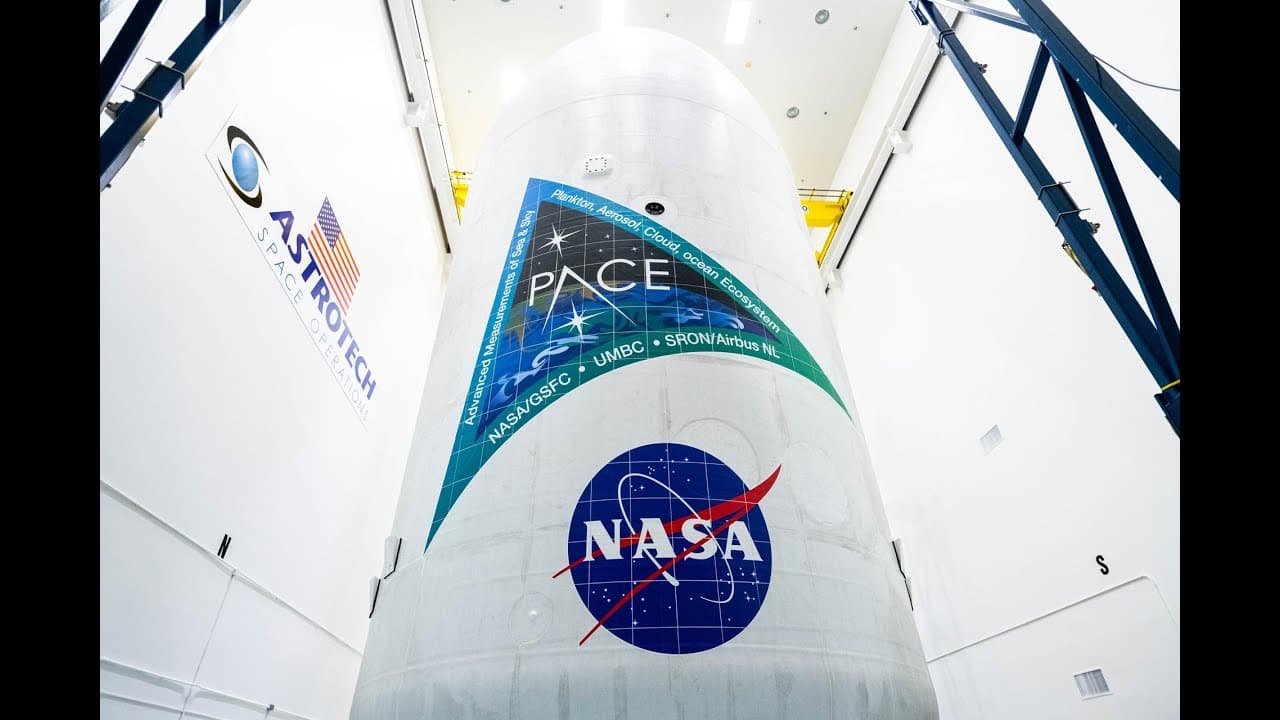
NASA's Pace mission aims to study the interplay of aerosols, clouds, and phytoplankton in Earth's oceans and atmosphere to understand the planet's complex climate system.
Transcript
hello and welcome to the Kennedy Space Center in Florida for the pre-launch news conference for NASA's Earth observing satellite called Pace I'm darl Dale and I'll be your moderator for today's news conference Pace stands for Plankton aerosol Cloud ocean ecosystem and its mission is to unfold the mysteries of our ocean and atmosphere Pace will be l... Read More
Key Insights
- 😶🌫️ Pace aims to unravel the mysteries of aerosols, clouds, and phytoplankton to understand Earth's climate system.
- ⛅ The mission will provide valuable data on aerosols, which have a significant impact on cloud formation, weather patterns, and climate stability.
- 🤞 By studying the interplay of phytoplankton and aerosols, scientists hope to improve climate models and enhance our understanding of Earth's changing ecosystems.
Install to Summarize YouTube Videos and Get Transcripts
Explore YouTube Video Summarizer or Get YouTube Transcript Extractor
Questions & Answers
Q: What is the main objective of NASA's Pace mission?
The main objective of the Pace mission is to study the interplay of aerosols, clouds, and phytoplankton in Earth's oceans and atmosphere to gain insights into the planet's climate system.
Q: How will Pace contribute to our understanding of Earth's climate?
Pace will provide valuable data on aerosols, which play a crucial role in cloud formation and weather patterns. By studying these interactions, scientists hope to enhance climate models and improve our ability to predict and respond to climate events.
Q: What role does phytoplankton play in the global ecosystem?
Phytoplankton, microscopic algae at the base of the marine food chain, serve as a food source for fish and other marine organisms. They also play a critical role in carbon dioxide absorption and oxygen production, making them important for regulating Earth's climate.
Q: How will Pace's data be made available to the public?
Pace data, along with algorithms and models, will be freely accessible through NASA's Earth Science Data Systems. This open-source approach aims to accelerate scientific discoveries and support decision-making for a variety of applications, including hurricane prediction and ecosystem management.
Summary & Key Takeaways
-
NASA's Pace mission is set to launch on February 6th, with the goal of studying the role of phytoplankton and aerosols in Earth's oceans and atmosphere.
-
Pace will join NASA's fleet of Earth observing satellites, providing valuable data on land, ocean, ice, and atmosphere to better understand our changing planet.
-
The mission will help unravel the mysteries of how clouds form, weather systems behave, and how ocean life interacts with the global climate.
Read in Other Languages (beta)
Share This Summary 📚
Summarize YouTube Videos and Get Video Transcripts with 1-Click
Try YouTube Summary with ChatGPT & Claude or YouTube Transcript Generator
Explore More Summaries from NASA 📚

Summarize YouTube Videos and Get Video Transcripts with 1-Click
Try YouTube Summary with ChatGPT & Claude or YouTube Transcript Generator