What’s Next to Deliver the SDG Agenda?
TL;DR
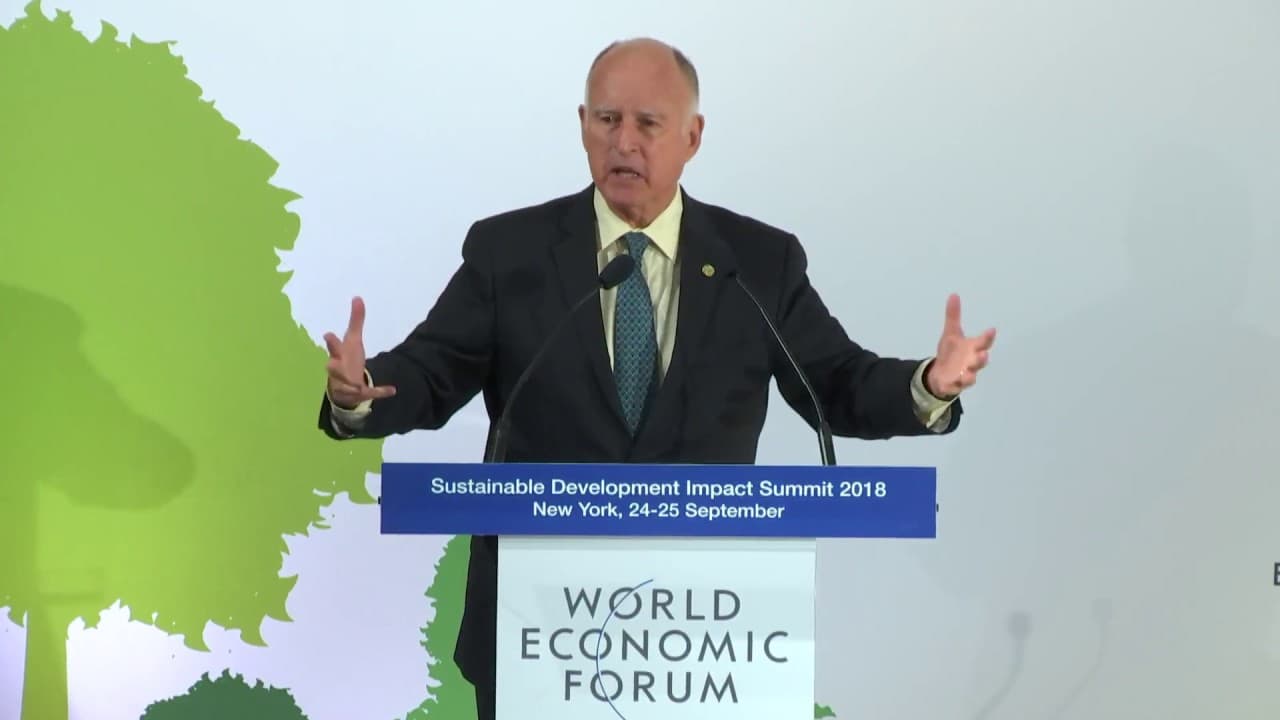
Delivering the SDG agenda requires world leaders to collaborate, align the economy with ecology, and close the widening gap between technological power and human wisdom, restraint, and insight. More than 4,000 mayors, CEOs, governors, and provincial leaders attended the San Francisco climate action summit, demonstrating broad commitment, but countries are still stalling on the Paris agreement. Read on for the speaker’s proposed direction.
Transcript
[Applause] well thank you very much it's a real pleasure to be here at a sustainable conference trying to make the state of the world better and certainly our climate action summit in San Francisco was a remarkable event in the face of the abdication of Washington we have the dedication of California and the climate action summit which brought toge... Read More
Key Insights
- 😚 The world faces complex challenges in achieving sustainability, including climate change, nuclear proliferation, and the need to close the gap between technological power and human wisdom.
- 🪡 Sustainability efforts must be inclusive, considering the needs and perspectives of all communities and addressing inequalities.
- 🖐️ Technology, education, and public-private partnerships play crucial roles in addressing global challenges and achieving the sustainable development goals.
- 😑 Time is running out, and urgent action is required to effectively address the pressing issues of climate change and sustainability.
Install to Summarize YouTube Videos and Get Transcripts
Explore YouTube Video Summarizer or Get YouTube Transcript Extractor
Questions & Answers
Q: What is next to deliver the SDG agenda?
World leaders must pull together, collaborate honestly, assess the current situation, and develop shared understandings that lead to agreements. They must also shape the economy according to ecological limits and exercise greater wisdom, insight, and restraint.
Q: Why does the speaker say the world is not on a sustainable path?
The planet has 7.3 billion people, more than a billion automobiles, and more than 94 billion gallons of gasoline burned every day. Species are being extinguished, habitats are being destroyed, and waste and plastic are circulating through the environment.
Q: What did the San Francisco climate action summit demonstrate?
The summit brought together over 4,000 mayors, CEOs, governors, and provincial leaders from every continent. Representing billions of people, they committed to transforming the economy, culture, and way of life toward sustainability.
Q: What gap must humanity close to become sustainable?
Technological power is rising steeply, while wisdom, restraint, and insight remain flat. The speaker says humanity must either curb its power or develop and exercise the wisdom needed to control it.
Q: What makes reversing climate change possible?
The speaker says humanity already has the knowledge and information needed to change direction. The unresolved questions are whether people and leaders have the will and imagination to act.
Q: How should the economy relate to ecology?
The economy lives inside the ecology and must be shaped accordingly. The atmosphere above and the soil below are not indestructible, so economic activity must remain within nature’s limits.
Q: Why does climate action require international cooperation?
Climate change does not recognize national sovereignty and affects everyone, including big and small, rich and poor. Because all people breathe the same air and share concerns for their grandchildren, countries must act together.
Q: What problems threaten progress on the Paris agreement?
Many countries are stalling or pulling back from their commitments. The speaker warns that the next conference of the parties in Poland could become a setback rather than an advance toward the goals agreed in Paris.
Summary & Key Takeaways
-
Number: The planet has 7.3 billion people.
-
Number: More than a billion automobiles contribute to the sustainability challenge.
-
Number: More than 94 billion gallons of gasoline are burned every day.
-
Number: Over 4,000 mayors, CEOs, governors, and provincial leaders attended the San Francisco climate action summit.
-
Definition: Sustainability requires closing the widening gap between technological power and wisdom, restraint, and insight.
-
Compare: Technological power rises steeply, while the development of wisdom, restraint, and insight remains flat.
-
Number: Russia has 7,000 nuclear weapons, with more than a thousand capable of being set off within an hour or an hour and a half.
-
Number: The speaker contrasts climate change with 14,000 nuclear warheads and identifies automobiles, power plants, houses, waste, and ocean plastic as distributed causes.
-
Step 1: World leaders must collaborate honestly and assess where the world currently stands.
-
Step 2: Leaders must establish shared understandings that lead to agreements.
-
Definition: The economy exists inside the ecology and must operate within the limits of the atmosphere and soil.
-
When: In 1963, President Kennedy said people breathe the same air and announced that America would stop nuclear testing and pursue an atmospheric test-ban treaty.
Read in Other Languages (beta)
Share This Summary 📚
Summarize YouTube Videos and Get Video Transcripts with 1-Click
Try YouTube Summary with ChatGPT & Claude or YouTube Transcript Generator
Explore More Summaries from World Economic Forum 📚
Summarize YouTube Videos and Get Video Transcripts with 1-Click
Try YouTube Summary with ChatGPT & Claude or YouTube Transcript Generator