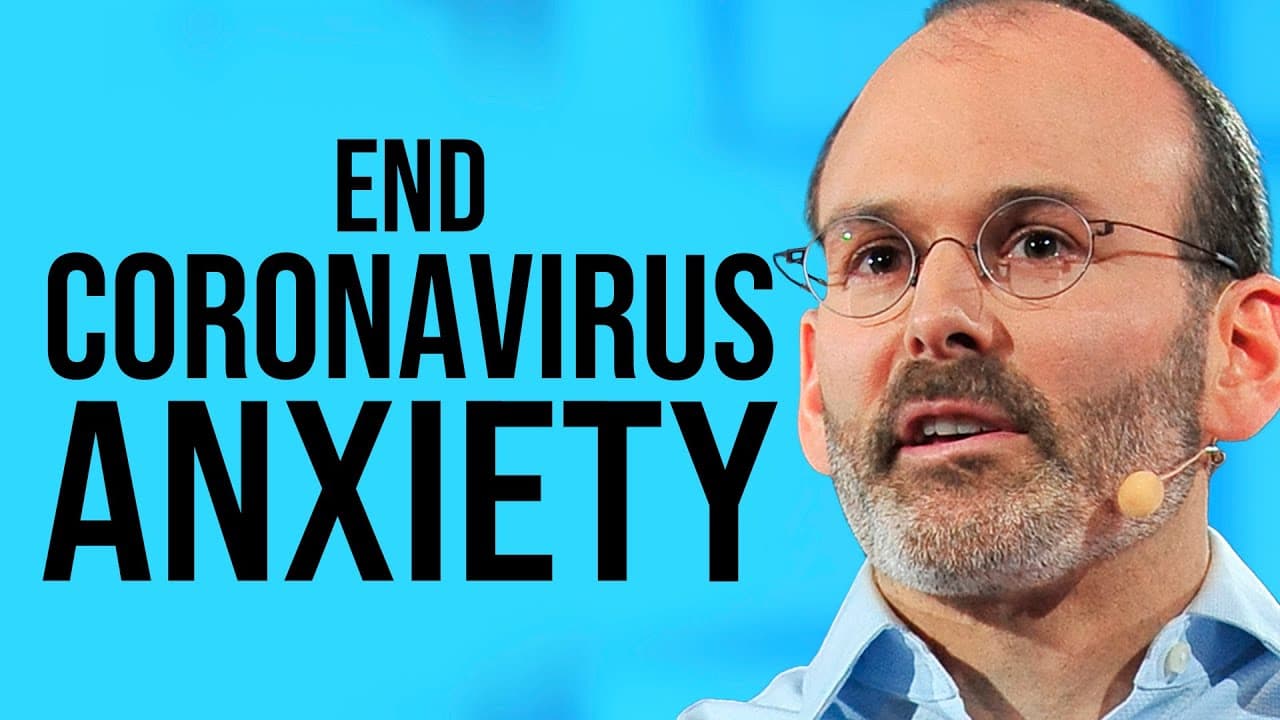
Behavioral Neuroscientist Shows You How to Break The Coronavirus Anxiety Cycle | Judson Brewer
TL;DR
Break the coronavirus anxiety cycle by recognizing how fear, uncertainty, and social contagion create spiraling “what if” thoughts, then redirecting habit loops toward calm, connection, and kindness. Dr. Judd Brewer explains that fear is a normal survival response, but panic can take the prefrontal cortex offline and drive unhelpful behavior such as buying six months of toilet paper. Read on for practical ways to regain awareness and stay grounded in the present.
Transcript
hey everybody welcome to a very special episode of impact theory uh because of the coronavirus we're all on quarantine here so this is going to be our first ever interview filmed on skype and i cannot think of a better guess today i have joined me dr judd brewer he is the director of research and innovation at the mindfulness center an associate pr... Read More
Key Insights
- 😵💫 Anxiety is normal, but it can spiral out of control when combined with fear, uncertainty, and social contagion.
- 🔁 Understanding our habit loops and triggers is vital for managing anxiety effectively.
- 😃 Calm, connection, and kindness serve as "bigger better offers" that can help counteract anxiety.
- 💭 Awareness and mindfulness are essential for maintaining control over our thoughts and behavior.
- 🫠 Reading books can provide a sense of connection, alleviating feelings of isolation.
- 🖐️ Social contagion plays a significant role in the spread of anxiety and panic.
- 🥡 Taking things less personally and focusing on the present moment can help reduce anxiety.
Install to Summarize YouTube Videos and Get Transcripts
Explore YouTube Video Summarizer or Get YouTube Transcript Extractor
Questions & Answers
Q: How can you break the coronavirus anxiety cycle?
First, become aware of the triggers and habit loops that allow fear and uncertainty to turn into anxious “what if” scenarios. Then retrain the brain toward more rewarding behaviors, calm, connection, and kindness, while using mindfulness to remain grounded in the present.
Q: Why do fear and uncertainty cause anxiety?
Fear is a normal, adaptive survival response that helps people recognize and avoid danger. When the brain lacks accurate information, however, its planning system can repeatedly generate “what if” scenarios, causing anxiety to spiral.
Q: What is social contagion, and how does it amplify anxiety?
Social contagion is the transfer of emotion from one person to another. An anxious phone conversation, contact with someone who is panicking, or panic-filled social media posts can spread anxiety and intensify fear even when people are physically apart.
Q: What happens to the brain when anxiety becomes panic?
Anxiety causes the thinking brain to start going offline. When escalating anxiety becomes panic, the prefrontal cortex, the part involved in thinking and planning, can go completely offline, increasing the likelihood of unhelpful behavior.
Q: Why did people panic-buy toilet paper during the coronavirus outbreak?
Brewer does not claim to know where the toilet-paper idea originated. He explains that it spread from person to person until it became a meme for panic, with shoppers copying others after seeing a run on toilet paper rather than deciding independently that they needed six months’ worth.
Q: How do habit loops contribute to anxiety?
Habit loops connect triggers with repeated reactions, allowing anxious behavior to reinforce itself. Becoming aware of those loops is the first step toward replacing them with responses the brain finds more rewarding, including kindness, connection, and calm.
Q: How can mindfulness help manage coronavirus anxiety?
Mindfulness helps maintain awareness of thoughts, emotions, and triggers instead of automatically following anxious reactions. By returning attention to the present moment, a person can interrupt spiraling thoughts and respond more calmly.
Q: Why are calm, connection, and kindness useful responses to anxiety?
Brewer presents calm, connection, and kindness as “bigger better offers” for the brain than anxious habits. Focusing on these more rewarding behaviors can help retrain habitual responses and counter the fear, isolation, and social contagion that fuel anxiety.
Summary & Key Takeaways
-
Anxiety is a normal response to fear and uncertainty, but it can spiral out of control when paired with social contagion, causing panic and irrational behaviors.
-
The key to managing anxiety is to understand how our survival mechanisms work and how they can be triggered and amplified by fear and uncertainty.
-
To combat anxiety, it is important to become aware of our habit loops, retrain our brains to focus on more rewarding behaviors such as kindness, connection, and calm, and practice mindfulness to stay grounded in the present moment.
Read in Other Languages (beta)
Share This Summary 📚
Summarize YouTube Videos and Get Video Transcripts with 1-Click
Try YouTube Summary with ChatGPT & Claude or YouTube Transcript Generator
Explore More Summaries from Full Episodes of Impact Theory 📚


Summarize YouTube Videos and Get Video Transcripts with 1-Click
Try YouTube Summary with ChatGPT & Claude or YouTube Transcript Generator