How Did Packard Mass-Produce the Merlin Engine for the P-51 Mustang?
TL;DR
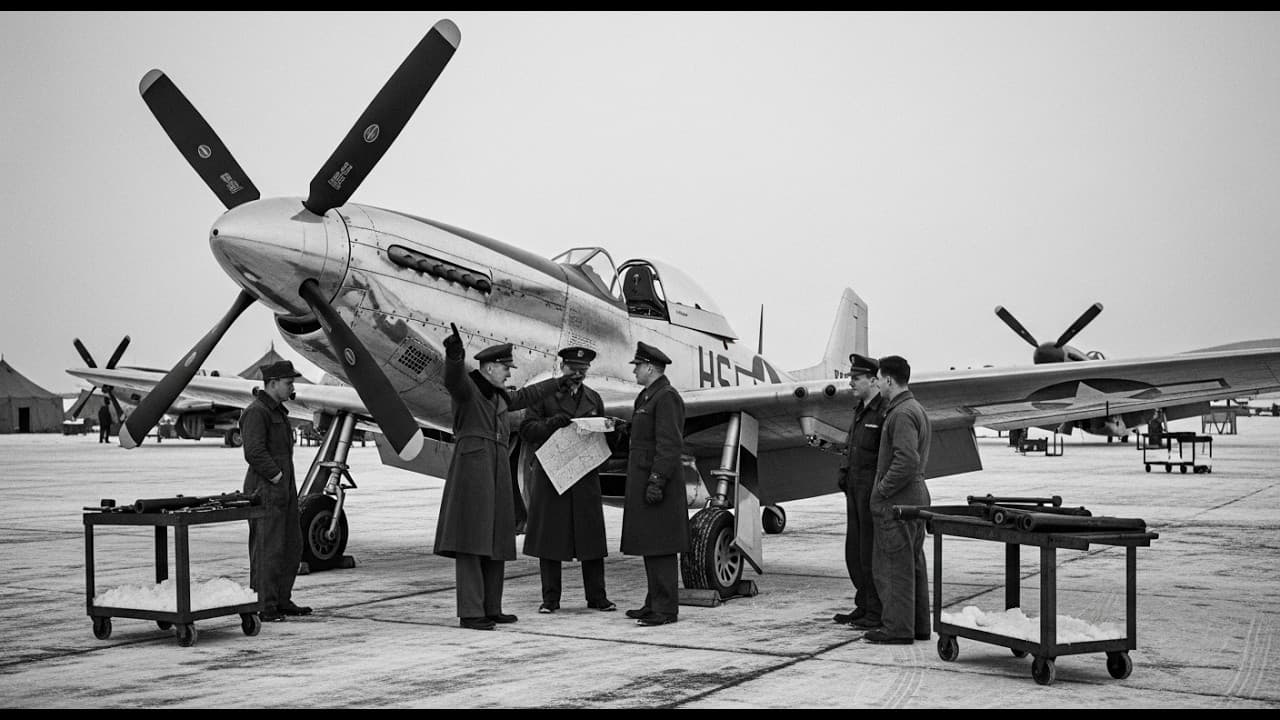
Packard mass-produced the Merlin engine for the P-51 Mustang by replacing hand fitting with interchangeable parts while preserving the British design. Over 11 months, engineers created 6,000 technical drawings, tightened tolerances, built tooling for British threads, and standardized complex components such as bearings and supercharger impellers. Read on to see how these changes retained the Merlin’s high-altitude performance while making assembly-line production possible.
Transcript
August 2nd, 1941, Detroit, Michigan. Inside Packard Motorcar Company's East Grand Boulevard plant, two Rolls-Royce Merlin engines roared to life on test stands. But something was different. These weren't British engines. They were Americanmade copies built from British blueprints that Packard's engineers had completely rewritten. The crowd watching... Read More
Key Insights
- The Allison-powered P-51 was effective below 15,000 feet, but its single-stage supercharger could not supply enough compressed air at bomber operating altitudes. By 25,000 feet, engine output had fallen to barely 1,000 horsepower, leaving the fighter poorly suited to escort duties.
- The Merlin’s high-altitude advantage came from a two-stage, two-speed supercharger designed by Stanley Hooker. Its gear ratio changed from 6.391-to-1 in low-speed mode to 8.095-to-1 in high-speed mode, helping maintain sea-level pressure up to 30,000 feet.
- Rolls-Royce manufacturing depended on skilled workers hand-fitting roughly 14,000 parts. Connecting rods, bearing clearances, cylinder heads, and supercharger impellers could be individually adjusted, an approach that produced precise engines but could not satisfy the much larger wartime production demand.
- Packard’s central manufacturing principle was complete part interchangeability. Its engineers tightened tolerances so any correctly produced component could fit any engine without filing or adjustment, converting a craft-based design into a repeatable assembly-line product while preserving the Merlin’s dimensions and performance.
- Packard rewrote the Merlin’s production documentation for American factories. During 11 months of preparation, its engineers produced 6,000 new technical drawings that respecified dimensions, clarified manufacturing intent, tightened tolerances, and defined repeatable processes suitable for dedicated machining centers.
- British thread compatibility was preserved through custom American tooling. Packard manufactured taps, dies, cutting tools, and measuring systems for BSW, BSF, and BA specifications, allowing parts to be exchanged between Detroit-built and Derby-built engines while eliminating routine hand fitting.
- Packard’s silver-lead bearings with indium plating improved the original bearing design. Testing showed that the substituted material carried loads effectively, created a smoother low-friction surface, improved break-in behavior, ran cooler, and lasted longer, leading Rolls-Royce to adopt the innovation.
- Supercharger production became more consistent through precision casting, machining, and dynamic-balance testing. Packard produced impellers that needed minimal corrective balancing, even though they operated above 30,000 RPM and required accuracy measured in ten-thousandths of an inch.
Install to Summarize YouTube Videos and Get Transcripts
Explore YouTube Video Summarizer or Get YouTube Transcript Extractor
Questions & Answers
Q: How did Packard mass-produce the Merlin engine for the P-51 Mustang?
Packard translated a hand-fitted engine of roughly 14,000 parts into repeatable manufacturing operations based on complete part interchangeability. Over 11 months, its engineers produced 6,000 new technical drawings, tightened tolerances, clarified dimensions, and created processes that allowed components to be assembled without individual filing or adjustment.
Q: Why did the Allison-powered P-51 struggle at high altitude?
Its Allison V-1710 used a single-stage supercharger that could not compress enough air as altitude increased. The fighter performed well below 15,000 feet, but by 25,000 feet its output had fallen to barely 1,000 horsepower and by 30,000 feet it was essentially helpless.
Q: How did the Merlin improve the P-51’s high-altitude performance?
The Merlin used Stanley Hooker’s two-stage, two-speed supercharger to maintain sea-level pressure up to 30,000 feet. Its drive ratio changed from 6.391-to-1 in low-speed mode to 8.095-to-1 in high-speed mode, helping sustain power in thinner air.
Q: Why was Rolls-Royce’s Merlin production difficult to scale?
Rolls-Royce relied on skilled workers to hand-fit roughly 14,000 parts, including connecting rods, bearings, cylinder heads, and supercharger impellers. Its shadow factories produced roughly 200 engines per week by September 1940 even though 2,000 were needed.
Q: How did Packard preserve compatibility with British Merlin parts?
Packard retained the British thread standards rather than replacing them with American threads. It developed taps, dies, cutting tools, and measuring systems for BSW, BSF, and BA specifications, allowing parts from Detroit-built and Derby-built engines to remain interchangeable.
Q: What bearing improvement did Packard introduce to the Merlin?
Packard used silver-lead bearings with indium plating in place of the original bearing design. Testing showed that they carried loads effectively, reduced friction, improved break-in behavior, ran cooler, and lasted longer; Rolls-Royce later adopted the improvement.
Q: How did Packard standardize Merlin supercharger impeller production?
Packard used precision casting, machining, and dynamic-balance testing to produce more consistent impellers. The resulting parts required minimal corrective balancing despite operating above 30,000 RPM and requiring accuracy measured in ten-thousandths of an inch.
Q: What was Packard’s central manufacturing principle for the Merlin?
Packard required complete interchangeability: any correctly produced component had to fit any engine without filing or adjustment. Engineers tightened tolerances and defined repeatable processes while preserving the Merlin’s dimensions, compatibility, and performance.
Summary & Key Takeaways
-
The Allison-powered P-51 performed well below 15,000 feet but lost power at the altitudes used by German fighters and American bombers. Rolls-Royce’s Merlin offered the needed solution through a two-stage, two-speed supercharger that maintained sea-level pressure up to 30,000 feet, making it suitable for high-altitude escort missions.
-
Rolls-Royce produced the Merlin through skilled hand fitting, while Packard required complete interchangeability for assembly-line manufacturing. Over 11 months, Packard created 6,000 technical drawings, respecified dimensions, tightened tolerances, developed British-thread tooling, and redesigned manufacturing processes without abandoning compatibility with engines and replacement parts produced in Britain.
-
Packard improved several components while adapting the Merlin for scale. Silver-lead bearings with indium plating ran cooler and lasted longer, precision-made supercharger impellers required less balancing, and redesigned coolant passages simplified manufacturing while preserving cooling. The resulting V-1650 combined British engine design with American precision production and quality-control methods.
Read in Other Languages (beta)
Share This Summary 📚
Summarize YouTube Videos and Get Video Transcripts with 1-Click
Try YouTube Summary with ChatGPT & Claude or YouTube Transcript Generator
Explore More Summaries from Iron Minds 📚

Summarize YouTube Videos and Get Video Transcripts with 1-Click
Try YouTube Summary with ChatGPT & Claude or YouTube Transcript Generator