Will AGI Replace Human Jobs or Enhance Productivity?
TL;DR
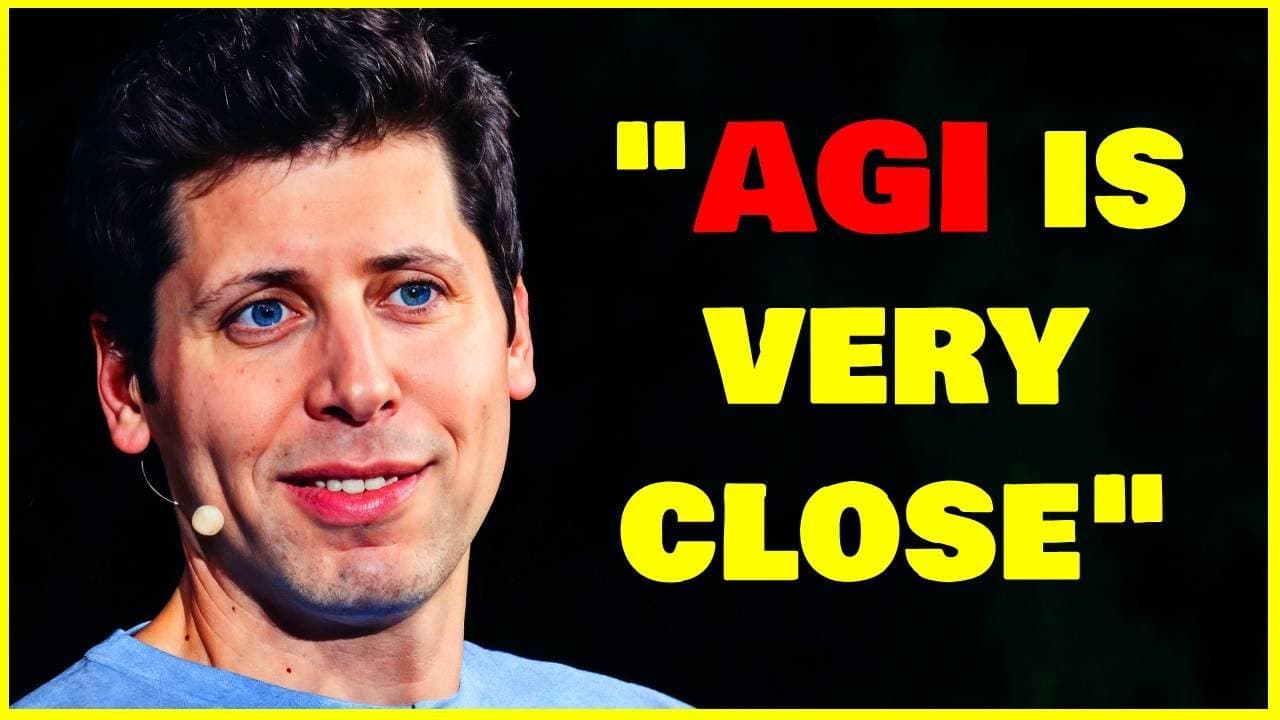
No, technology is not replacing jobs the way many feared, according to Sam Altman speaking at Davos. He says AI has been far more of a productivity tool than expected, letting people magnify what they can do by a factor of two or five, with coders reporting they are two to three times more productive. Jobs will change and some will disappear, but Altman argues AGI will alter work much less than we all think. Read on for why he believes he is ahead of the curve.
Transcript
the feeling of inequality or technology leaving people behind is there the danger that AI furthers those Trends yes for sure I think that's something to think about but one of the things that surprised us very pleasantly on the upside because when you start building a technology you start doing research you you kind of say we'll follow where the sc... Read More
Key Insights
- 🔨 AI is currently a tool that enhances human capabilities rather than replacing jobs to the extent initially expected.
- 👻 The coexistence of humans and AI in the workforce allows for increased productivity and improved job performance.
- 👋 AI researchers have differing views on the potential outcomes of AI, with optimism for good outcomes and recognition of the risks associated with AI.
- 🎙️ More videos with Sam Altman:
Install to Summarize YouTube Videos and Get Transcripts
Explore YouTube Video Summarizer or Get YouTube Transcript Extractor
Questions & Answers
Q: Will technology replace jobs, and will workers be safe?
Sam Altman says that so far AI has not been replacing jobs to the degree people expected, and has instead acted as a tool that magnifies what humans can do. He acknowledges that jobs will change and some will go away entirely, but argues the human drives and the way society works are so strong that AGI will change jobs much less than most people think.
Q: How much more productive does AI actually make people?
Altman says people are magnifying what they can do by a factor of two or five, and in some cases doing things they simply could not do before. He cites coders who say they are two to three times more productive and never want to code again without the tool.
Q: If AI makes coders more productive, won't that reduce the need for coders?
Not according to Altman. He says the world just needs a lot more code than there are people to write it, so demand does not run out. As ability goes up, expectations go up too, so people simply do more rather than being displaced.
Q: What did OpenAI's research find about job dislocation from AI?
OpenAI has a policy research team studying this, and they have seen significant impact in terms of changing the way people do their jobs rather than job dislocation. The team expects that effect to accelerate, changing more people's jobs, but so far it has not meant significant replacement of jobs.
Q: When do AI researchers expect machine intelligence to do all human tasks?
A paper surveying thousands of AI authors on the future of AI gives at least a 50% chance of AI systems achieving several milestones by 2028, about four years out. Those milestones include autonomously constructing a payment processing site from scratch, creating a song indistinguishable from a new song by a popular musician, and autonomously downloading and fine-tuning a large language model.
Q: What are "centaurs" and "cyborgs" in the context of working with AI?
They come from a paper called "Centaurs and Cyborgs on the Jagged Frontier," which examines how much AI improves common white-collar tasks. The framing distinguishes between people who divide labor with AI (centaurs) and those who integrate their work more deeply with it (cyborgs), depending on where AI's "jagged frontier" of capabilities lies.
Q: Who is the woman on stage with Sam Altman at Davos?
She is Anna Makanju, currently VP of Global Affairs at OpenAI. She has traveled with Sam Altman as a liaison to various world governments to help educate them on AI and work out policy. She previously worked at Facebook as global policy manager for content regulation and public policy manager for global elections.
Q: Does Sam Altman think AGI is coming soon?
Yes. Altman says AGI will be developed in the reasonably close future, essentially version 1.0 rolling out soon. However, he argues it will change the world, and jobs in particular, much less than everyone expects, a statement he admits would not even have made sense to him at an earlier point in his thinking.
Summary & Key Takeaways
-
AI technology is evolving to magnify human capabilities, allowing individuals to do their jobs better and improving productivity by a factor of two or five.
-
While some jobs may change or become obsolete, AI is not currently replacing jobs to the degree initially expected.
-
Research indicates that AI will coexist with humans, augmenting their abilities and transforming the future of work.
Read in Other Languages (beta)
Share This Summary 📚
Summarize YouTube Videos and Get Video Transcripts with 1-Click
Try YouTube Summary with ChatGPT & Claude or YouTube Transcript Generator
Explore More Summaries from AI Unleashed - The Coming Artificial Intelligence Revolution and Race to AGI 📚




Summarize YouTube Videos and Get Video Transcripts with 1-Click
Try YouTube Summary with ChatGPT & Claude or YouTube Transcript Generator