How to Collaborate Across Deep Social Divides
TL;DR
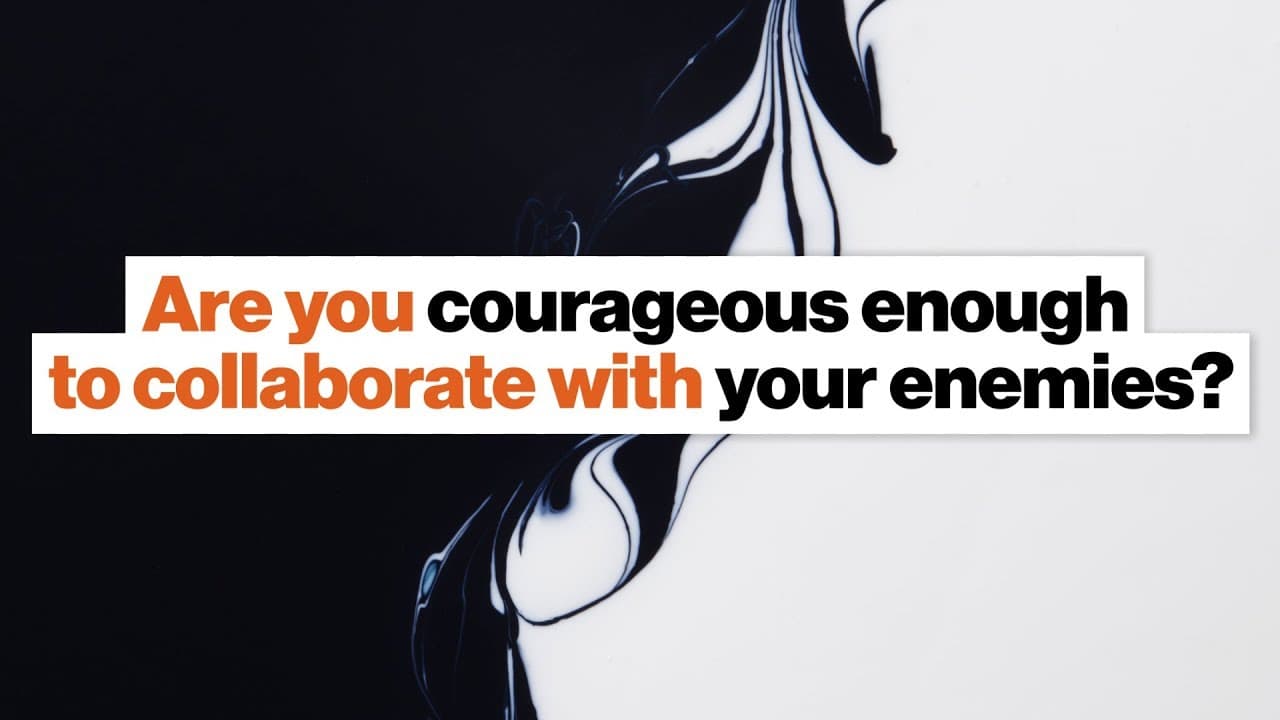
Start collaboration by distinguishing genuine violations from hostile rhetoric, then identify goals both sides fiercely share. Bishop Omar Jahwar argues that vulnerability, honest disagreement, and mutual value can turn unlikely opponents into effective partners. Deep social problems cannot be solved inside political or cultural echo chambers because progress requires access to people, perspectives, and resources beyond one's familiar group.
Transcript
Well, I started out in, uh, early '90s. I was the first gang specialist hired, uh, by the State of Texas. My job was to essentially go into youth prisons and some of those young early adult prisons and deal with the gang phenomenon that happened in the '90s. Job was to negotiate peace in those, uh, environments, and then furlough those young men ou... Read More
Key Insights
- A true enemy is defined by genuine violation, intent, and consistent behavior, not merely by inflammatory rhetoric. Treating every ideological opponent as an enemy can restrict the relationships, access, and influence needed to address difficult social problems.
- Group identity can function as protection, belonging, and a way of life within neighborhoods or prison environments. Even when an identity rests on falsehoods, directly confronting it requires care because believers may organize their lives and violent actions around it.
- Conflict negotiation works by using available influence to introduce a different perspective without dismissing what participants believe. Jahwar applied this approach in youth prisons, where his role included negotiating peace and helping young men seek safe passage back into their neighborhoods.
- Unlikely cooperation can begin when opposing groups recognize an immediate need for one another. An Aryan Brotherhood leader temporarily distinguished Jahwar from the group's racist declarations, then later became a leader in the prison's Umoja unity council.
- Perception is not always reality when people from politically different environments meet directly. Paul Ryan attended Jahwar's Dallas gathering to listen, while Jahwar later entered conservative settings and found that the separation between their concerns was smaller than expected.
- Vulnerability creates room for reciprocal learning across ideological boundaries. Ryan acknowledged that he lacked information and asked Jahwar to explain his environment, while offering introductions to people who were willing to help but whom Jahwar would not otherwise have met.
- Shared commitments provide a practical foundation for collaboration without requiring complete agreement. Jahwar's guiding question was what the participants fiercely agreed upon, including citizenship, preventing poverty from becoming a destination, transformation, and redemption.
- A common goal can remain larger than each participant's political or social role. Jahwar and Ryan could disagree openly about policy without damaging their relationship because their partnership centered on adding value and solving problems that other people avoided.
Install to Summarize YouTube Videos and Get Transcripts
Explore YouTube Video Summarizer or Get YouTube Transcript Extractor
Questions & Answers
Q: How can people collaborate across political or social divides?
People can collaborate across divides by meeting in a vulnerable place, admitting what they do not know, and exchanging perspectives without hiding real disagreements. Bishop Omar Jahwar recommends identifying what both sides fiercely agree upon and working intensely toward those shared goals. The relationship should focus on whether participants add value to each other and solve problems, rather than on how they manage appearances or political roles.
Q: What makes someone a true enemy rather than an opponent?
A true enemy should be identified through genuine violation, harmful intent, and consistent behavior, not through rhetoric alone. Bishop Omar Jahwar warns that arguments, offensive language, or major differences can create the appearance of enmity without proving it. Careful classification matters because labeling people as enemies too quickly can limit influence, close access, and prevent cooperation with people who may later become necessary partners.
Q: Why is rhetoric an unreliable way to identify enemies?
Rhetoric can exaggerate conflict without accurately revealing a person's intentions, conduct, or willingness to cooperate. Jahwar illustrates this by comparing heated personal arguments with actual enmity and by describing negotiations with an Aryan Brotherhood group. Although the group's formal speech expressed racist hostility, its leader recognized a practical need for Jahwar and later participated in a unity council, showing that behavior could move beyond declared ideology.
Q: How did Omar Jahwar negotiate peace among prison gangs?
Jahwar entered youth and early adult prisons as the first gang specialist hired by the State of Texas. His task was to negotiate peace within those environments, then furlough young men so they could return to their neighborhoods and ask established leaders for free passage back into community life. His method required understanding protective identities and using influence carefully to introduce perspectives that challenged their underlying falsehoods.
Q: What did the Aryan Brotherhood negotiation teach about cooperation?
The negotiation showed that people who voice extreme hostility may still recognize a need for someone outside their group and become capable of practical cooperation. During a gathering, an Aryan Brotherhood leader affirmed the group's racist beliefs but excluded Jahwar personally because the group needed him. That leader later became part of the Umoja unity council in prison, demonstrating that engagement can uncover possibilities hidden by rhetoric.
Q: How did Omar Jahwar and Paul Ryan build trust?
Jahwar and Ryan built trust through listening, reciprocal exposure, and an honest admission of limited knowledge. Ryan visited Jahwar's Dallas work and spent hours listening, then invited Jahwar into conservative settings to share his ideas. Ryan also offered introductions to potential supporters whom Jahwar would not otherwise have met. Their relationship grew because both could learn, contribute value, and discuss disagreements without concealing them.
Q: What does it mean to find what people fiercely agree upon?
Finding what people fiercely agree upon means identifying substantial shared commitments that can support joint action despite ideological differences. Jahwar cites agreement that everyone should be a citizen, poverty should not become a person's destination, and people are capable of transformation and redemption. These common convictions gave collaborators a foundation for real relationships and practical work without requiring them to erase or disguise policy disagreements.
Q: Why can echo chambers not solve deep social problems?
Echo chambers organize life around oppositions such as us versus them, right versus left, or red versus blue. Jahwar argues that this separation blocks the relationships and perspectives required to solve deep problems. If people treat unfamiliar groups as enemies, they limit their influence and access. Effective problem solving instead requires listening across boundaries, testing ideas openly, finding shared goals, and working with unlikely allies.
Summary & Key Takeaways
-
Bishop Omar Jahwar developed his approach while negotiating peace among prison gangs and helping young people return safely to their neighborhoods. He learned that group identities can provide protection and belonging, even when built on falsehoods. Challenging those identities requires care because deeply held beliefs can govern how people live, fight, and die.
-
Jahwar argues that hostile language alone does not necessarily make someone an enemy. Intent, consistent behavior, and genuine violations provide better evidence. His work with an Aryan Brotherhood leader showed that immediate needs and personal relationships could create an opening for cooperation, eventually leading that man to participate in a prison unity council.
-
Collaboration with Paul Ryan grew from mutual vulnerability and curiosity rather than political agreement. They exchanged access, information, and perspectives while remaining candid about policy differences. By concentrating on shared commitments such as citizenship, escaping poverty, transformation, and redemption, they built a relationship focused on solving problems that others avoided.
Read in Other Languages (beta)
Share This Summary 📚
Summarize YouTube Videos and Get Video Transcripts with 1-Click
Try YouTube Summary with ChatGPT & Claude or YouTube Transcript Generator
Explore More Summaries from Big Think 📚

Summarize YouTube Videos and Get Video Transcripts with 1-Click
Try YouTube Summary with ChatGPT & Claude or YouTube Transcript Generator