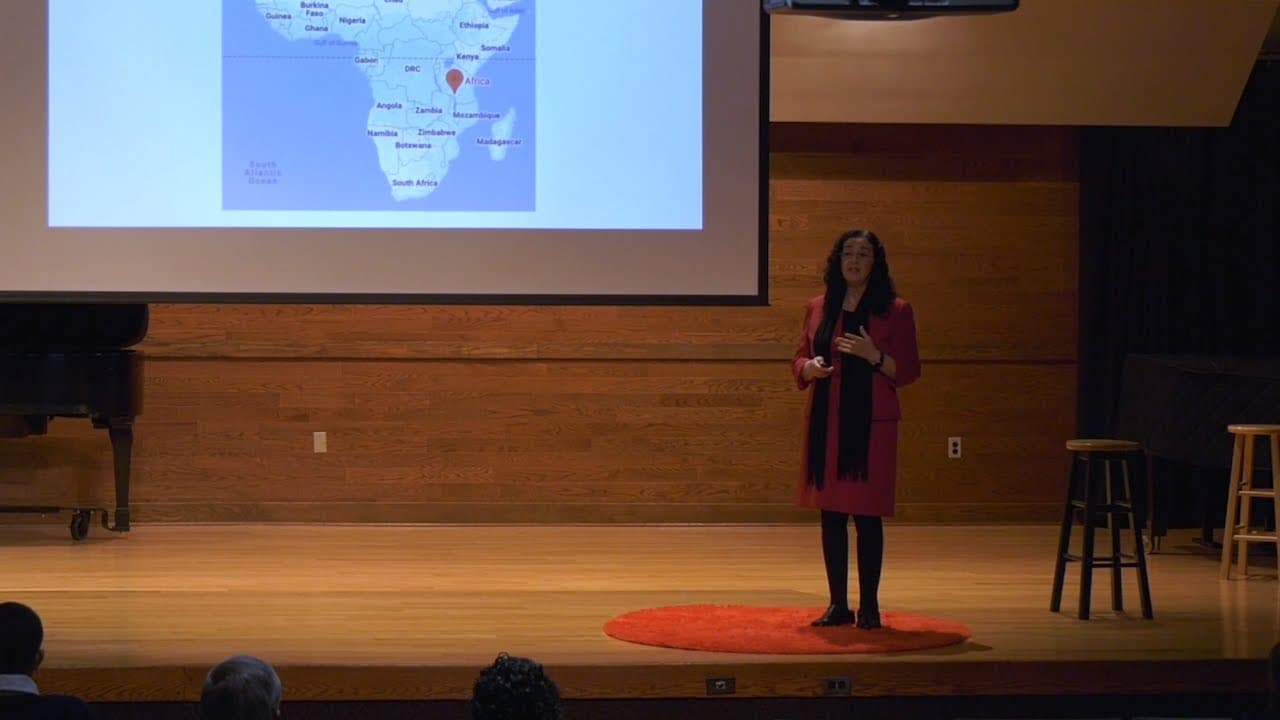
The Importance Of Having An Accent! | Hilda Chacón | TEDxNazarethUniversity
TL;DR
Having an accent is important because it reflects the courage and effort required to immerse yourself in another language and culture, especially as an adult. Hilda Chacón explains that language shapes thought, while bilingual and multilingual people can perceive a wider range of meaning and develop flexibility, empathy, resilience, and creative problem-solving. Read on to discover why an accent represents valuable linguistic and cultural experience.
Transcript
Transcriber: SHIMA BAGHERZADEH Reviewer: Michael Nystrom Today I will be talking about something that is very true for me, as I believe it is for millions of other people around the planet, including our students who are pursuing careers in languages and cultures. I will be talking to you in English, which clearly is not my first language. And you ... Read More
Key Insights
- 🌍 Embracing accents shows a willingness to immerse oneself in another language and culture, leading to a unique perspective on the world.
- 🤔 Different languages shape the way we perceive and think about actions, focusing on different aspects.
- ❓ Learning multiple languages offers numerous invaluable skills, including flexibility, empathy, resilience, and creative problem-solving.
- 🇺🇸 There are about 7,000 languages in the world, with a significant linguistic and cultural diversity in the United States.
- 😀 Children have a greater ability to learn languages easily, while adults face different challenges.
- 👻 Multilingualism allows for a deeper understanding and appreciation of diverse cultures.
- 😯 There is an increasing number of people living outside their country of origin, necessitating language acquisition and often resulting in accented speech.
Install to Summarize YouTube Videos and Get Transcripts
Explore YouTube Video Summarizer or Get YouTube Transcript Extractor
Questions & Answers
Q: Why is having an accent important?
Having an accent can show that someone dared to immerse themselves in another language and culture during adult life. Hilda Chacón presents it as evidence of embracing life among people with different cultural practices and historical backgrounds.
Q: Why do adults often retain an accent when speaking another language?
People who learn a language beyond childhood will very probably retain an accent for the rest of their lives. Adult learners acquire language differently, comparing it with their primary language and deliberately learning features such as verb conjugations and prepositions.
Q: How does speaking another language shape the way people think?
The languages people speak direct attention toward different aspects of experience. For example, some languages emphasize who performed an action, while others emphasize the consequences of that action.
Q: What advantages do bilingual and multilingual people have?
Bilingual and multilingual people can perceive a wider range of meaning in everyday life. Chacón also associates multilingualism with flexibility, empathy, agency, resilience, adaptability, creative problem-solving, imagination, and humility.
Q: How many languages are spoken worldwide and in the United States?
About 7,000 languages are spoken worldwide. Somewhere between 350 and 430 of them are spoken in the United States, making the country highly linguistically and culturally diverse.
Q: How common is speaking a language other than English at home in the United States?
According to the U.S. Census figures cited by Chacón, about 68 million people speak a language other than English at home. She also says this number increased threefold between 1980 and 2019 and that one in five U.S. homes speaks another language besides English.
Q: Can children learn a second language more easily than adults?
Children can learn a second language easily when exposed to it from an early age. That early ability diminishes with age, so adults must approach acquisition through similarities to and differences from their primary language.
Q: How does learning another language provide access to other cultures?
Knowing another language lets people follow what members of another culture are saying in their own words. It can also help learners appreciate other societies, question assumptions about unfamiliar cultures, and discover a different side of themselves while immersed in another culture.
Summary & Key Takeaways
-
Learning a language as an adult means embracing an accent, which represents a willingness to immerse oneself in a new culture and language.
-
Scientific evidence shows that different languages shape the way we think, focusing on different aspects of actions.
-
Multilingualism allows for a broader understanding of meanings and offers valuable skills such as flexibility, empathy, resilience, and creative problem-solving.
Read in Other Languages (beta)
Share This Summary 📚
Summarize YouTube Videos and Get Video Transcripts with 1-Click
Try YouTube Summary with ChatGPT & Claude or YouTube Transcript Generator
Explore More Summaries from TEDx Talks 📚




Summarize YouTube Videos and Get Video Transcripts with 1-Click
Try YouTube Summary with ChatGPT & Claude or YouTube Transcript Generator