What Is the Black Swallower and How Does It Eat So Much?
TL;DR
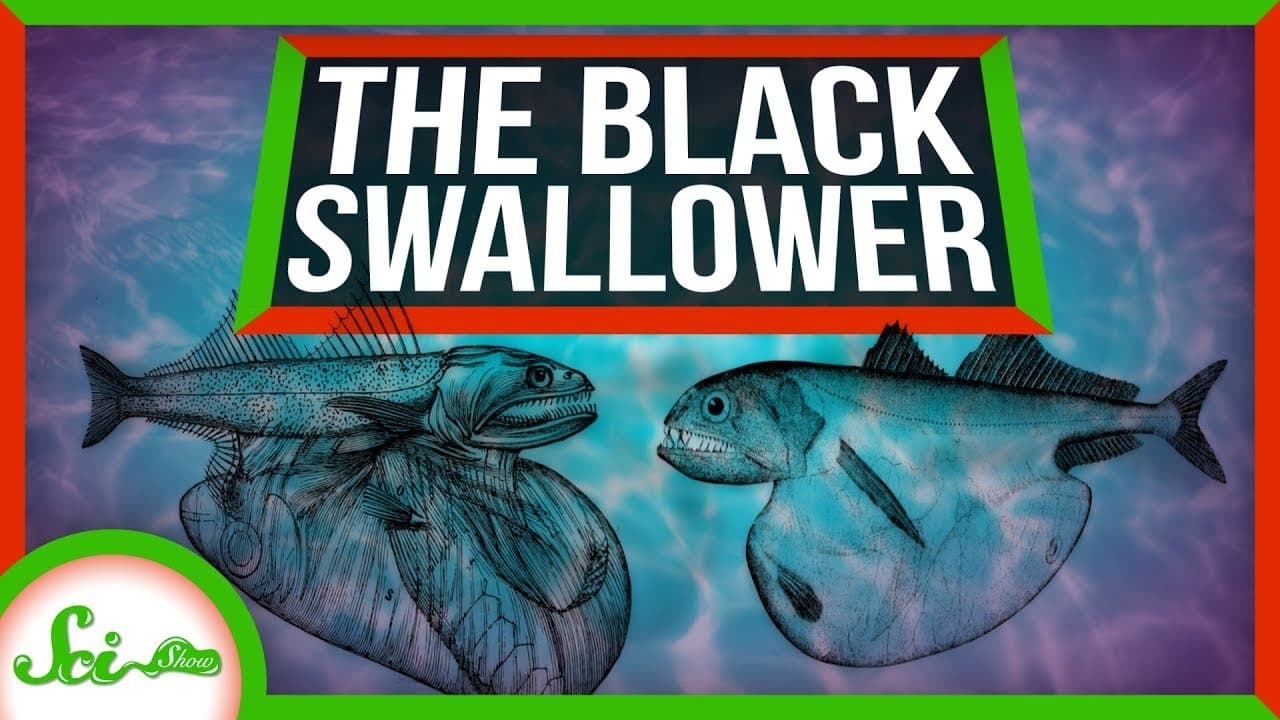
The black swallower is a deep-sea fish capable of consuming meals up to twelve times its own mass due to its large mouth and elastic stomach. This adaptation allows it to survive in the deep ocean, where food is scarce, although excessive overeating can be fatal as decomposing prey can inflate its stomach and cause it to float to the surface.
Transcript
Thanks for CuriosityStream for supporting this episode! Go to CuriosityStream.com/SciShow to learn more. [INTRO ♪] Compared to other creepy deepwater critters like gulper eels or angler fish, Chiasmodon niger looks pretty unassuming—kind of like an ugly anchovy. It grows to about 25 centimeters long, and is found all around the world at about 700 t... Read More
Key Insights
- 🤢 The black swallower is a deep-sea fish that has the ability to eat meals several times larger than its own size.
- 🤑 Its large mouth, elastic stomach, and flexible body allow it to stretch and accommodate its prey.
- 😋 The black swallower is found in the twilight and midnight zones of the ocean, where food is scarce.
- 🫢 Overeating can be fatal for black swallowers, as a decomposing meal releases gases that can inflate their stomach and kill them.
- 👨🔬 Scientists have been able to study black swallowers more closely with the help of advanced deep-sea vehicles.
- ⬛ The black swallower's ability to eat such large meals is an adaptation for survival in the deep ocean.
- ⬛ It remains unclear how the black swallower copes with such large meals, but it likely involves metabolic adjustments similar to those seen in snakes.
Install to Summarize YouTube Videos and Get Transcripts
Explore YouTube Video Summarizer or Get YouTube Transcript Extractor
Questions & Answers
Q: How does the black swallower manage to eat meals several times larger than its own size?
The black swallower has a large mouth, very elastic stomach, and a body that can expand to accommodate its big appetite. These adaptations allow it to stretch its chest and make room for the prey it has swallowed.
Q: How does the black swallower hunt and capture its prey?
The black swallower first seizes its victim by the tail. Then, it progressively moves its jaws up the prey's body, similar to how a boa constrictor constricts its prey, until the prey is completely engulfed.
Q: Can the black swallower's ability to eat large meals ever backfire on them?
Yes, the black swallower's big appetite can sometimes get the better of them. If they eat a meal that is too large, the prey can start to rot and decompose inside their stomach, releasing gases that can inflate their stomach like a balloon and kill them.
Q: How do scientists study and observe the black swallower?
In the past, scientists relied on specimens collected from dead black swallowers, often found floating on the ocean's surface after fatally overeating. Nowadays, better deep-sea vehicles allow scientists to observe them in their natural habitat.
Summary & Key Takeaways
-
The black swallower is a fish found at depths of 700 to 2800 meters in the twilight and midnight zones of the ocean.
-
It can eat meals several times larger than its own size, with reports suggesting they can eat meals twelve times their mass.
-
The black swallower's ability to eat such large meals is possible due to its large mouth, elastic stomach, and flexible body.
Read in Other Languages (beta)
Share This Summary 📚
Summarize YouTube Videos and Get Video Transcripts with 1-Click
Try YouTube Summary with ChatGPT & Claude or YouTube Transcript Generator
Explore More Summaries from SciShow 📚
Summarize YouTube Videos and Get Video Transcripts with 1-Click
Try YouTube Summary with ChatGPT & Claude or YouTube Transcript Generator