How Can Civic Tech Improve Government Systems?
TL;DR
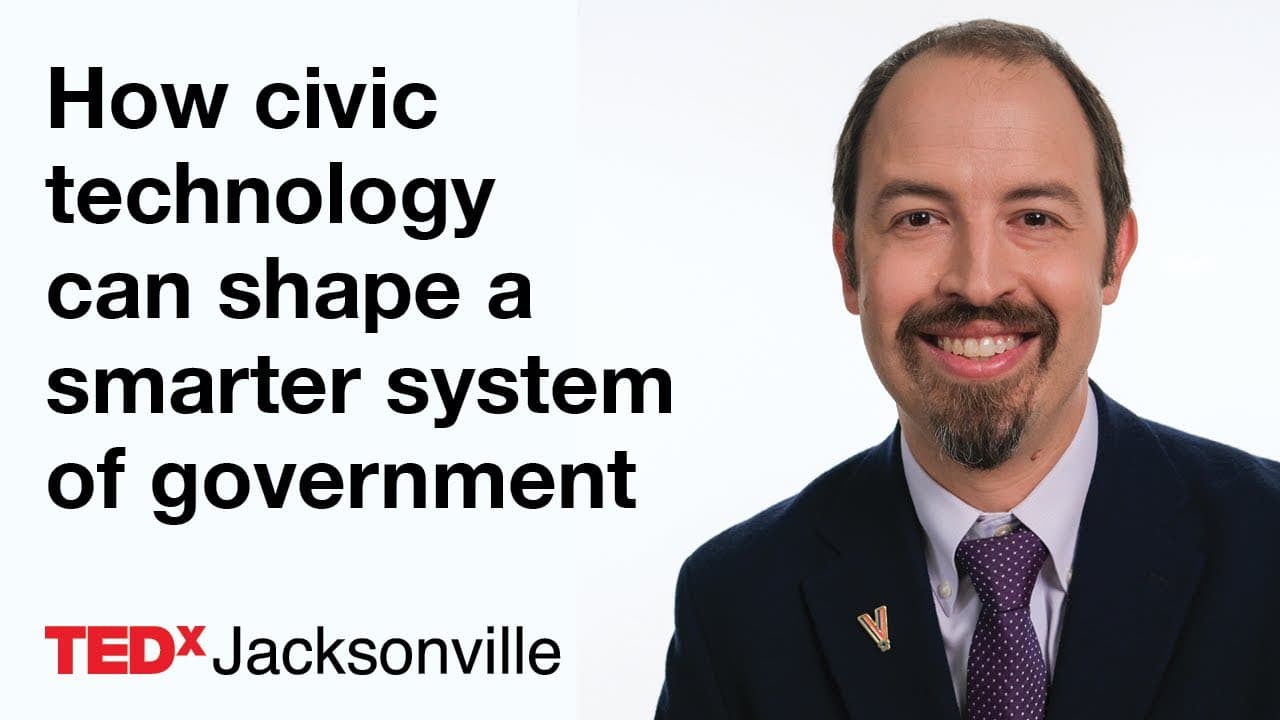
Civic technology can enhance government systems by increasing transparency, accountability, and voter engagement. The Digital Democracy Project enables mobile voting and real-time legislative tracking, empowering voters to directly influence legislation. This technology aims to restore faith in democracy by providing tools for active citizen participation and holding legislators accountable.
Transcript
I'm here to tell the story about a man a woman and an idea the man Lieutenant Tyler Brown was a classmate of mine at Georgia Tech he and I joined the military after 911 out of a sense that our nation and well democracy itself was under attack now Tyler was natural leader and he was widely admired as our student body president he was like the Big Ma... Read More
Key Insights
- Civic technology is transforming government by enhancing transparency and accountability.
- The Digital Democracy Project allows voters to cast ballots on pending legislation via mobile devices.
- Mobile voting technology, developed by a Boston-based startup, ensures secure and scalable elections.
- AI technology is used to simplify legislative language, making it accessible to the general public.
- Real-time voting data is displayed in maps, showing voter preferences by legislative district.
- Scorecards compare voter preferences with legislative actions, holding politicians accountable.
- The project is nonpartisan and funded by bipartisan support, emphasizing its neutrality.
- Early results show increased voter engagement and influence on legislative decisions.
Install to Summarize YouTube Videos and Get Transcripts
Explore YouTube Video Summarizer or Get YouTube Transcript Extractor
Questions & Answers
Q: How does civic technology improve government transparency?
Civic technology improves government transparency by providing platforms that allow citizens to directly engage with the legislative process. For example, the Digital Democracy Project enables voters to cast ballots on pending legislation via mobile devices and displays real-time voting data in maps. This transparency helps hold legislators accountable and ensures that citizens' voices are heard in government decisions.
Q: What is the Digital Democracy Project?
The Digital Democracy Project is a civic technology initiative designed to enhance democratic engagement by allowing voters to participate in the legislative process through mobile voting. It provides tools for real-time tracking of legislative actions, enabling voters to influence legislation and hold legislators accountable. The project aims to address structural deficiencies in the political system and restore faith in democracy.
Q: How does mobile voting work in the Digital Democracy Project?
Mobile voting in the Digital Democracy Project is facilitated through a secure app developed by a Boston-based startup. The app uses advanced technologies like device-level authentication, blockchain, and biometric ID verification to ensure secure and scalable elections. Voters can cast ballots on pending legislation directly from their mobile devices, making the voting process more accessible and efficient.
Q: Why is AI used in the Digital Democracy Project?
AI is used in the Digital Democracy Project to simplify and summarize complex legislative language, making it more accessible to the general public. By distilling key points of a bill into common language, AI enables voters to understand legislation better and make informed decisions. This technology ensures that citizens have the necessary information to participate effectively in the democratic process.
Q: What role do scorecards play in the Digital Democracy Project?
Scorecards in the Digital Democracy Project compare voter preferences expressed through the app with legislative actions taken by politicians. These scorecards provide concrete data on whether legislators align with their constituents' wishes, helping voters make informed decisions on Election Day. Scorecards increase accountability by highlighting discrepancies between voter desires and legislative actions.
Q: How does the Digital Democracy Project increase voter engagement?
The Digital Democracy Project increases voter engagement by providing tools that allow citizens to participate directly in the legislative process. Through mobile voting and real-time tracking of legislative actions, voters can influence legislation and hold politicians accountable. By making the process more accessible and transparent, the project encourages citizens to re-engage with democratic governance.
Q: What are the early results of the Digital Democracy Project?
Early results of the Digital Democracy Project show increased voter engagement and influence on legislative decisions. Registered Florida voters have used the platform to express their preferences on over 180 bills, impacting decisions on significant issues like social media regulations and hurricane relief funding. The project has also inspired political candidates to endorse its use, demonstrating its potential to reshape democratic processes.
Q: How is the Digital Democracy Project funded?
The Digital Democracy Project is funded as a nonpartisan nonprofit organization with bipartisan support, particularly from the state of Florida. This funding model emphasizes the project's neutrality and commitment to enhancing democratic engagement without political bias. The bipartisan nature of the funding underscores the broad appeal and potential impact of the project in improving government transparency and accountability.
Summary & Key Takeaways
-
Civic technology, like the Digital Democracy Project, aims to improve government systems by enhancing transparency and accountability. It allows voters to cast ballots on pending legislation via mobile devices and uses AI to simplify legislative language. This empowers citizens to directly influence legislation and hold legislators accountable, ultimately restoring faith in democracy.
-
The Digital Democracy Project combines mobile voting and real-time legislative tracking to give voters a direct voice in government. By displaying aggregate voting data and providing scorecards for legislators, it increases transparency and accountability. This project, with bipartisan support, seeks to re-engage citizens and improve democratic processes.
-
Through secure mobile voting and accessible legislative summaries, the Digital Democracy Project engages citizens in the democratic process. It provides tools for voters to influence legislation and hold politicians accountable, aiming to address structural deficiencies in the political system and inspire renewed faith in democratic governance.
Read in Other Languages (beta)
Share This Summary 📚
Summarize YouTube Videos and Get Video Transcripts with 1-Click
Try YouTube Summary with ChatGPT & Claude or YouTube Transcript Generator
Explore More Summaries from TEDx Talks 📚





Summarize YouTube Videos and Get Video Transcripts with 1-Click
Try YouTube Summary with ChatGPT & Claude or YouTube Transcript Generator