What Happened at Litany of Shadows Plantation?
TL;DR
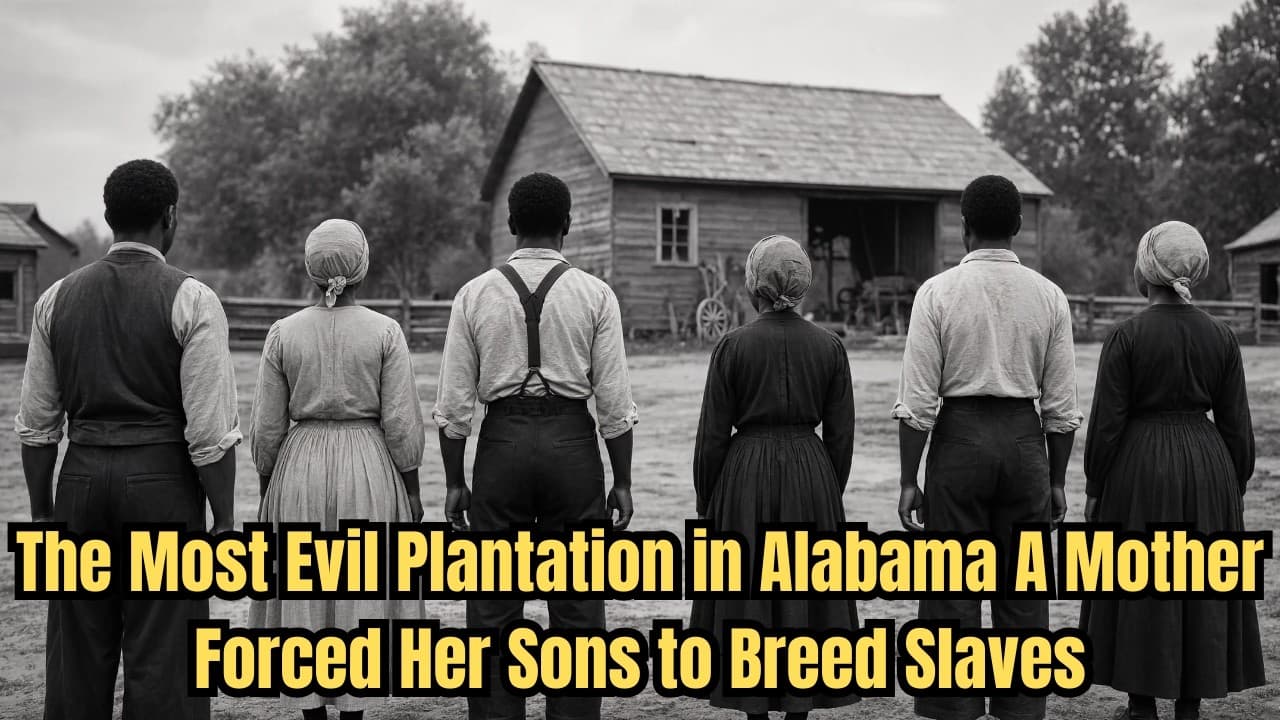
Elizabeth Crane orchestrated a systematic breeding program on her plantation in Alabama, using her sons to father children with enslaved women to save the plantation from financial ruin. This program, documented by a horrified doctor, was a calculated system of abuse that the enslaved people eventually resisted, leading to its end. Their resistance highlighted the power of memory and testimony in confronting historical horrors.
Transcript
There is a leather journal housed in the Alabama State Archives that remained unread for 127 years. When historians were finally permitted to open it in 1974, three of them promptly requested transfers to different departments. The journal belonged to a doctor summoned to a plantation outside Selma in 1847. What he documented there was so deeply di... Read More
Key Insights
- Elizabeth Crane ran a systematic breeding program on her plantation to increase her labor force without capital investment.
- Her sons, Jonathan and Samuel Crane, were used as instruments in this program, fathering children with enslaved women.
- The breeding program was meticulously documented in ledgers, treating human lives as inventory.
- Resistance from the enslaved community eventually led to the collapse of Elizabeth's system.
- Dr. Nathaniel Morrison documented the horrors he witnessed at the plantation in a sealed journal.
- The enslaved people used subtle sabotage and coordinated resistance to dismantle the breeding program.
- Elizabeth Crane's actions were motivated by financial desperation and a cold business logic.
- The story of Litany of Shadows highlights the power of memory and testimony in preserving historical truth.
Install to Summarize YouTube Videos and Get Transcripts
Explore YouTube Video Summarizer or Get YouTube Transcript Extractor
Questions & Answers
Q: What was the breeding program at Litany of Shadows?
The breeding program at Litany of Shadows was a calculated system orchestrated by Elizabeth Crane to increase her labor force without purchasing additional enslaved people. She used her sons, Jonathan and Samuel, to father children with enslaved women, treating these children as inventory to be documented in ledgers. This program was a methodical form of abuse that prioritized financial gain over human dignity.
Q: How did the enslaved people resist the breeding program?
The enslaved people at Litany of Shadows engaged in subtle sabotage and coordinated resistance to dismantle the breeding program. They provided false information about fertility, disrupted record-keeping, and caused equipment failures. Their efforts culminated in the burning of the supervised cabin, forcing Elizabeth Crane to abandon her system. This resistance highlighted the power of collective action and memory in confronting oppression.
Q: What role did Dr. Nathaniel Morrison play in documenting the events?
Dr. Nathaniel Morrison, a physician who visited Litany of Shadows, was appalled by the systematic abuse he witnessed. He documented his observations in a detailed journal, which he sealed for 100 years. Morrison's journal provided crucial evidence of the horrors at the plantation, confirming the accounts of formerly enslaved people and preserving the truth for future generations.
Q: Why did Elizabeth Crane start the breeding program?
Elizabeth Crane initiated the breeding program at Litany of Shadows to address a financial crisis following her husband's death. Faced with significant debt, she sought to increase her labor force without capital expenditure, using a systematic approach to breeding enslaved people. Her actions were driven by a cold business logic that prioritized financial survival over human rights.
Q: What was the impact of the resistance at Litany of Shadows?
The resistance at Litany of Shadows successfully dismantled Elizabeth Crane's breeding program, demonstrating the power of collective action in confronting oppressive systems. Although the enslaved people did not achieve full freedom, their efforts forced Elizabeth to abandon her system, proving that resistance was possible and that even the most carefully designed systems of oppression could be dismantled.
Q: How did the story of Litany of Shadows become public?
The story of Litany of Shadows became public when Dr. Nathaniel Morrison's sealed journal was opened in 1974, revealing detailed accounts of the breeding program. This, combined with oral histories and testimonies from descendants of the enslaved people, allowed historians to reconstruct the events and publish the findings, bringing the horrors of the plantation to light and sparking intense debate about historical memory and accountability.
Q: What lessons can be learned from the story of Litany of Shadows?
The story of Litany of Shadows teaches the importance of remembering and bearing witness to historical horrors. It highlights the power of memory and testimony in preserving truth and confronting oppression. The events underscore the need to challenge comfortable historical narratives and recognize the complex realities of survival and resistance within oppressive systems. Understanding such history helps prevent the recurrence of similar injustices.
Q: What happened to Elizabeth Crane and her family after the events at Litany of Shadows?
After the collapse of her breeding program, Elizabeth Crane faced declining plantation productivity and increasing resistance from the enslaved people. Her son Jonathan died in despair, while Samuel became increasingly violent and was eventually exiled to Texas. Elizabeth suffered a stroke and died in 1856, with her daughter Mary burning the remaining ledgers to protect the family's reputation. The plantation was sold, and its history was largely forgotten until later revelations.
Summary & Key Takeaways
-
Elizabeth Crane orchestrated a calculated breeding program at her plantation, using her sons as instruments to father children with enslaved women. This system was meticulously documented, treating human lives as inventory. Resistance from the enslaved community eventually dismantled the program, highlighting the power of memory and testimony in confronting historical horrors.
-
Dr. Nathaniel Morrison, who witnessed the horrors at Litany of Shadows, documented his observations in a sealed journal. This journal, along with oral histories and testimonies from the enslaved people, later revealed the full extent of Elizabeth Crane's systematic abuse. The story underscores the importance of preserving historical truth.
-
The enslaved community at Litany of Shadows used subtle sabotage and coordinated efforts to resist and ultimately end Elizabeth Crane's breeding program. Their actions demonstrated the potential for resistance even within oppressive systems, and their story serves as a testament to the enduring power of memory and testimony.
Read in Other Languages (beta)
Share This Summary 📚
Summarize YouTube Videos and Get Video Transcripts with 1-Click
Try YouTube Summary with ChatGPT & Claude or YouTube Transcript Generator
Explore More Summaries from Litany of Shadows 📚

Summarize YouTube Videos and Get Video Transcripts with 1-Click
Try YouTube Summary with ChatGPT & Claude or YouTube Transcript Generator