What Are Generalized Projections and Outer Joins in Relational Algebra?
TL;DR
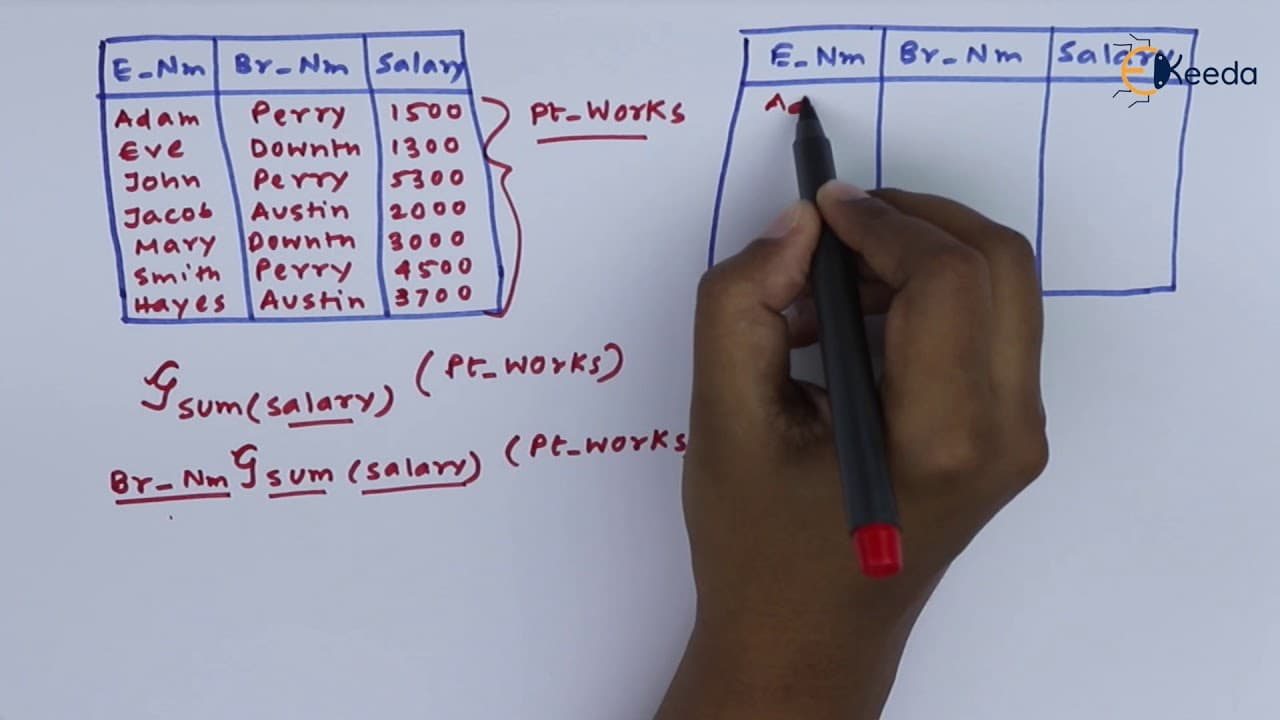
Generalized projections in relational algebra extend the basic projection by allowing aggregate functions like sum, average, max, and count. Outer joins combine data from two relations based on matching values, with left, right, and full outer joins offering different ways to include unmatched data, ensuring no information is lost from either side.
Transcript
click the Bell icon to get latest videos from akira hello friends as we have discussed all the basic relational algebra operations as well as some additional operations to that today we will discuss about the extension of the relational algebra operation that is the generalized projection all of the outer joins like left outer join right outer join... Read More
Key Insights
- 😒 The generalized projection extends the capabilities of the projection operation in relational algebra by allowing the use of aggregate functions for calculations and summarizations.
- 🎭 Aggregate functions such as sum, average, max, min, distinct count, and count can be used in the generalized projection to perform various calculations on attributes or numeric values.
- 👥 Grouping in the generalized projection enables calculations and aggregations to be performed within specific subsets of the data based on a common attribute.
- ↔️ Outer join operations, such as the left, right, and full outer join, allow the combination of attributes from multiple relations based on matching values.
- ↔️ Left outer join includes all values from the left relation along with any matching values from the right relation.
- ↔️ Right outer join includes all values from the right relation along with any matching values from the left relation.
- 🎟️ Full outer join includes all values from both relations, combining attributes where they match and keeping missing attributes as null or empty values.
Install to Summarize YouTube Videos and Get Transcripts
Explore YouTube Video Summarizer or Get YouTube Transcript Extractor
Questions & Answers
Q: What is the difference between the projection operation and the generalized projection?
The generalized projection is an extension of the projection operation that allows the use of aggregate functions on numeric values or attributes. This enables calculations and summarizations in the projected result.
Q: How are aggregate functions used in the generalized projection?
Aggregate functions such as sum, average, max, min, distinct count, and count can be used in the projection to perform calculations on numeric values or attributes. For example, the sum function adds up all the values of a field, while the average function calculates the average of the values.
Q: What is the purpose of grouping in the generalized projection?
Grouping allows the generalized projection to be applied on specific subsets of the data based on a common attribute. It enables calculations and aggregations to be performed within each group separately.
Q: What is the difference between left, right, and full outer joins?
In a left outer join, all values from the left relation are included along with any matching values from the right relation. In a right outer join, all values from the right relation are included, and in a full outer join, all values from both relations are included.
Q: How is the outer join operation useful in database management?
The outer join operation allows us to combine attributes from multiple relations based on common values. This is particularly useful when we want to retrieve data that may have missing or incomplete information in one of the relations.
Summary & Key Takeaways
-
The video introduces the concept of the generalized projection, which is similar to the projection operation but allows the use of aggregate functions on numeric values or attributes.
-
Aggregate functions such as sum, average, max, min, distinct count, and count are discussed in relation to the generalized projection.
-
The video also explains the outer join operation, which combines attributes from two or more relations based on common values, and demonstrates examples of left, right, and full outer joins.
Read in Other Languages (beta)
Share This Summary 📚
Summarize YouTube Videos and Get Video Transcripts with 1-Click
Try YouTube Summary with ChatGPT & Claude or YouTube Transcript Generator
Explore More Summaries from Ekeeda 📚





Summarize YouTube Videos and Get Video Transcripts with 1-Click
Try YouTube Summary with ChatGPT & Claude or YouTube Transcript Generator