The March on Washington That Never Happened
TL;DR
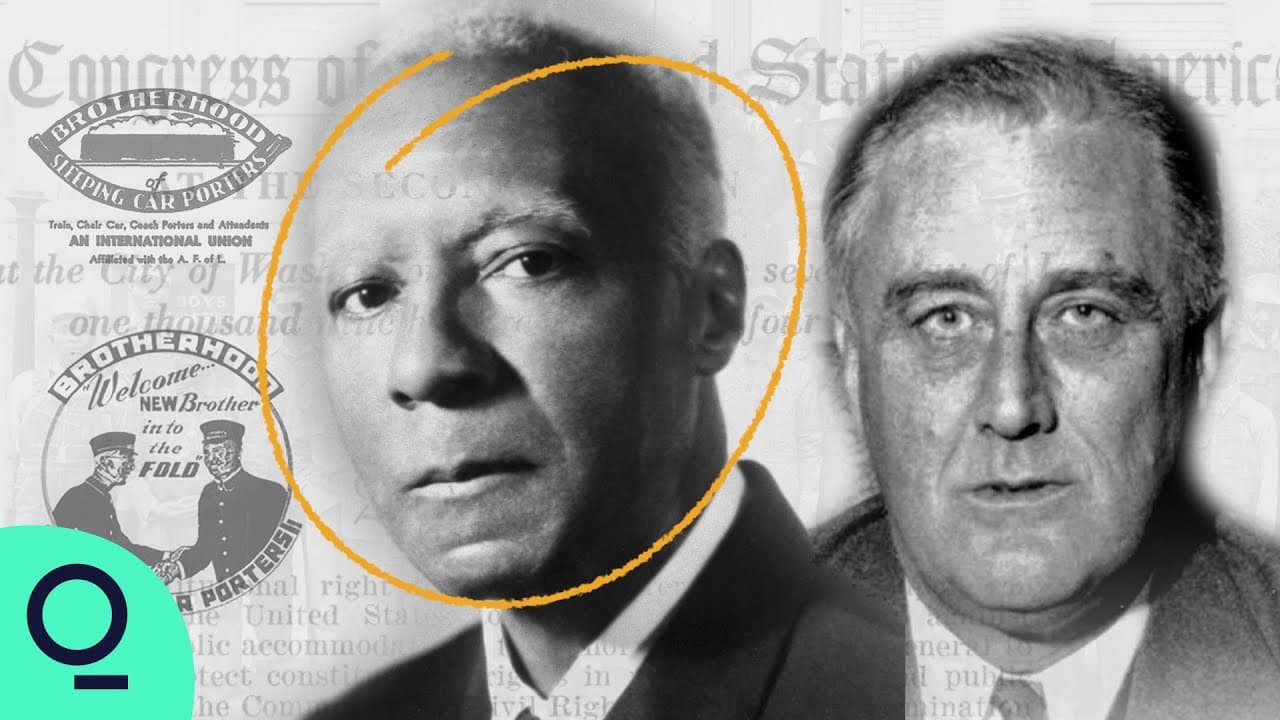
This video explains the story of the March on Washington that almost happened in 1941, led by A. Philip Randolph. It delves into the efforts of Randolph and the Brotherhood of the Sleeping Car Porters to mobilize a hundred thousand Black Americans to demand fair employment practices, highlighting the early civil rights struggles that paved the way for future victories.
Transcript
Peaceable assembly is the cornerstone to the ongoing fight for equal rights. And in America, we look towards the Civil Rights Movement of the 1950s and '60s as our primary model. "It all started when Mrs. Rosa Parks wouldn't give up her seat on the bus to a white man." "This is rehearsal, man getting to know their machines." But at the dawn of Worl... Read More
Key Insights
- The video highlights the significance of peaceable assembly in the fight for equal rights, using the Civil Rights Movement as a primary model.
- A. Philip Randolph, a prominent leader in the Black Movement, played a crucial role in organizing the 1941 March on Washington that never happened.
- The Brotherhood of the Sleeping Car Porters, the first all-Black union, was instrumental in building a nationwide network that Randolph used to mobilize support.
- Randolph's efforts led to the signing of Executive Order 8802 by President Roosevelt, ensuring fair hiring practices for Black Americans in defense industries.
- Despite not achieving all his demands, Randolph's actions marked a significant early victory for the Civil Rights Movement and inspired future protests.
- The video emphasizes the long-term struggle for civil rights, showing that progress is often achieved through persistent efforts over time.
- A. Philip Randolph's strategies and tactics are timeless and continue to be studied by those organizing for change today.
- The March on Washington in 1941 set the stage for the famous 1963 march and the eventual passing of the Civil Rights Act of 1964.
Install to Summarize YouTube Videos and Get Transcripts
Explore YouTube Video Summarizer or Get YouTube Transcript Extractor
Questions & Answers
Q: What was the main objective of the 1941 March on Washington organized by A. Philip Randolph?
The main objective of the 1941 March on Washington organized by A. Philip Randolph was to protest racial discrimination in defense industries and demand fair employment practices for Black Americans. Randolph aimed to mobilize a hundred thousand Black protestors to pressure the government into ensuring equal job opportunities during a time of national economic growth.
Q: How did A. Philip Randolph manage to organize a large-scale protest without modern communication tools?
A. Philip Randolph effectively organized a large-scale protest by leveraging the extensive network of the Brotherhood of the Sleeping Car Porters. The union's members, who traveled across the country, served as a communication network, distributing information and rallying support among Black communities. This grassroots approach enabled Randolph to mobilize thousands despite the absence of modern communication tools like social media.
Q: What was the outcome of Randolph's planned march, and how did it impact the Civil Rights Movement?
The planned march led by A. Philip Randolph did not take place, but it resulted in a significant victory when President Roosevelt signed Executive Order 8802. This order ensured fair hiring practices for Black Americans in defense industries and established the Fair Employment Practices Commission. This early success marked a critical inflection point in the Civil Rights Movement, demonstrating the power of organized protest.
Q: Who were some of the key figures that supported Randolph's efforts during the 1941 march planning?
Key figures supporting Randolph's efforts included Eleanor Roosevelt, who facilitated a meeting between Randolph and President Roosevelt, and leaders like Walter White of the NAACP and Mary McLeod Bethune, a prominent figure in Black women's organizations. Their support helped Randolph gain the attention of the White House and contributed to the success of his advocacy.
Q: What role did the Brotherhood of the Sleeping Car Porters play in Randolph's civil rights efforts?
The Brotherhood of the Sleeping Car Porters played a crucial role in Randolph's civil rights efforts by providing a nationwide network of Black workers who could disseminate information and rally support. The union's members, who traveled extensively, facilitated communication between isolated Black communities and helped Randolph organize large-scale protests and advocate for better working conditions and equal rights.
Q: How did Randolph's actions in 1941 influence future civil rights events and legislation?
Randolph's actions in 1941 set a precedent for future civil rights events by demonstrating the effectiveness of organized protest. His ability to mobilize support and achieve concessions from the government inspired later movements, including the 1963 March on Washington. His efforts also laid the groundwork for significant legislative achievements, such as the Civil Rights Act of 1964, by highlighting the importance of persistent advocacy.
Q: What were some of the challenges Randolph faced in organizing the 1941 march, and how did he overcome them?
Randolph faced challenges such as the government's initial refusal to address racial discrimination and the logistical difficulties of organizing a large protest without modern communication tools. He overcame these obstacles by leveraging the Brotherhood of the Sleeping Car Porters' network, gaining the support of influential figures like Eleanor Roosevelt, and maintaining a steadfast commitment to his demands, ultimately forcing the government to concede.
Q: In what ways did the 1941 march contribute to the overall progress of the Civil Rights Movement?
The 1941 march contributed to the Civil Rights Movement by achieving a significant policy change with Executive Order 8802, which ensured fair employment practices for Black Americans. This success demonstrated the power of collective action and set a precedent for future protests. It also highlighted the importance of strategic planning and alliances, inspiring subsequent civil rights leaders to adopt similar tactics in their advocacy efforts.
Summary & Key Takeaways
-
The video explores the early civil rights efforts led by A. Philip Randolph, focusing on the 1941 March on Washington that was planned but never took place. Randolph's leadership and the support of the Brotherhood of the Sleeping Car Porters led to significant progress in fair employment practices for Black Americans.
-
A. Philip Randolph's story is a testament to the power of organized protest in the civil rights movement. His ability to mobilize thousands of Black Americans in 1941 forced President Roosevelt to sign an executive order ensuring fair hiring practices, marking a significant early victory.
-
The video underscores the importance of persistence in the civil rights struggle, highlighting how Randolph's early efforts laid the groundwork for future victories, including the famous 1963 March on Washington and the Civil Rights Act of 1964. His legacy continues to inspire modern movements.
Read in Other Languages (beta)
Share This Summary 📚
Summarize YouTube Videos and Get Video Transcripts with 1-Click
Try YouTube Summary with ChatGPT & Claude or YouTube Transcript Generator
Explore More Summaries from Bloomberg Originals 📚





Summarize YouTube Videos and Get Video Transcripts with 1-Click
Try YouTube Summary with ChatGPT & Claude or YouTube Transcript Generator