The Fighter that Broke The Stalemate In the Air - Fokker D.VII I THE GREAT WAR
TL;DR
The Fokker D.VII was pivotal in WWI and post-war aviation.
Transcript
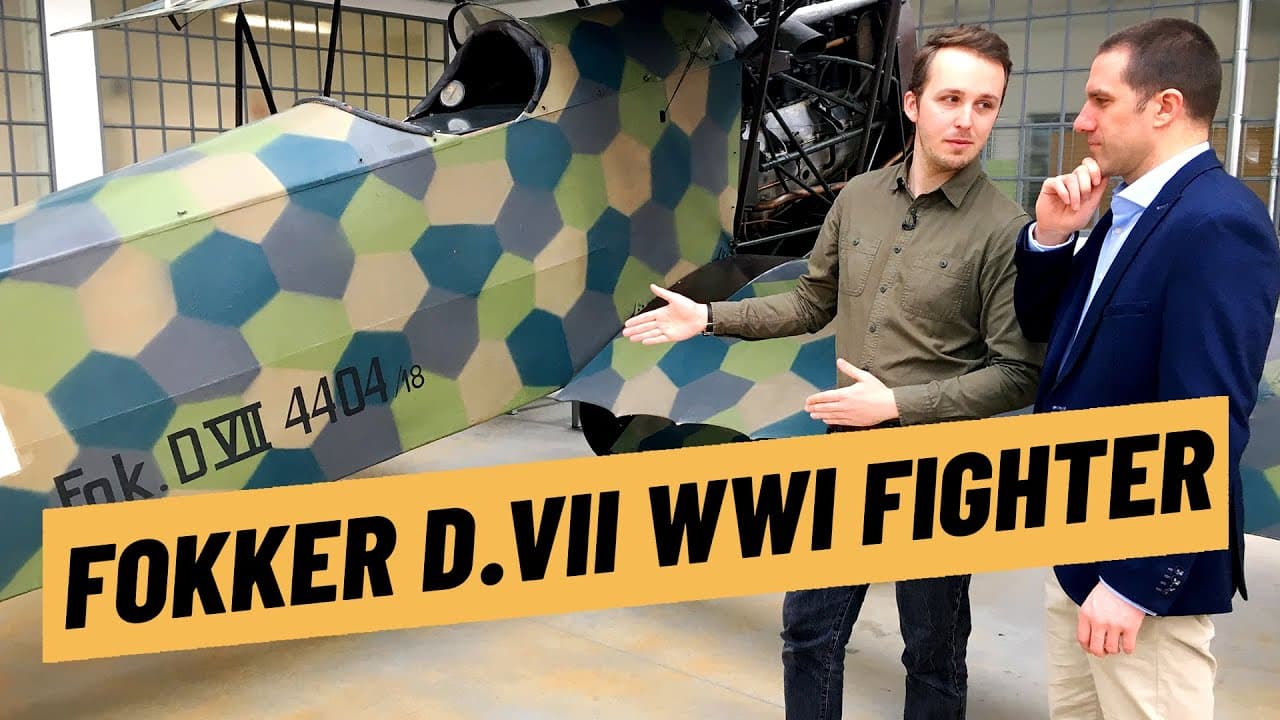
hi Everybody this is Jess I'm here with Chris from military aviation history and we are just outside Munich at the German air Museum in schheim and we are standing in front of a fker D7 which was an extremely important aircraft in the latter stages of the First World War so Chris why don't you tell us a bit about why this aircraft this model in par... Read More
Key Insights
- The Fokker D.VII was a crucial aircraft for Germany in WWI, introduced in 1918, and known for its impressive performance.
- Despite its unassuming appearance, the Fokker D.VII had excellent flying characteristics and was a formidable fighter aircraft.
- The aircraft was initially powered by a Mercedes engine, later upgraded to a BMW engine, enhancing its altitude performance.
- The Fokker D.VII was notably mentioned in the armistice agreements, highlighting its significance to the Allies.
- Post-WWI, the Fokker D.VII was used by various air forces, including Poland, the Soviet Union, and Hungary, in subsequent conflicts.
- Many Fokker D.VIIs were taken to Western countries as trophies or for testing, with some receiving modifications like the Liberty engine.
- Anthony Fokker smuggled several aircraft to the Netherlands, contributing to their preservation in museums today.
- The Fokker D.VII remains a subject of interest in aviation history, with ongoing research and exhibitions dedicated to its legacy.
Install to Summarize YouTube Videos and Get Transcripts
Explore YouTube Video Summarizer or Get YouTube Transcript Extractor
Questions & Answers
Q: What made the Fokker D.VII an important aircraft in WWI?
The Fokker D.VII was crucial due to its advanced flying capabilities and superior performance at high altitudes, thanks to its upgraded BMW engine. It was introduced in 1918 and played a significant role by challenging Allied aircraft, becoming a formidable opponent in the skies during the latter part of WWI.
Q: How did the engine upgrade impact the Fokker D.VII's performance?
The engine upgrade from a Mercedes to a BMW engine significantly improved the Fokker D.VII's performance, especially at higher altitudes. This upgrade provided the aircraft with more power and efficiency, making it a superior fighter compared to its predecessors and contributing to its reputation as a game-changer in aerial combat.
Q: Why was the Fokker D.VII mentioned in armistice agreements?
The Fokker D.VII was specifically mentioned in armistice agreements due to its impact in aerial warfare and the threat it posed to the Allies. Its mention highlighted the Allies' desire to neutralize its advantage by demanding its surrender, underscoring its significance as a powerful tool in the German arsenal during WWI.
Q: How was the Fokker D.VII used after WWI?
After WWI, the Fokker D.VII continued to see action in various conflicts, including the Polish-Soviet War and the Hungarian-Romanian War. It was utilized by multiple countries, either captured or purchased, and served as both a combat aircraft and a subject for testing and modification in nations like the United States.
Q: What role did Anthony Fokker play in preserving the D.VII?
Anthony Fokker played a crucial role in preserving the D.VII by smuggling several aircraft to the Netherlands after the war. This clandestine operation ensured that many D.VIIs survived the post-war scrapping and destruction, allowing them to be displayed in museums and studied by aviation enthusiasts today.
Q: What was the significance of the D.VII's armament?
The Fokker D.VII's armament consisted of two synchronized machine guns, which allowed it to fire through the propeller without damaging it. This standard armament configuration provided it with effective firepower in dogfights, making it a formidable adversary in the skies during WWI.
Q: How did the Fokker D.VII influence post-war aviation?
The Fokker D.VII influenced post-war aviation by serving as a benchmark for fighter aircraft performance. Its design and capabilities inspired further developments in aviation technology, and its use in various post-war conflicts demonstrated its adaptability and enduring relevance in aerial combat scenarios.
Q: What can viewers expect from the upcoming episode on the Fokker D.VII?
Viewers can look forward to an in-depth exploration of the Fokker D.VII in the upcoming episode on the Military Aviation History channel. The episode will delve into the aircraft's history, design features, and operational impact, providing aviation enthusiasts with detailed insights and visual documentation of this iconic fighter.
Summary & Key Takeaways
-
The Fokker D.VII was a significant German fighter aircraft introduced in 1918, known for its exceptional performance and pivotal role during the latter stages of WWI.
-
Equipped with a powerful BMW engine, the Fokker D.VII excelled at high altitudes, surprising Allied forces with its capabilities and becoming a sought-after aircraft post-war.
-
Post-armistice, the Fokker D.VII was used by various countries, including Poland and the Soviet Union, and many were preserved as trophies or for testing in Western nations.
Read in Other Languages (beta)
Share This Summary 📚
Summarize YouTube Videos and Get Video Transcripts with 1-Click
Try YouTube Summary with ChatGPT & Claude or YouTube Transcript Generator
Explore More Summaries from The Great War 📚




Summarize YouTube Videos and Get Video Transcripts with 1-Click
Try YouTube Summary with ChatGPT & Claude or YouTube Transcript Generator