Disney Files Landmark Case Against AI Image Generator
TL;DR
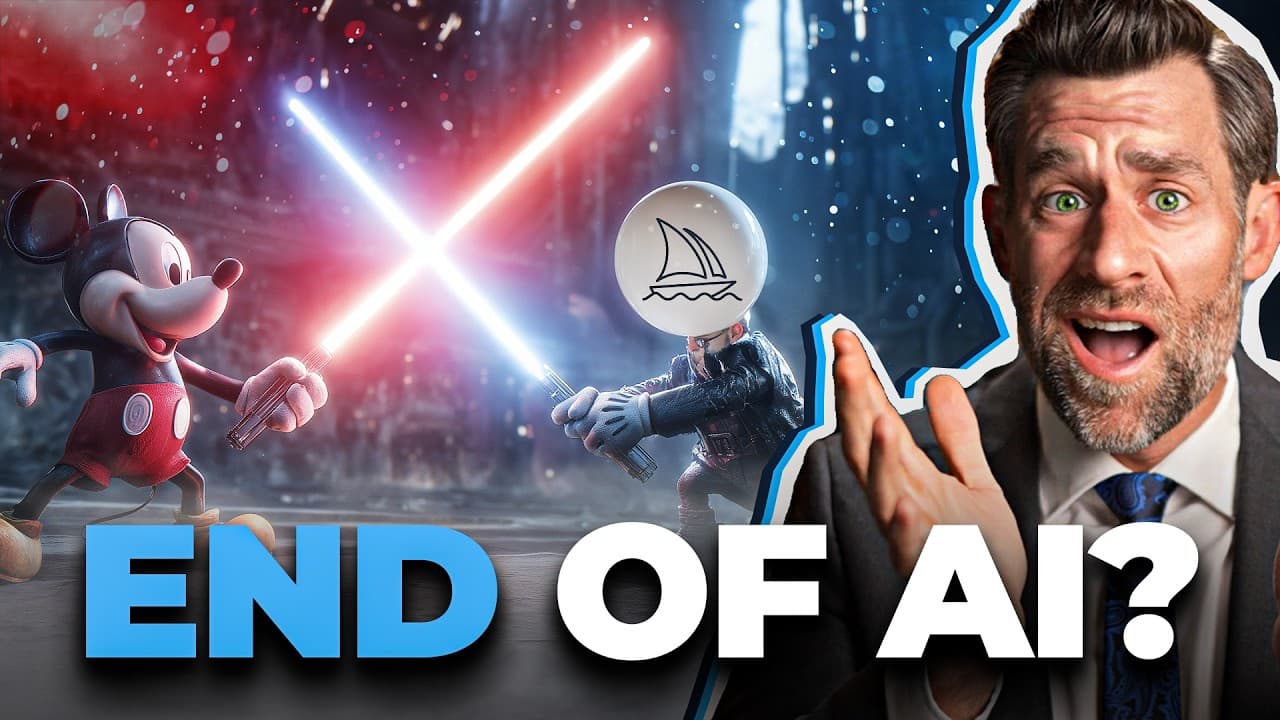
This video explains the landmark lawsuit filed by Disney and Universal against Midjourney AI for copyright infringement. The video covers the legal implications of AI-generated content, focusing on the boundaries of fair use and the potential impact on the entertainment industry's intellectual property rights. It offers a deep dive into the legal arguments and defenses involved, highlighting the stakes for both the plaintiffs and the AI company.
Transcript
Well, you mess with the mouse and you get the horns. Mickey, Shrek, Elsa, Frankenstein's monster, Iron Man, the Minions. These universally recognized characters have joined forces to take on a digital pirate more dangerous than Jack Sparrow. Midjourney AI. This is the entertainment industry's version of the Avengers Assembling. But it's Disney vers... Read More
Key Insights
- Disney and Universal have filed a lawsuit against Midjourney AI, accusing it of direct and secondary copyright infringement by generating images of their iconic characters without permission.
- The lawsuit challenges the boundaries of fair use and derivative works, questioning whether AI companies can legally profit from using copyrighted content for training and generating outputs.
- Midjourney is accused of systematically exploiting copyrighted works, acting as a 'virtual vending machine' that reproduces famous characters like Elsa, Iron Man, and the Minions on demand.
- The plaintiffs argue that Midjourney's business model relies on reproducing their copyrighted works, leading to substantial financial gain without proper licensing or compensation.
- The case emphasizes the need for legal clarity on AI-generated content, as current laws struggle to address the complexities of new technology and its impact on copyright protection.
- Midjourney's defense is likely to focus on fair use, claiming that its service is transformative and does not directly copy images but generates new works based on user prompts.
- The lawsuit highlights the entertainment industry's significant investment in creating iconic characters, stressing that Midjourney's infringement is willful and harmful to their market.
- The outcome of this case could set a precedent for future AI-related copyright disputes, potentially reshaping the legal landscape for generative AI and intellectual property rights.
Install to Summarize YouTube Videos and Get Transcripts
Explore YouTube Video Summarizer or Get YouTube Transcript Extractor
Questions & Answers
Q: What is the main legal issue in the lawsuit against Midjourney AI?
The main legal issue in the lawsuit against Midjourney AI is copyright infringement. Disney and Universal accuse Midjourney of using their copyrighted characters without permission, challenging the boundaries of fair use and derivative works in the context of AI-generated content. The outcome could impact how AI companies use copyrighted material.
Q: How does Midjourney allegedly infringe on Disney and Universal's copyrights?
Midjourney allegedly infringes on Disney and Universal's copyrights by generating images of their iconic characters, such as Elsa and Iron Man, without proper licensing or compensation. The company is accused of systematically exploiting copyrighted works, acting as a 'virtual vending machine' that reproduces these characters on demand, leading to substantial financial gain.
Q: What is Midjourney's likely defense against the copyright infringement claims?
Midjourney's likely defense against the copyright infringement claims is the fair use doctrine. The company may argue that its service is transformative, meaning it changes or adds something new to the original material, and that it does not directly copy images but generates new works based on user prompts. This defense will be crucial in determining the case's outcome.
Q: Why is this lawsuit significant for the entertainment industry?
This lawsuit is significant for the entertainment industry because it challenges the legal boundaries of AI-generated content and copyright protection. Disney and Universal stress that they have invested billions in creating iconic characters, and Midjourney's alleged infringement could undermine their market and licensing business. The case could set a precedent for future AI-related copyright disputes.
Q: What are the potential outcomes of the lawsuit against Midjourney?
The potential outcomes of the lawsuit against Midjourney include a court ruling that could redefine fair use and copyright laws for AI-generated content. The case could end in a settlement, with Midjourney possibly agreeing to pay licensing fees. Alternatively, a court decision could lead to stricter regulations on how AI companies use copyrighted material, impacting the future of AI technology.
Q: How does the lawsuit address Midjourney's business model?
The lawsuit addresses Midjourney's business model by claiming it relies on reproducing copyrighted works for profit without proper licensing. Disney and Universal argue that Midjourney's economic success is built on the unlicensed use of their popular characters, and that the company's infringement is calculated and willful, harming the entertainment industry's market.
Q: What role does fair use play in this legal battle?
Fair use plays a central role in this legal battle as it is Midjourney's primary defense against the copyright infringement claims. The court will examine factors such as the purpose and character of the use, the nature of the copyrighted work, the amount used, and the effect on the market. The outcome will hinge on whether Midjourney's use is deemed transformative and non-competitive with the original works.
Q: How might this case impact the future of AI technology?
This case might impact the future of AI technology by setting a legal precedent for how AI companies can use copyrighted material. A decision against Midjourney could lead to stricter regulations and licensing requirements, affecting the development and use of generative AI. Conversely, a ruling in favor of Midjourney could encourage broader use of AI technologies in creative fields, but with potential risks to intellectual property rights.
Summary & Key Takeaways
-
Disney and Universal have sued Midjourney AI for copyright infringement, accusing it of generating images of their characters like Elsa and Iron Man without permission. This legal battle could redefine the boundaries of fair use and derivative works in the context of AI-generated content.
-
The lawsuit claims Midjourney's business model depends on reproducing copyrighted works, leading to substantial profits without proper licensing. Plaintiffs argue that the AI company's actions are willful and harmful to the entertainment industry's market for its iconic characters.
-
Midjourney's defense will likely focus on fair use, arguing that its service is transformative and does not directly copy images. The case highlights the need for legal clarity on AI-generated content, as current laws struggle to address the complexities of new technology and copyright protection.
Read in Other Languages (beta)
Share This Summary 📚
Summarize YouTube Videos and Get Video Transcripts with 1-Click
Try YouTube Summary with ChatGPT & Claude or YouTube Transcript Generator
Explore More Summaries from LegalEagle 📚
Summarize YouTube Videos and Get Video Transcripts with 1-Click
Try YouTube Summary with ChatGPT & Claude or YouTube Transcript Generator