Products
Features
YouTube Video Summarizer
Summarize YouTube videos
Web & PDF Highlighter
Highlight web pages & PDFs
Chat with PDF
Ask any PDF questions with AI
Ask AI Clone
Chat with your highlights & memories
Audio Transcriber
Transcribe audio files to text
Glasp Reader
Read and highlight articles
Kindle Highlight Export
Export your Kindle highlights
Idea Hatch
Hatch ideas from your highlights
Integrations
Obsidian Plugin
Notion Integration
Pocket Integration
Instapaper Integration
Medium Integration
Readwise Integration
Snipd Integration
Hypothesis Integration
Apps & Extensions
Chrome Extension
Safari Extension
Edge Add-ons
Firefox Add-ons
iOS App
Android App
Discover
Discover
Ideas
Discover new ideas and insights
Articles
Curated articles and insights
Books
Book recommendations by great minds
Posts
Essays and notes from readers
Quotes
Inspiring quotes collection
Videos
Curated videos and summaries
Explore Glasp
Glasp Newsletter
Weekly insights and updates
Glasp Talk
Interview series with great minds
Glasp Blog
Latest news and articles
Glasp Use Cases
Learn how others use Glasp
Build & Support
Glasp API
Access Glasp's API for developers
MCP Connector
Connect Glasp to Claude & ChatGPT
Community
Glasp Reddit Community
Students
Student discount and benefits
FAQs
Frequently Asked Questions
AboutPricing
DashboardLog inSign up

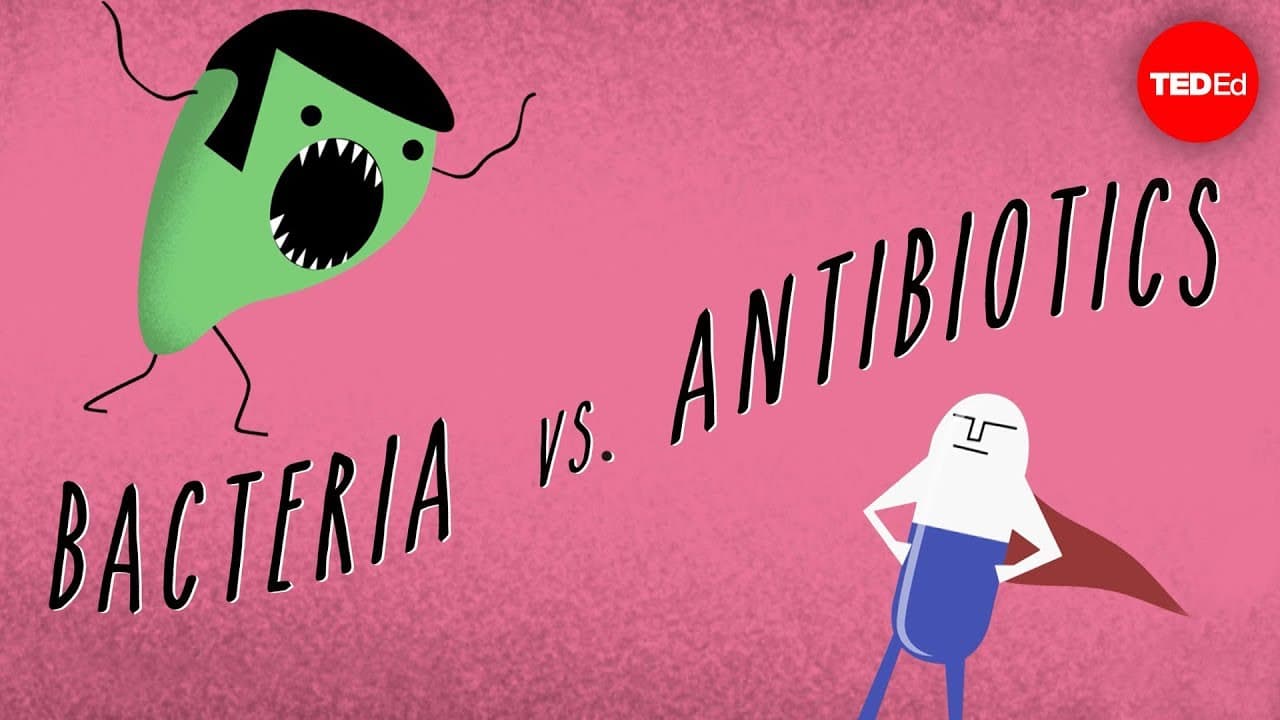
What causes antibiotic resistance? - Kevin Wu
3.7M views
•
August 7, 2014
by
TED-Ed
YouTube video player
What causes antibiotic resistance? - Kevin Wu

TL;DR

Bacteria are evolving resistance to antibiotics, leading to dangerous superbugs.

Transcript

What if I told you there were trillions of tiny bacteria all around you? It's true. Microorganisms called bacteria were some of the first life forms to appear on Earth. Though they consist of only a single cell, their total biomass is greater than that of all plants and animals combined. And they live virtually everywhere: on the ground, in the wat... Read More

Key Insights

  • ❓ Bacteria are prevalent and can be beneficial or harmful to humans.
  • 😚 Antibiotics have been essential in treating bacterial infections but are losing effectiveness due to resistance.
  • 🥦 Superbugs like MRSA and E. coli have evolved resistance mechanisms that make them difficult to treat.
  • 👨‍🔬 Scientists are actively researching new treatments and preventive measures to address the rise of superbugs.
  • 😒 Responsible antibiotic use and hygiene practices are crucial in preventing the further spread of antibiotic resistance.
  • ❓ Collaborative efforts between individuals, healthcare providers, and researchers are essential in combating superbugs.
  • ❓ The World Health Organization has prioritized the development of novel treatments in response to the threat of antibiotic-resistant bacteria.

Install to Summarize YouTube Videos and Get Transcripts

Explore YouTube Video Summarizer or Get YouTube Transcript Extractor

Questions & Answers

Q: How do bacteria develop resistance to antibiotics?

Bacteria undergo mutations that allow them to survive antibiotic exposure, passing on resistant genes to offspring, leading to the development of superbugs.

Q: Why are superbugs a growing concern in healthcare?

Superbugs like MRSA and E. coli have evolved to resist multiple antibiotics, making infections harder to treat and increasing the risk of deadly epidemics.

Q: What measures are being taken to combat superbugs?

Scientists are developing new antibiotics, exploring alternative treatments like phage therapy, and promoting responsible antibiotic use to prevent the spread of resistance.

Q: How can individuals contribute to combating superbugs?

By following medical advice on antibiotic use, practicing good hygiene, and supporting research for new treatments, individuals can help slow down the spread of superbugs.

Summary & Key Takeaways

  • Bacteria, some of the earliest life forms on Earth, thrive everywhere and can be beneficial or harmful.

  • Antibiotics have been effective in treating bacterial infections but are becoming less so due to bacteria developing resistance.

  • Scientists are researching new treatments and strategies to combat the rise of superbugs.


Read in Other Languages (beta)

English

Share This Summary 📚

Summarize YouTube Videos and Get Video Transcripts with 1-Click

Download browser extensions on:

Try YouTube Summary with ChatGPT & Claude or YouTube Transcript Generator

Explore More Summaries from TED-Ed 📚
Cannibalism in the animal kingdom - Bill Schutt thumbnail
Cannibalism in the animal kingdom - Bill Schutt
TED-Ed
What makes something "Kafkaesque"? - Noah Tavlin thumbnail
What makes something "Kafkaesque"? - Noah Tavlin
TED-Ed
The fascinating history of cemeteries - Keith Eggener thumbnail
The fascinating history of cemeteries - Keith Eggener
TED-Ed
Why sitting is bad for you - Murat Dalkilinç thumbnail
Why sitting is bad for you - Murat Dalkilinç
TED-Ed
The myth of Prometheus - Iseult Gillespie thumbnail
The myth of Prometheus - Iseult Gillespie
TED-Ed
Why do people join cults? - Janja Lalich thumbnail
Why do people join cults? - Janja Lalich
TED-Ed

Summarize YouTube Videos and Get Video Transcripts with 1-Click

Download browser extensions on:

Try YouTube Summary with ChatGPT & Claude or YouTube Transcript Generator

Apps & Extensions

  • Chrome Extension
  • Safari Extension
  • Edge Add-ons
  • Firefox Add-ons
  • iOS App
  • Android App

Key Features

  • YouTube Video Summarizer
  • Web & PDF Summarizer
  • Web & PDF Highlighter
  • Chat with PDF
  • Ask AI Clone
  • Audio Transcriber
  • Glasp Reader
  • Kindle Highlight Export
  • Idea Hatch

Integrations

  • Obsidian Plugin
  • Notion Integration
  • Pocket Integration
  • Instapaper Integration
  • Medium Integration
  • Readwise Integration
  • Snipd Integration
  • Hypothesis Integration

More Features

  • APIs
  • MCP Connector
  • Blog & Post
  • Embed Links
  • Image Highlight
  • Personality Test
  • Quote Shots

Company

  • About us
  • Blog
  • Community
  • FAQs
  • Job Board
  • Newsletter
  • Pricing
Terms

•

Privacy

•

Guidelines

© 2026 Glasp Inc. All rights reserved.