What Are the Foundations of Deep Learning?
TL;DR
The foundations of deep learning include feedforward neural networks which process input through multiple hidden layers using activation functions. Training involves optimizing parameters via backpropagation and stochastic gradient descent. Key advancements in the field, such as dropout and batch normalization, help mitigate issues like overfitting and vanishing gradients.
Transcript
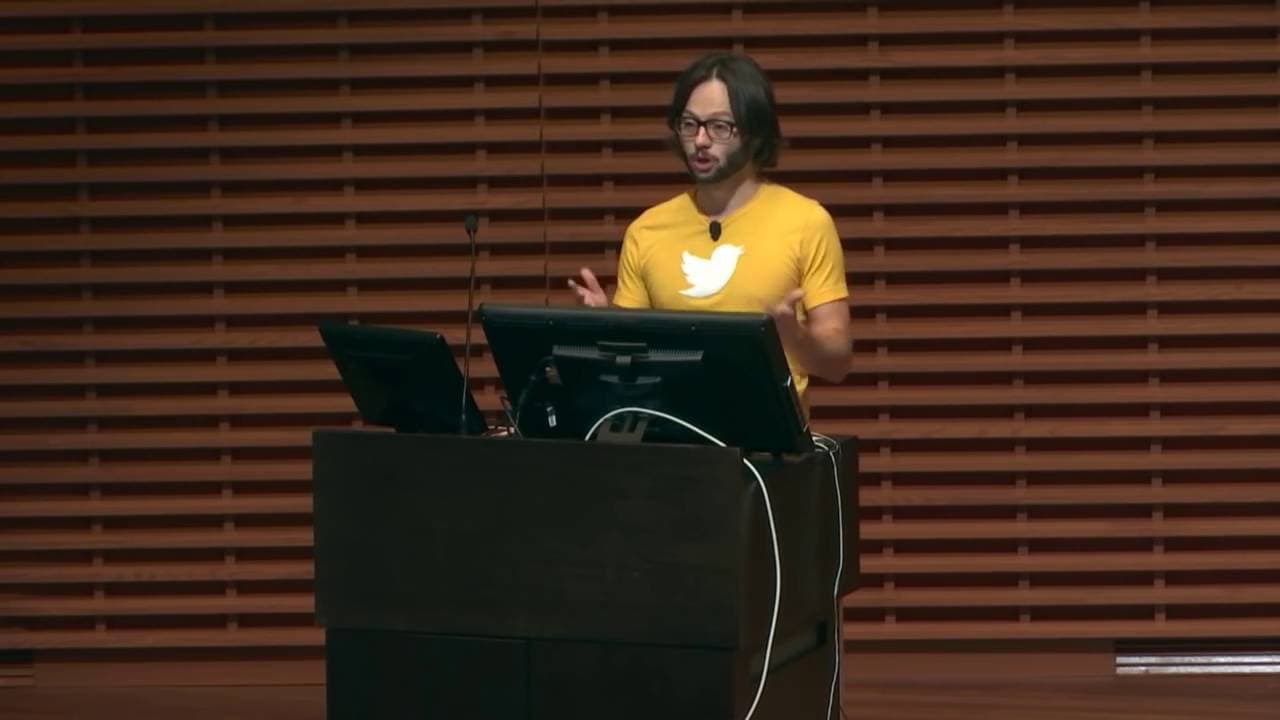
that's good all right cool so yes I was asked to give this presentation on the foundations of deep learning which is mostly going over basic feed-forward neural networks and motivating a little bit deep learning and some of the more recent developments and and some of the topics that you'll see across the next two days so I as Andrew mentioned I ha... Read More
Key Insights
- 🤱 Feed-forward neural networks process input data to produce outputs through hidden layers and activation functions.
- 🚂 Training neural networks involves optimizing parameters through backpropagation using stochastic gradient descent.
- ❓ Recent developments in deep learning, like dropout and batch normalization, address challenges such as overfitting and vanishing gradients.
Install to Summarize YouTube Videos and Get Transcripts
Explore YouTube Video Summarizer or Get YouTube Transcript Extractor
Questions & Answers
Q: Why is batch normalization important in deep learning?
Batch normalization helps to normalize pre-activations during training by computing means and standard deviations in mini-batches, leading to faster and more stable optimization.
Q: How does dropout regularization work in neural networks?
Dropout randomly removes hidden units during training to prevent overfitting by making each unit less reliant on co-adapted units, thus encouraging more generalized feature learning.
Q: What are the challenges of training deep neural networks?
Challenges include vanishing gradients, which hinder optimization of lower layers, and overfitting due to an excessive number of parameters and lack of generalization.
Q: How does the rectified linear activation function promote sparsity in neural networks?
The rectified linear activation function introduces sparsity by setting negative pre-activations to zero, leading to sparse activations and potentially enhancing feature selection.
Summary & Key Takeaways
-
Introduction to feed-forward neural networks in deep learning, including notation and activation functions.
-
Explanation of training neural networks, including loss functions, backpropagation, and optimization techniques.
-
Discussion of recent developments like dropout, batch normalization, and unsupervised pre-training in deep learning.
Read in Other Languages (beta)
Share This Summary 📚
Summarize YouTube Videos and Get Video Transcripts with 1-Click
Try YouTube Summary with ChatGPT & Claude or YouTube Transcript Generator
Explore More Summaries from Lex Fridman 📚





Summarize YouTube Videos and Get Video Transcripts with 1-Click
Try YouTube Summary with ChatGPT & Claude or YouTube Transcript Generator