What is Air Lock?
TL;DR
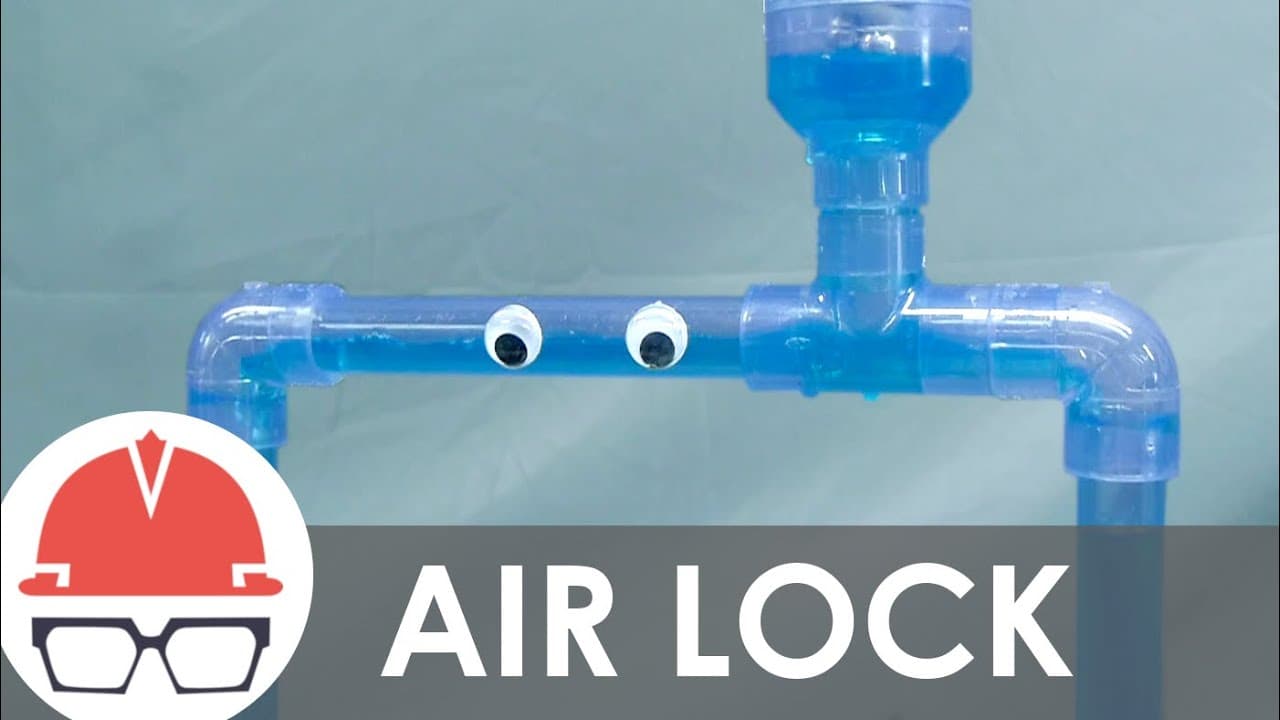
Air lock constricts flow in pipelines by trapping gas.
Transcript
Engineering nearly always involves assumptions and simplifications there are just too many variables in the real world to keep track of them all so we simplify we neglect the variables that don't matter and we make assumptions about the variables we can't measure or predict but what happens when one of those assumptions is wrong one of the most bas... Read More
Key Insights
- Air lock occurs when gas is trapped in pipelines, constricting flow and reducing efficiency. This is a common issue in engineering that must be addressed.
- Gases can enter pipelines through dissolved air in liquids, leaks in the system, or simply because pipes are initially filled with air.
- High spots in pipelines, such as those caused by natural contours or design constraints, are common places for gas to be trapped.
- Air trapped in pipes takes up space that could otherwise be used for fluid flow, acting like a constriction and reducing the overall flow rate.
- Engineers use the hydraulic grade line to visualize energy loss in pipelines, which can be exacerbated by air lock, leading to reduced flow or even no flow.
- Solutions to air lock include using larger pumps, designing pipelines to avoid trapping air, and installing automatic air release valves.
- Automatic air release valves work by venting trapped air from high points in the pipeline without human intervention, using a float mechanism.
- Making incorrect assumptions about gas in pipelines can lead to poor design and functionality, highlighting the importance of understanding air lock in engineering.
Install to Summarize YouTube Videos and Get Transcripts
Explore YouTube Video Summarizer or Get YouTube Transcript Extractor
Questions & Answers
Q: What is air lock in pipelines?
Air lock is a condition in pipelines where trapped gas constricts the flow of fluid. This occurs because the gas takes up space that could otherwise be occupied by the fluid, reducing the overall flow rate and efficiency of the pipeline system.
Q: How does gas get trapped in pipelines?
Gas can get trapped in pipelines due to several factors. It can enter through dissolved gases in the fluid, leaks in the system, or because the pipe was initially filled with air. High spots in the pipeline, often unavoidable due to design constraints, are common places for gas to be trapped.
Q: What are the effects of air lock on pipeline flow?
Air lock reduces the cross-sectional area available for fluid flow, acting like a constriction in the pipeline. This leads to a decrease in flow rate and can cause significant energy losses. In severe cases, it can prevent any flow from occurring if the hydraulic grade line drops below the outlet.
Q: What solutions exist for managing air lock in pipelines?
Solutions for managing air lock include using larger pumps to overcome energy losses, designing pipelines to avoid high spots where gas can be trapped, and installing automatic air release valves. These valves vent trapped gas from the pipeline without needing manual intervention.
Q: How do automatic air release valves work?
Automatic air release valves work by using a float mechanism. When there is no air in the pipe, the float keeps the valve closed. However, when a significant air bubble forms, the float acts as a weight, opening the valve and allowing the trapped air to escape, maintaining pipeline efficiency.
Q: Why is understanding air lock important for engineers?
Understanding air lock is crucial for engineers because it affects the efficiency and functionality of pipeline systems. Incorrect assumptions about gas in pipelines can lead to poor design and operational issues. Addressing air lock through proper design and solutions ensures reliable and efficient pipeline operation.
Q: What role does the hydraulic grade line play in understanding air lock?
The hydraulic grade line is a graphical tool used by engineers to visualize the potential energy available in the fluid at any point along a pipeline. It helps identify energy losses due to factors like friction, turbulence, and air lock, allowing engineers to design more efficient systems.
Q: Can air lock be completely avoided in pipeline design?
While it is challenging to completely avoid air lock, especially in complex pipeline systems, engineers can minimize its impact through careful design. This includes avoiding high spots, ensuring fast fluid flow to expel trapped air, and using automatic air release valves to manage any trapped gas efficiently.
Summary & Key Takeaways
-
Air lock is a common issue in fluid pipelines, caused by trapped gas that constricts flow. Engineers must consider this when designing pipelines to ensure efficiency and functionality.
-
Gases enter pipelines through various means, including dissolved air in liquids and leaks. High spots in pipelines are susceptible to trapping this gas, leading to reduced flow rates.
-
Solutions to air lock include larger pumps, better pipeline design, and automatic air release valves. Understanding and addressing air lock is crucial for effective engineering.
Read in Other Languages (beta)
Share This Summary 📚
Summarize YouTube Videos and Get Video Transcripts with 1-Click
Try YouTube Summary with ChatGPT & Claude or YouTube Transcript Generator
Explore More Summaries from Practical Engineering 📚





Summarize YouTube Videos and Get Video Transcripts with 1-Click
Try YouTube Summary with ChatGPT & Claude or YouTube Transcript Generator