The Economic Policy Differences Between Clinton and Trump
TL;DR
Clinton and Trump present contrasting economic plans impacting growth and regulation.
Transcript
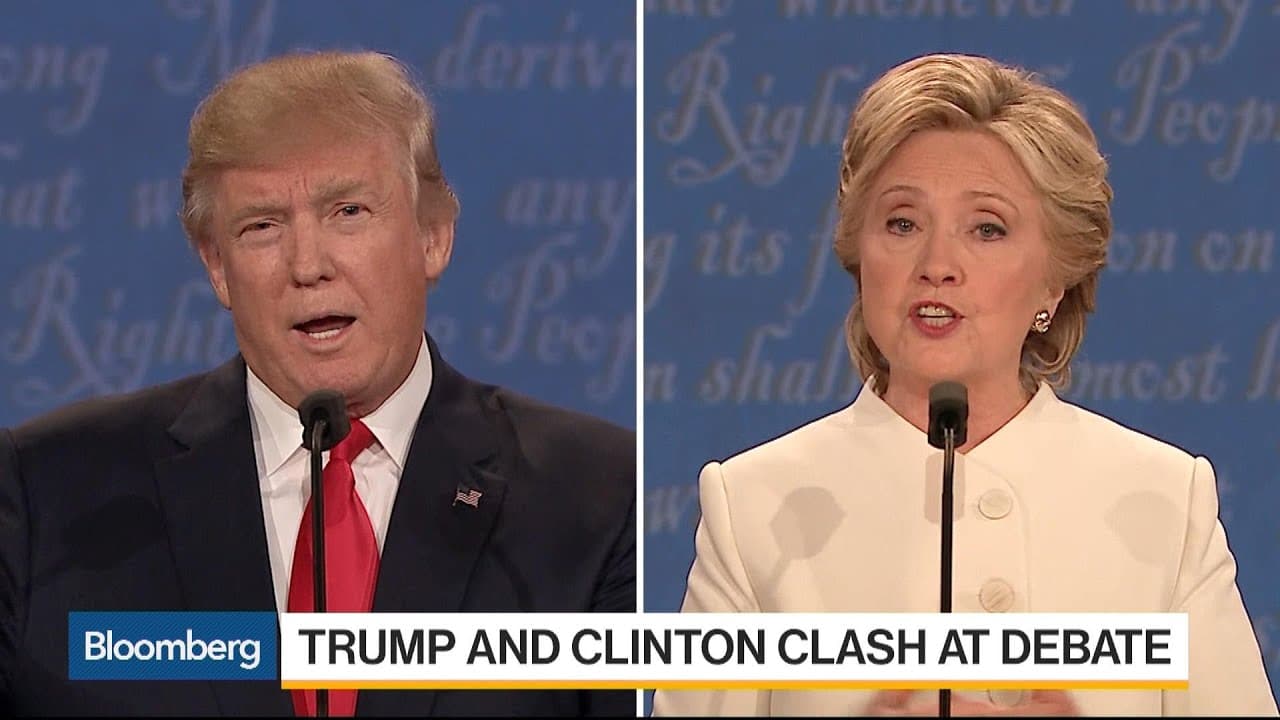
we have a morning must watch today and for we turn to Las Vegas and that dramatic debate between the two principal candidates for president most of the headlines this morning about the pyrotechnics but in truth there was a fair amount of substance address by both Hillary Clinton and Donald Trump for example mr. Trump had an extended discussion with... Read More
Key Insights
- The debate highlighted stark differences in economic policies between Clinton and Trump, focusing on growth and regulation.
- Trump's plan involves significant deficit spending and tax cuts, potentially boosting short-term growth but risking long-term job loss.
- Clinton's approach includes tax increases and spending cuts, potentially slowing short-term growth but increasing long-term GDP.
- Experts are divided on Trump's economic plan due to its lack of detail and assumptions about trade impacts.
- Trump's views on trade are criticized for being zero-sum, ignoring the benefits of imports and exports in a global economy.
- The U.S. growth rate, slower than emerging markets, is attributed to recovering from a financial recession, unlike China or India.
- Trump proposes deregulation as a growth strategy, but lacks specifics on which regulations to cut and their economic impacts.
- Balancing regulation cuts involves trade-offs, such as potential business losses in sectors like environmental compliance.
Install to Summarize YouTube Videos and Get Transcripts
Explore YouTube Video Summarizer or Get YouTube Transcript Extractor
Questions & Answers
Q: What are the key differences in economic policies between Clinton and Trump?
Clinton and Trump have contrasting economic policies. Trump focuses on significant tax cuts and deregulation, aiming for short-term growth through deficit spending. Clinton proposes tax increases and spending cuts, prioritizing long-term economic stability. These differing approaches reflect their broader economic philosophies, with Trump favoring immediate stimulation and Clinton advocating for sustainable growth.
Q: How do experts view Trump's economic plan?
Experts have mixed views on Trump's economic plan due to its lack of detail and reliance on assumptions. While some believe it could boost short-term growth through deficit spending, others warn of potential long-term job losses and economic contraction. The plan's ambiguity, particularly regarding trade and regulation, complicates accurate predictions.
Q: What is the impact of Trump's trade views on his economic plan?
Trump's trade views, characterized by a zero-sum perspective, could negatively impact his economic plan. He criticizes trade deficits and emphasizes tariffs, overlooking the benefits of global trade. This approach could lead to trade tensions and economic isolation, undermining potential growth and complicating international economic relationships.
Q: Why is the U.S. growth rate slower compared to emerging markets?
The U.S. growth rate is slower than emerging markets due to recovering from a financial recession, which typically results in prolonged economic sluggishness. Emerging markets like China and India experience higher growth rates because they are developing from a lower economic base, making percentage increases appear more significant compared to the mature U.S. economy.
Q: What are the challenges of evaluating Trump's economic proposals?
Evaluating Trump's economic proposals is challenging due to their lack of detail and reliance on broad assumptions. The absence of specific plans, particularly in tax policy and regulation, leaves economists guessing about potential impacts. This uncertainty makes it difficult to project long-term outcomes and assess the feasibility of his economic promises.
Q: How does regulation factor into the economic debate between Clinton and Trump?
Regulation is a key point of contention in the economic debate between Clinton and Trump. Trump advocates for deregulation to stimulate growth but lacks specifics on which regulations to cut. Clinton, on the other hand, does not prioritize deregulation, focusing instead on maintaining necessary regulatory frameworks to ensure economic stability and compliance.
Q: What are the potential risks of Trump's deregulation plans?
Trump's deregulation plans pose potential risks, including negative impacts on industries reliant on regulatory compliance, such as environmental sectors. Without clear guidelines on which regulations to cut, there is a risk of unintended consequences, including job losses in compliance industries and potential environmental and safety issues, complicating economic assessments.
Q: How do Clinton's economic policies aim for long-term growth?
Clinton's economic policies aim for long-term growth by focusing on tax increases and spending cuts, which are expected to stabilize the economy over time. Her approach emphasizes sustainable development, with an eye on increasing GDP and job creation beyond 2020. This strategy contrasts with Trump's immediate growth focus, prioritizing economic resilience and stability.
Summary & Key Takeaways
-
The debate between Clinton and Trump revealed significant differences in their economic strategies, with Trump advocating for tax cuts and deregulation, while Clinton supports tax increases and spending cuts. Experts suggest Trump's plan might boost short-term growth but harm the economy long-term, whereas Clinton's approach could lead to sustainable growth.
-
Trump's economic plan lacks detailed specifics, making it challenging for economists to accurately predict its outcomes. His approach to trade is seen as zero-sum, ignoring the complexities of global trade dynamics. In contrast, Clinton's plan, though slower in short-term growth, promises a more stable long-term economic trajectory.
-
The discussion also touched on the role of regulation in economic growth, with Trump advocating for cuts without specifying which regulations to target. This raises concerns about potential negative impacts on industries dependent on compliance, highlighting the complexity of balancing growth with regulatory needs.
Read in Other Languages (beta)
Share This Summary 📚
Summarize YouTube Videos and Get Video Transcripts with 1-Click
Try YouTube Summary with ChatGPT & Claude or YouTube Transcript Generator
Explore More Summaries from Bloomberg Originals 📚




Summarize YouTube Videos and Get Video Transcripts with 1-Click
Try YouTube Summary with ChatGPT & Claude or YouTube Transcript Generator