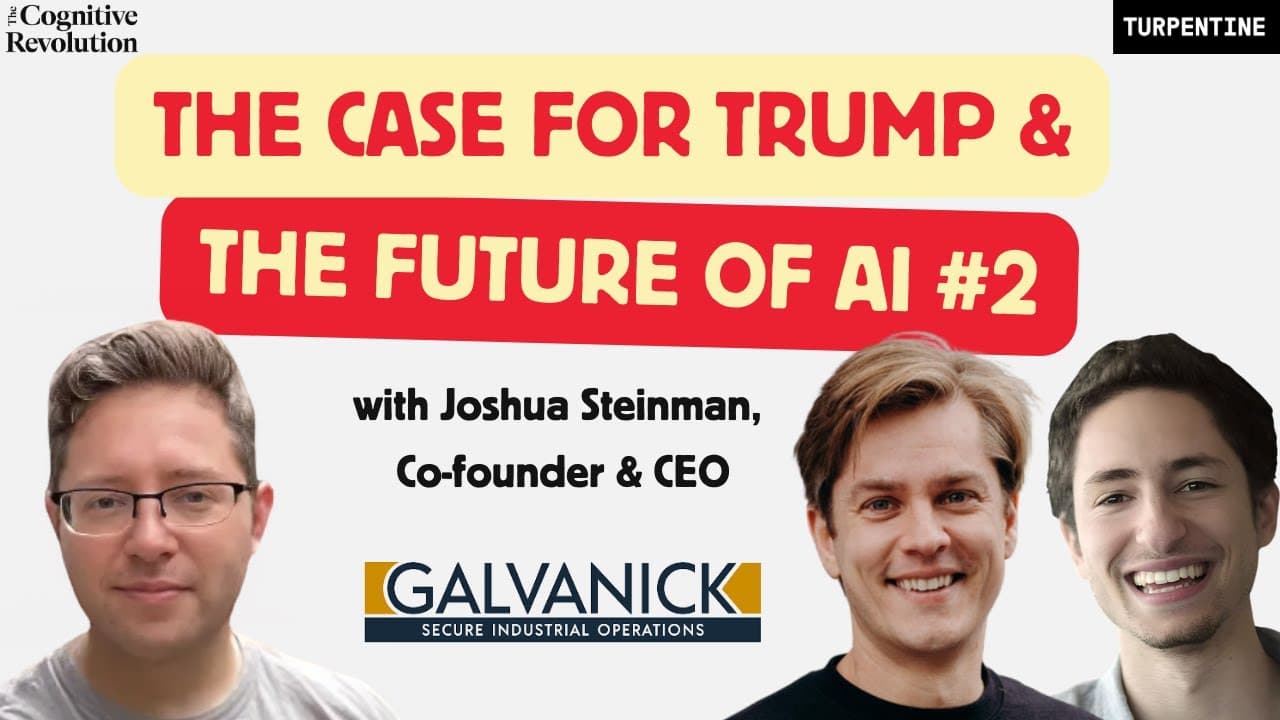
AI Under Trump? The Stakes of 2024 w/ Joshua Steinman [Pt 2 of 2]
TL;DR
In this episode, Nathan explores the potential impact of the 2024 election on AI development, focusing on the cases for and against Trump. He discusses US-China relations, leadership approaches, and the need for a positive-sum mindset in the AI era. Nathan shares his reasons for voting for Kamala Harris, emphasizing the importance of stable leadership during pivotal moments.
Transcript
hello and welcome to the cognitive Revolution where we interview Visionary researchers entrepreneurs and Builders working on the frontier of artificial intelligence each week we'll explore their revolutionary ideas and together we'll build a picture of how AI technology will transform work life and Society in the coming years I'm Nathan lens joined... Read More
Key Insights
- Nathan discusses the importance of stable leadership in the context of AI development and the potential dangers of an AI arms race with China.
- The conversation highlights the differing perspectives on US-China relations, with Nathan advocating for trust-building and collaboration, while Josh emphasizes a more adversarial stance.
- Nathan expresses concerns about the potential for AI to become a destabilizing force if not managed carefully, advocating for a positive-sum approach to technology development.
- Josh shares insights from his experience working with Trump, describing him as a sharp thinker who often looks several steps ahead in strategic discussions.
- The episode explores the media's role in shaping public perceptions of political figures, with Josh arguing that many narratives are misrepresentations of reality.
- The discussion touches on the challenges of managing great power competition and the risks of escalating tensions with China, particularly in the context of AI and technology.
- Nathan argues for a global approach to AI development, emphasizing the importance of avoiding a militarized AI future and seeking cooperative solutions.
- The conversation delves into the complexities of political decision-making, highlighting the influence of economic and security considerations on policy choices.
Install to Summarize YouTube Videos and Get Transcripts
Explore YouTube Video Summarizer or Get YouTube Transcript Extractor
Questions & Answers
Q: What are Nathan's main reasons for not supporting Trump in the upcoming election?
Nathan's main reasons for not supporting Trump include concerns about US-China relations, leadership approach, and the need for a positive-sum mindset in the AI era. He believes that Trump's inclination to escalate tensions with China and prioritize narrow domestic interests over global considerations could lead to unnecessary risks in an increasingly volatile environment.
Q: How does Nathan view the potential impact of AI development on global politics?
Nathan views AI development as a transformative force with the potential to significantly impact global politics. He is concerned about the possibility of an AI arms race with China and advocates for a collaborative approach to AI development. He emphasizes the importance of stable leadership and a positive-sum mindset to ensure AI serves humanity rather than becoming a destabilizing force.
Q: What insights does Joshua Steinman share about working with Trump?
Joshua Steinman shares that he found Trump to be a sharp thinker who often looks several steps ahead in strategic discussions. He describes Trump as a great communicator and highlights the challenges of working in an environment where media narratives often misrepresent reality. Steinman emphasizes the importance of understanding the complexities of political decision-making and the influence of economic and security considerations.
Q: What are the differing perspectives on US-China relations discussed in the episode?
The episode presents differing perspectives on US-China relations. Nathan advocates for trust-building and collaboration to avoid an AI arms race and seeks cooperative solutions. In contrast, Josh emphasizes a more adversarial stance, viewing China as a significant threat and advocating for a strong response to China's actions and policies, particularly in the context of AI and technology.
Q: How does Nathan propose addressing the risks associated with AI development?
Nathan proposes addressing the risks associated with AI development by fostering a collaborative approach and building trust between global powers. He advocates for a positive-sum mindset and emphasizes the importance of stable leadership to navigate the challenges posed by AI. Nathan believes that avoiding a militarized AI future requires cooperative solutions and a focus on ensuring AI benefits all of humanity.
Q: What role does the media play in shaping public perceptions of political figures, according to the episode?
According to the episode, the media plays a significant role in shaping public perceptions of political figures. Josh argues that many media narratives are misrepresentations of reality, influenced by various interests and agendas. He emphasizes the importance of seeking direct sources of information and understanding the complexities of political decision-making beyond media portrayals.
Q: What are the challenges of managing great power competition discussed in the episode?
The episode discusses the challenges of managing great power competition, particularly in the context of US-China relations and AI development. It highlights the risks of escalating tensions and the need for careful management of economic and security considerations. Nathan and Josh present differing views on how to approach these challenges, with Nathan advocating for collaboration and Josh emphasizing a more adversarial stance.
Q: How does the episode explore the complexities of political decision-making?
The episode explores the complexities of political decision-making by highlighting the influence of economic and security considerations on policy choices. It discusses the challenges of managing great power competition and the risks of escalating tensions with China. The conversation also touches on the media's role in shaping public perceptions and the importance of understanding the nuances of political dynamics.
Summary & Key Takeaways
-
Nathan explores the potential impact of the 2024 election on AI development, focusing on the cases for and against Trump. He discusses US-China relations, leadership approaches, and the need for a positive-sum mindset in the AI era. Nathan shares his reasons for voting for Kamala Harris, emphasizing the importance of stable leadership during pivotal moments.
-
The episode features an interview with Joshua Steinman, who shares insights from his experience working with Trump. Steinman describes Trump as a sharp thinker who often looks several steps ahead in strategic discussions. The conversation also touches on the media's role in shaping public perceptions of political figures.
-
The discussion highlights the differing perspectives on US-China relations, with Nathan advocating for trust-building and collaboration, while Josh emphasizes a more adversarial stance. The episode explores the challenges of managing great power competition and the risks of escalating tensions with China, particularly in the context of AI and technology.
Read in Other Languages (beta)
Share This Summary 📚
Summarize YouTube Videos and Get Video Transcripts with 1-Click
Try YouTube Summary with ChatGPT & Claude or YouTube Transcript Generator
Explore More Summaries from Cognitive Revolution "How AI Changes Everything" 📚





Summarize YouTube Videos and Get Video Transcripts with 1-Click
Try YouTube Summary with ChatGPT & Claude or YouTube Transcript Generator