How the WHO Came Under Fire
TL;DR
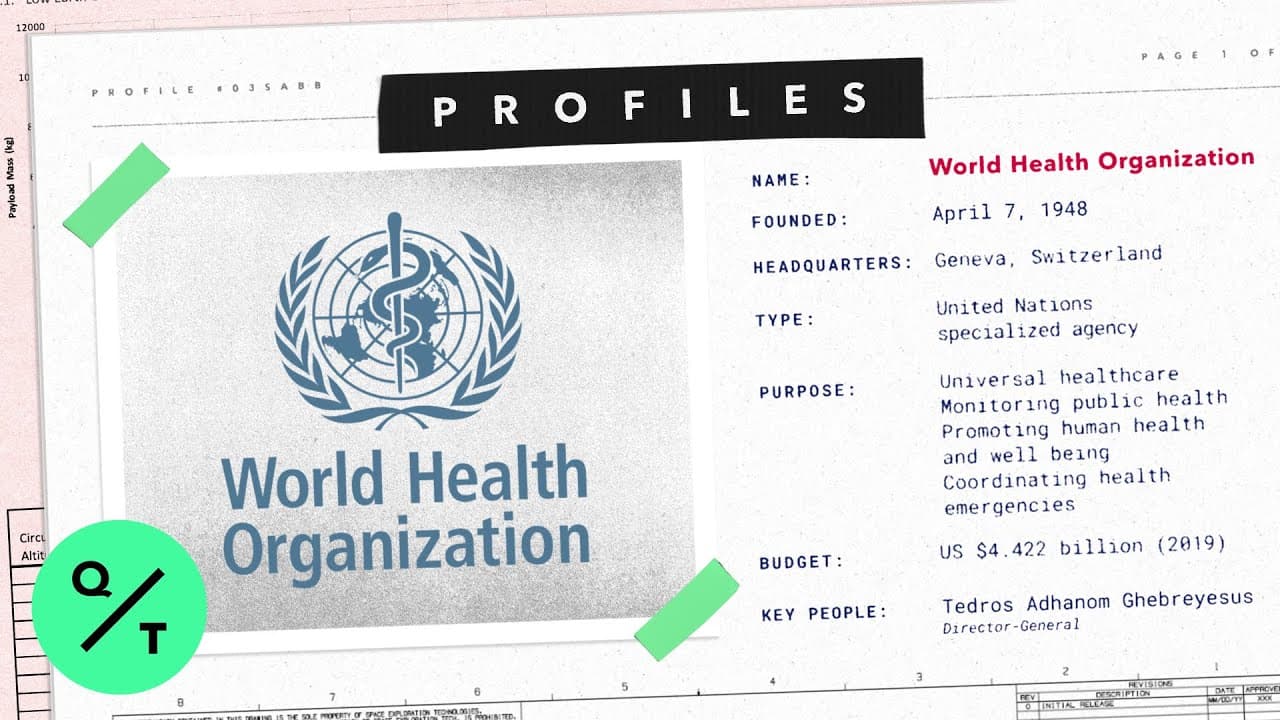
The video covers the challenges and controversies faced by the World Health Organization (WHO) during the Covid-19 pandemic. It explores the organization's historical role, its funding complexities, and the geopolitical tensions that arose, particularly with the United States under President Trump. The video serves as a comprehensive review of the WHO's past actions and current criticisms.
Transcript
During this global pandemic the world, for the most part, has looked to the World Health Organization for guidance. The World Health Organization launches a collaborative project to find a vaccine and treatments. The World Health Organization warning young people they're not invincible. The World Health Organization officially announced that this i... Read More
Key Insights
- The World Health Organization (WHO) was founded in 1948 with a vision to coordinate global health policy and foster international cooperation.
- Over the decades, the WHO has taken on numerous missions, including eradication of diseases like smallpox and awareness campaigns on various health issues.
- The WHO's funding has shifted from assessed contributions by member states to mostly voluntary contributions, affecting its operations and priorities.
- The organization has faced criticism for its responses to past epidemics, such as over-reacting to SARS and under-reacting to Ebola.
- During the Covid-19 pandemic, the WHO was criticized for allegedly being too trusting of China's initial reports on the virus.
- The United States, a major contributor to the WHO, withdrew funding under President Trump, citing mismanagement and bias towards China.
- The WHO's complex bureaucracy, with regional offices and country offices, poses challenges in maintaining consistent global health policies.
- The video questions whether the world can create a neutral and effective global health body free from political and financial influences.
Install to Summarize YouTube Videos and Get Transcripts
Explore YouTube Video Summarizer or Get YouTube Transcript Extractor
Questions & Answers
Q: What is the historical role of the World Health Organization?
The World Health Organization (WHO) was founded in 1948 with the goal of coordinating global health policy and fostering international cooperation. Over the decades, it has taken on numerous missions, including disease eradication efforts, setting medical standards, and providing technical support to low and middle-income countries.
Q: How is the World Health Organization funded?
Originally, the WHO was funded through assessed contributions or dues from member states, determined by each country's GDP and population. However, over the last three decades, funding has shifted to mostly voluntary contributions, with significant donations from countries like the U.S. and organizations such as the Bill and Melinda Gates Foundation.
Q: What criticisms has the WHO faced regarding epidemic responses?
The WHO has faced criticism for its responses to past epidemics. In 2003, it was criticized for over-reacting to SARS, which had limited fatalities but significant economic impact. Conversely, in 2014, the WHO was criticized for under-reacting to the Ebola outbreak in West Africa, delaying its declaration as a public health emergency.
Q: How did the WHO handle the Covid-19 pandemic initially?
Initially, the WHO declared Covid-19 an international health emergency within one month, a quicker response compared to past epidemics like Ebola. However, it faced criticism for allegedly being too trusting of China's initial reports on the virus and for the praise given to China's handling of the outbreak.
Q: Why did President Trump criticize the WHO during the pandemic?
President Trump criticized the WHO for allegedly being too trusting of China's initial reports on the Covid-19 virus and accused the organization of bias towards China. As a result, he announced the U.S. would halt funding to the WHO, citing mismanagement and a failure to address the pandemic effectively.
Q: What impact does U.S. funding have on the WHO?
The United States is one of the largest contributors to the WHO, and its withdrawal of funding under President Trump represented a significant financial loss for the organization. This action threatened the WHO's ability to support global health initiatives, particularly in poorer countries that rely on its resources and guidance.
Q: What are the challenges within the WHO's organizational structure?
The WHO's complex organizational structure includes six regional offices and 150 country offices, each with its own bureaucratic staff and functioning. This structure poses challenges in maintaining consistent global health policies and balancing authority between regional offices and the headquarters in Geneva.
Q: What future does the video suggest for the WHO?
The video suggests that the WHO's future depends on whether the world can create a neutral and effective global health body free from political and financial influences. It questions if the current crisis can lead to a reformed WHO that is better equipped to handle global health challenges without being beholden to various interests.
Summary & Key Takeaways
-
The video explores the history and challenges of the World Health Organization (WHO) amid the Covid-19 pandemic. It highlights the organization's funding complexities and geopolitical tensions, particularly with the U.S. under President Trump, who accused the WHO of bias towards China and halted funding.
-
The WHO has a long history of coordinating global health efforts, but it faces criticism for its responses to past epidemics like SARS and Ebola. The video discusses the organization's bureaucratic challenges and the impact of shifting from assessed contributions to voluntary funding.
-
As the WHO navigates the Covid-19 crisis, the video examines its role in global health diplomacy and the difficulties in pleasing both the U.S. and China. It raises questions about the possibility of creating a truly neutral and effective world health body free from political and financial influences.
Read in Other Languages (beta)
Share This Summary 📚
Summarize YouTube Videos and Get Video Transcripts with 1-Click
Try YouTube Summary with ChatGPT & Claude or YouTube Transcript Generator
Explore More Summaries from Bloomberg Originals 📚


Summarize YouTube Videos and Get Video Transcripts with 1-Click
Try YouTube Summary with ChatGPT & Claude or YouTube Transcript Generator