The Wild Story of the Taum Sauk Dam Failure
TL;DR
This video explains the catastrophic failure of the Taum Sauk Dam in 2005, detailing the sequence of events leading to the disaster, the engineering oversights, and the subsequent rebuilding process. It offers a deep dive into the lessons learned from this failure and how it impacted dam safety regulations and practices.
Transcript
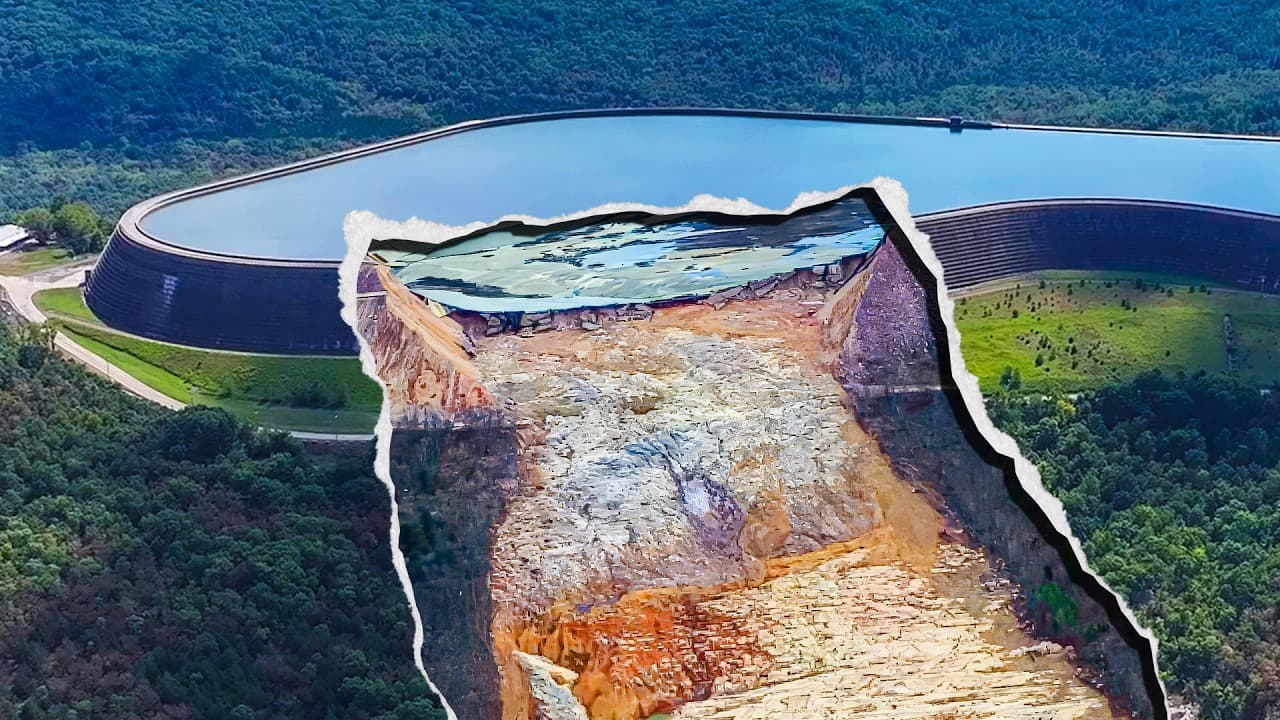
Early in the morning of December 14, 2005, pumps were nearly finished filling the upper reservoir at the Taum Sauk power station, marking the end of the daily cycle. Water rose to the top of the rockfill embankment, reaching the concrete parapet wall that ran along the top of the dam. But the water didn’t stop. One of the two pumps shut off, bu... Read More
Key Insights
- The Taum Sauk Dam failure occurred due to a series of engineering oversights, including faulty level sensors and inadequate safety measures, leading to the catastrophic overflow and collapse of the dam.
- The original Taum Sauk facility was a pioneering pumped storage plant that functioned like a battery, storing energy by pumping water to an upper reservoir during low demand and generating power during peak demand.
- The dam's unique design as an off-channel reservoir required a circular embankment, which increased engineering complexity and costs but was necessary due to the mountain location.
- The facility operated remotely without on-site technicians, a decision that contributed to the disaster when the control systems failed to prevent the reservoir from overfilling.
- The dam's failure highlighted the importance of including spillways in reservoir design, even for off-channel reservoirs, to safely manage unexpected water levels.
- Post-failure investigations by FERC revealed that the dam's rockfill embankment contained more soil than intended, leading to settlement issues that were not accounted for in the safety design.
- The rebuilding of the Taum Sauk Dam involved innovative techniques, including the use of roller-compacted concrete and the addition of a spillway to prevent future overflow incidents.
- The event prompted significant changes in dam safety regulations, with FERC implementing stricter oversight and requiring dam owners to have dedicated safety programs and engineers.
Install to Summarize YouTube Videos and Get Transcripts
Explore YouTube Video Summarizer or Get YouTube Transcript Extractor
Questions & Answers
Q: What caused the failure of the Taum Sauk Dam?
The failure of the Taum Sauk Dam was caused by a combination of engineering oversights, including faulty level sensors that provided incorrect water level readings, inadequate safety measures, and the absence of a spillway. These factors led to the reservoir overflowing and the subsequent collapse of the dam.
Q: How did the original Taum Sauk facility operate?
The original Taum Sauk facility operated as a pumped storage plant, functioning like a battery. It stored energy by pumping water to an upper reservoir during periods of low electricity demand and generated power by releasing the water to flow back down during peak demand, using reversible turbines.
Q: What were the key engineering challenges in the original Taum Sauk Dam design?
The key engineering challenges included the construction of a circular embankment on a mountain top, which increased complexity and costs. The design required a unique approach due to the lack of natural valleys at the site, necessitating a full perimeter dam and innovative solutions for water-tightness and remote operation.
Q: What changes were made during the rebuilding of the Taum Sauk Dam?
During the rebuilding, the Taum Sauk Dam was constructed using roller-compacted concrete to address settlement and leakage issues. A spillway was added to manage overflow safely. The new design also utilized material from the original embankment, reducing the need for new resources and enhancing the dam's structural integrity.
Q: How did the failure impact dam safety regulations?
The failure led to significant changes in dam safety regulations, with FERC implementing stricter oversight. It required dam owners to establish internal safety programs and appoint a Chief Dam Safety Engineer. The event underscored the necessity of spillways and robust safety systems in dam design.
Q: Why was the original Taum Sauk Dam considered innovative?
The original Taum Sauk Dam was considered innovative due to its role as a large-scale pumped storage facility, its remote operation without on-site technicians, and its unique off-channel reservoir design on a mountain top. These features were pioneering in the context of 1960s engineering.
Q: What lessons were learned from the Taum Sauk Dam failure?
The failure taught crucial lessons about the importance of accurate sensor readings, the necessity of spillways for overflow management, and the risks associated with complex control systems. It highlighted the need for comprehensive safety measures and regular oversight to prevent similar disasters.
Q: What role did FERC play following the Taum Sauk Dam failure?
Following the failure, FERC conducted an investigation that revealed the engineering oversights leading to the disaster. It implemented new regulations requiring dam owners to have dedicated safety programs and engineers. FERC's actions aimed to enhance dam safety and prevent future incidents.
Summary & Key Takeaways
-
The Taum Sauk Dam failure in 2005 was a result of multiple engineering oversights, including faulty level sensors and inadequate safety measures. The overflow led to the catastrophic collapse of the dam, releasing a massive surge of water down the mountainside.
-
The original Taum Sauk facility was a pioneering pumped storage plant, designed to store energy by pumping water to an upper reservoir during low demand and generating power during peak periods. Its unique design required a circular embankment due to its mountain location.
-
The failure prompted significant changes in dam safety regulations, with FERC implementing stricter oversight and requiring dam owners to have dedicated safety programs. The dam was rebuilt using innovative techniques, including roller-compacted concrete and the addition of a spillway.
Read in Other Languages (beta)
Share This Summary 📚
Summarize YouTube Videos and Get Video Transcripts with 1-Click
Try YouTube Summary with ChatGPT & Claude or YouTube Transcript Generator
Explore More Summaries from Practical Engineering 📚



Summarize YouTube Videos and Get Video Transcripts with 1-Click
Try YouTube Summary with ChatGPT & Claude or YouTube Transcript Generator