Graffiti, Street Art & Murals: What We Learn from Public Art
TL;DR
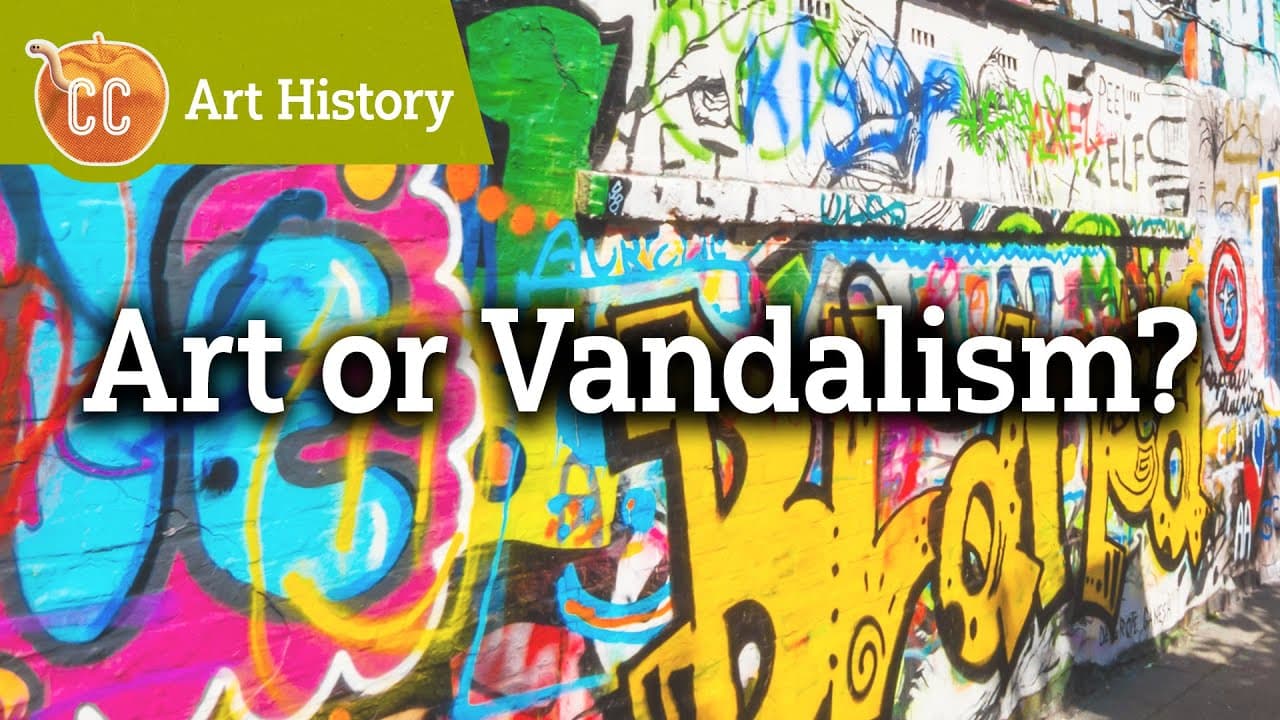
This video explores the history and significance of independent public art forms like graffiti, street art, and murals. It delves into their roles in cultural expression, political discourse, and community engagement, highlighting how these art forms challenge societal norms and contribute to historical and contemporary dialogues.
Transcript
Graffiti might seem like a modern invention. But in the remains of the Mayan city of Tikal, pictures of jaguars, snakes, and deities can be found scratched onto buildings. The archaeological sites at Herculaneum and Pompeii feature graffitied word games, grocery lists, and animal drawings. And just like I may or may not have written “Sarah was her... Read More
Key Insights
- Graffiti and street art have ancient roots, with examples found in historical sites like Pompeii and Tikal, demonstrating a long-standing human desire to create public art.
- Independent public art, unlike commissioned works, often challenges societal norms and resists the status quo, as it is created without official approval.
- The impermanence of street art is a defining characteristic, as these works are often temporary and subject to alteration or removal by authorities or community members.
- Independent public art can serve as a powerful tool for political expression, providing a voice for movements like Black Lives Matter and documenting historical events.
- The transformation of street art into mainstream acceptance is exemplified by artists like Jean-Michel Basquiat, whose work began as rebellion and evolved into celebrated fine art.
- Street art can foster community collaboration and engagement, as seen in projects like Jennifer Allora and Guillermo Calzadilla's 'Chalk,' which invites public participation.
- The documentation of street art through digital archives preserves its historical significance and offers insights into cultural and social dynamics.
- Despite its often illegal status, independent public art plays a crucial role in enriching communities, influencing mainstream art, and reflecting societal changes.
Install to Summarize YouTube Videos and Get Transcripts
Explore YouTube Video Summarizer or Get YouTube Transcript Extractor
Questions & Answers
Q: What historical examples of graffiti are mentioned in the video?
The video mentions ancient graffiti found in the Mayan city of Tikal, where images of jaguars, snakes, and deities are scratched onto buildings. It also references archaeological sites at Herculaneum and Pompeii, which feature graffitied word games, grocery lists, and animal drawings, showcasing the long history of public art.
Q: How does independent public art differ from officially sanctioned public art?
Independent public art is created without official approval, permits, or funding, often challenging societal norms and boundaries. Unlike sanctioned art, which follows specific rules and guidelines, independent art is more spontaneous and can be impermanent, reflecting the artist's desire to resist the status quo and engage with the community.
Q: What role does impermanence play in street art?
Impermanence is a defining feature of street art, as these works are often temporary and subject to alteration or removal. This characteristic allows street art to evolve with the community, encouraging interaction and collaboration. Artists embrace impermanence, understanding that their work may be covered or changed, reflecting the dynamic nature of public spaces.
Q: How has street art been used for political expression?
Street art has been a powerful tool for political expression, giving voice to movements like Black Lives Matter. The video highlights the mural created in Minneapolis following George Floyd's death, which became a site of public mourning and activism. Such artworks communicate serious points and can shift public opinion over time, documenting historical moments.
Q: What impact did Jean-Michel Basquiat have on street art and the art world?
Jean-Michel Basquiat began as a street artist using the tag SAMO to critique the commercial art world. His work, characterized by elements of street art, gained mainstream acceptance, bridging the gap between rebellion and fine art. Basquiat's success illustrates how street art can influence the art world and challenge traditional artistic boundaries.
Q: How does the video illustrate community engagement through street art?
The video discusses projects like 'Chalk' by Jennifer Allora and Guillermo Calzadilla, where human-sized chalk pieces are used to invite community participation. Such projects foster collaboration and interaction, allowing people to contribute to public art and creating a sense of ownership and engagement within the community.
Q: Why is the documentation of street art important?
Documenting street art through digital archives preserves its historical and cultural significance, allowing future generations to study its impact. The Urban Art Mapping project, for example, catalogs artworks related to the Black Lives Matter movement, providing insights into social dynamics and helping scholars understand the present through the lens of street art.
Q: What are some challenges faced by independent public art?
Independent public art faces challenges such as legal classification as vandalism, leading to potential removal or alteration by authorities. Despite its often illegal status, street art must navigate societal norms and boundaries while striving to engage with communities and convey important social and political messages.
Summary & Key Takeaways
-
The video explores the historical context and cultural significance of graffiti and street art, tracing their roots back to ancient civilizations. It examines how these art forms have evolved into powerful tools for social and political expression, challenging societal norms and engaging communities.
-
Independent public art, often created without official approval, is characterized by its impermanence and ability to provoke thought and dialogue. The video highlights how street art can reflect community values, document historical events, and influence mainstream art and culture.
-
By examining artists like Jean-Michel Basquiat and contemporary movements, the video illustrates the transformative power of street art. It emphasizes the importance of preserving these works through digital archives to understand their impact on history and society.
Read in Other Languages (beta)
Share This Summary 📚
Summarize YouTube Videos and Get Video Transcripts with 1-Click
Try YouTube Summary with ChatGPT & Claude or YouTube Transcript Generator
Explore More Summaries from CrashCourse 📚






Summarize YouTube Videos and Get Video Transcripts with 1-Click
Try YouTube Summary with ChatGPT & Claude or YouTube Transcript Generator