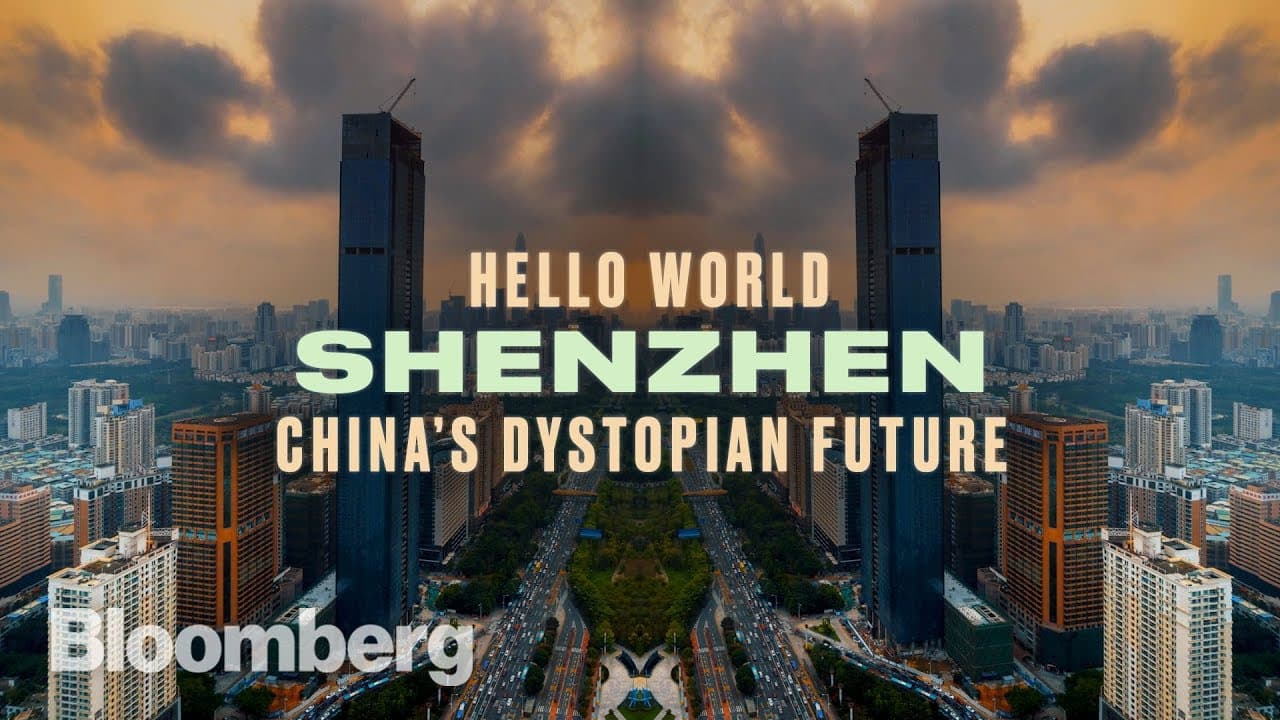
Inside China's High-Tech Dystopia
TL;DR
Shenzhen exemplifies a high-tech dystopia with automation and government surveillance.
Transcript
There's no disputing that Shenzhen has become one of the most important places in the world of tech. Nowhere else has quite as potent a combination of tech know-how, cheap manufacturing costs, and sheer speed. But it goes further than that. Living in Shenzhen is in many ways like living in the future. And not necessarily a utopian future. More like... Read More
Key Insights
- Shenzhen is a leading hub in the tech world, combining tech expertise, low manufacturing costs, and rapid development, but it represents a dystopian future.
- Factories in Shenzhen are rapidly automating, replacing human workers with robots, which could lead to significant unemployment and societal changes.
- QR codes dominate the economy in Shenzhen, replacing cash and credit cards, with the government having access to monitor transactions.
- The Chinese government uses technology to track and rank citizens' behavior, raising concerns about surveillance and privacy.
- Facial recognition technology is widely used for law enforcement in Shenzhen, with jaywalkers being fined automatically through mobile payment platforms.
- China has created its own internet ecosystem with domestic equivalents of Western tech giants, which the government can monitor and control.
- VPNs are used by some in China to access the broader internet, indicating a desire for freedom and curiosity among the younger generation.
- The future of Shenzhen remains uncertain, with potential for both innovation and increased government control, reflecting broader global tech concerns.
Install to Summarize YouTube Videos and Get Transcripts
Explore YouTube Video Summarizer or Get YouTube Transcript Extractor
Questions & Answers
Q: How has Shenzhen become a global tech hub?
Shenzhen has become a global tech hub by combining tech expertise, low manufacturing costs, and rapid development. These factors have made it a crucial location for tech manufacturing and innovation. However, this growth has also led to a dystopian future, with automation replacing human workers and increased government surveillance.
Q: What role do QR codes play in Shenzhen's economy?
QR codes are central to Shenzhen's economy, replacing cash and credit cards as the primary means of transaction. This system is convenient and efficient, but it also allows the government to monitor transactions through dominant payment systems like AliPay and WeChat, raising concerns about privacy and surveillance.
Q: How is facial recognition technology used in Shenzhen?
In Shenzhen, facial recognition technology is used for law enforcement purposes, such as automatically fining jaywalkers through mobile payment platforms. This technology is part of a broader surveillance system that tracks citizens' behavior, contributing to a dystopian environment where privacy is compromised.
Q: How has China created its own internet ecosystem?
China has developed its own internet ecosystem with domestic equivalents of Western tech giants, such as Baidu for Google and WeChat for Facebook. This ecosystem is monitored and controlled by the government, limiting access to the broader internet and reflecting a controlled information environment.
Q: What are the implications of automation in Shenzhen's factories?
Automation in Shenzhen's factories is leading to the replacement of human workers with robots, which could result in significant unemployment and societal changes. This shift aims to improve product quality and reduce costs, but it also raises concerns about the future of the workforce and economic inequality.
Q: How do VPNs affect internet access in China?
VPNs allow individuals in China to bypass government blocks and access the broader internet, indicating a desire for freedom and curiosity, particularly among the younger generation. While personal use of VPNs is generally tolerated, it highlights the tension between government control and individual access to information.
Q: What concerns are raised by the government's behavior tracking system?
The government's behavior tracking system in Shenzhen raises significant privacy and surveillance concerns. By monitoring and ranking citizens' behavior through technology, the government can exert control and influence over individuals' lives, leading to a dystopian environment where personal freedoms are compromised.
Q: What is the future outlook for Shenzhen?
The future of Shenzhen is uncertain, with potential for both innovation and increased government control. While the city is full of energy and creativity, the direction in which these traits will be channeled remains an open question. The balance between technological advancement and individual freedoms will be crucial in shaping its future.
Summary & Key Takeaways
-
Shenzhen has become a global tech hub due to its combination of technological expertise, low manufacturing costs, and rapid development. However, the city exemplifies a dystopian future, with automation replacing human workers and increased government surveillance through technology.
-
In Shenzhen, QR codes have replaced traditional payment methods, and the government monitors transactions through dominant payment systems. Facial recognition technology is used for law enforcement, and citizens' behavior is tracked and ranked, raising privacy concerns.
-
China has developed its own internet ecosystem, with domestic equivalents of Western tech platforms. VPNs allow some access to the broader internet, reflecting a desire for freedom among the younger generation. The future of Shenzhen is uncertain, with potential for both innovation and increased control.
Read in Other Languages (beta)
Share This Summary 📚
Summarize YouTube Videos and Get Video Transcripts with 1-Click
Try YouTube Summary with ChatGPT & Claude or YouTube Transcript Generator
Explore More Summaries from Bloomberg Originals 📚





Summarize YouTube Videos and Get Video Transcripts with 1-Click
Try YouTube Summary with ChatGPT & Claude or YouTube Transcript Generator