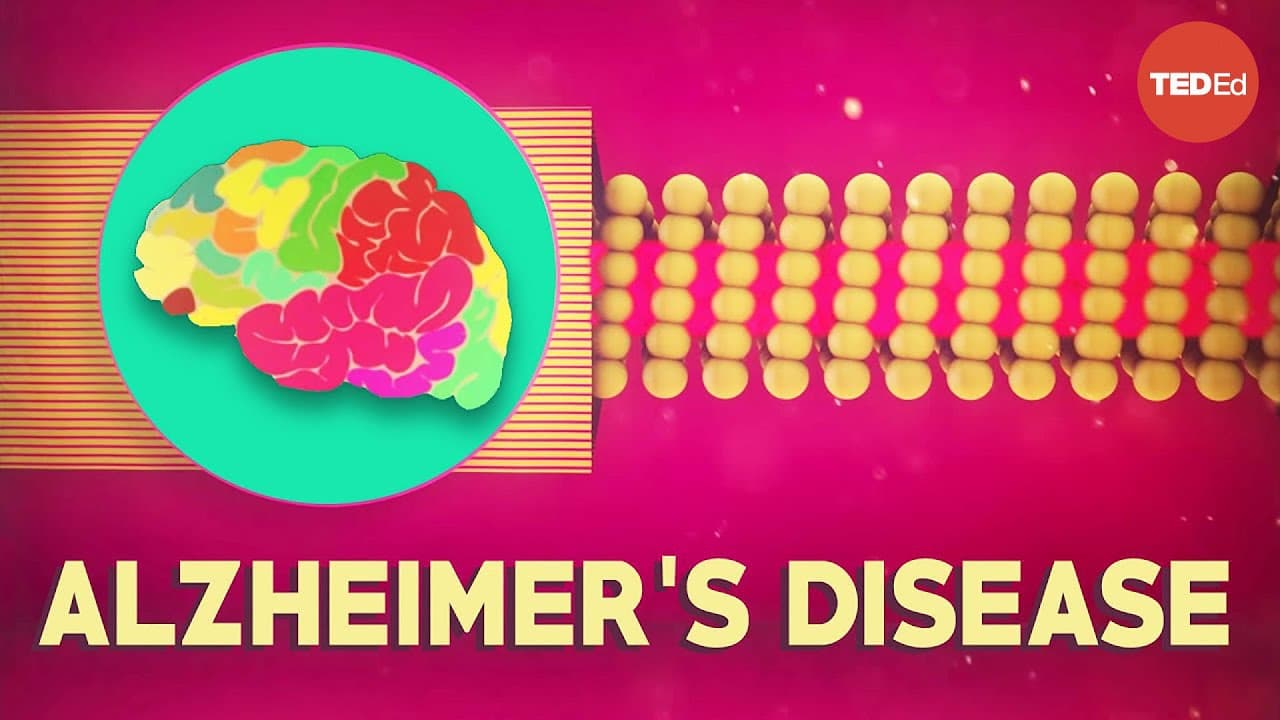
What is Alzheimer's disease? - Ivan Seah Yu Jun
TL;DR
Alzheimer's is the leading cause of dementia, impacting millions globally, with plaques and tangles destroying brain cells.
Transcript
Every four seconds, someone is diagnosed with Alzheimer's disease. It's the most common cause of dementia, affecting over 40 million people worldwide, and yet finding a cure is something that still eludes researchers today. Dr. Alois Alzheimer, a German psychiatrist, first described the symptoms in 1901 when he noticed that a particular hospital pa... Read More
Key Insights
- 💁 Alzheimer's affects over 40 million people globally and is the most common form of dementia.
- 🧠 Dr. Alois Alzheimer discovered the disease in 1901 by examining brain abnormalities in a patient.
- 🥺 Plaques and tangles formed in the brain disrupt cell communication and nutrient flow, leading to cell death.
- 🤔 Alzheimer's starts in the memory-forming hippocampus and progresses to affect logical thinking and emotions.
- 💅 Current research focuses on slowing the disease's progression rather than finding a cure.
- 🎯 Potential treatments include reducing acetylcholine breakdown and developing vaccines to target plaques.
- 🫤 Alzheimer's remains poorly understood despite being discovered over a century ago.
Install to Summarize YouTube Videos and Get Transcripts
Explore YouTube Video Summarizer or Get YouTube Transcript Extractor
Questions & Answers
Q: What did Dr. Alois Alzheimer first notice in a patient that led to the discovery of Alzheimer's disease?
Dr. Alzheimer noticed symptoms like memory issues, mood changes, and confusion in a patient, leading to the discovery of Alzheimer's disease.
Q: How do plaques and tangles contribute to the destruction of nerve cells in Alzheimer's disease?
Plaques form from beta-amyloid proteins, which clump together to block cell communication, while tangles made of tau protein lead to cell death by disrupting nutrient flow.
Q: What are the initial symptoms of Alzheimer's disease, and why do they occur?
Short-term memory loss is often the first symptom due to the disease's impact on the hippocampus, responsible for memory formation.
Q: What are some potential treatments for Alzheimer's disease being researched currently?
Treatments to slow the disease's progression include methods to reduce acetylcholine breakdown and vaccines targeting beta-amyloid plaques.
Summary & Key Takeaways
-
Alzheimer's is a prevalent form of dementia affecting millions worldwide, with no known cure.
-
The disease involves the formation of plaques and tangles in the brain, disrupting cell communication and leading to cell death.
-
Researchers are focused on slowing the disease's progression through temporary treatments and potential vaccines.
Read in Other Languages (beta)
Share This Summary 📚
Summarize YouTube Videos and Get Video Transcripts with 1-Click
Try YouTube Summary with ChatGPT & Claude or YouTube Transcript Generator
Explore More Summaries from TED-Ed 📚






Summarize YouTube Videos and Get Video Transcripts with 1-Click
Try YouTube Summary with ChatGPT & Claude or YouTube Transcript Generator