How to Train a Service Dog to Retrieve Items
TL;DR
To train a service dog to retrieve items, start by teaching them to bite and hold a simple object, then reward their successes while using non-reinforcement markers for mistakes. Gradually introduce complexity by having them walk with the item and eventually teach them to retrieve objects from the ground. Patience and repetition are crucial, as this process may take several months.
Transcript
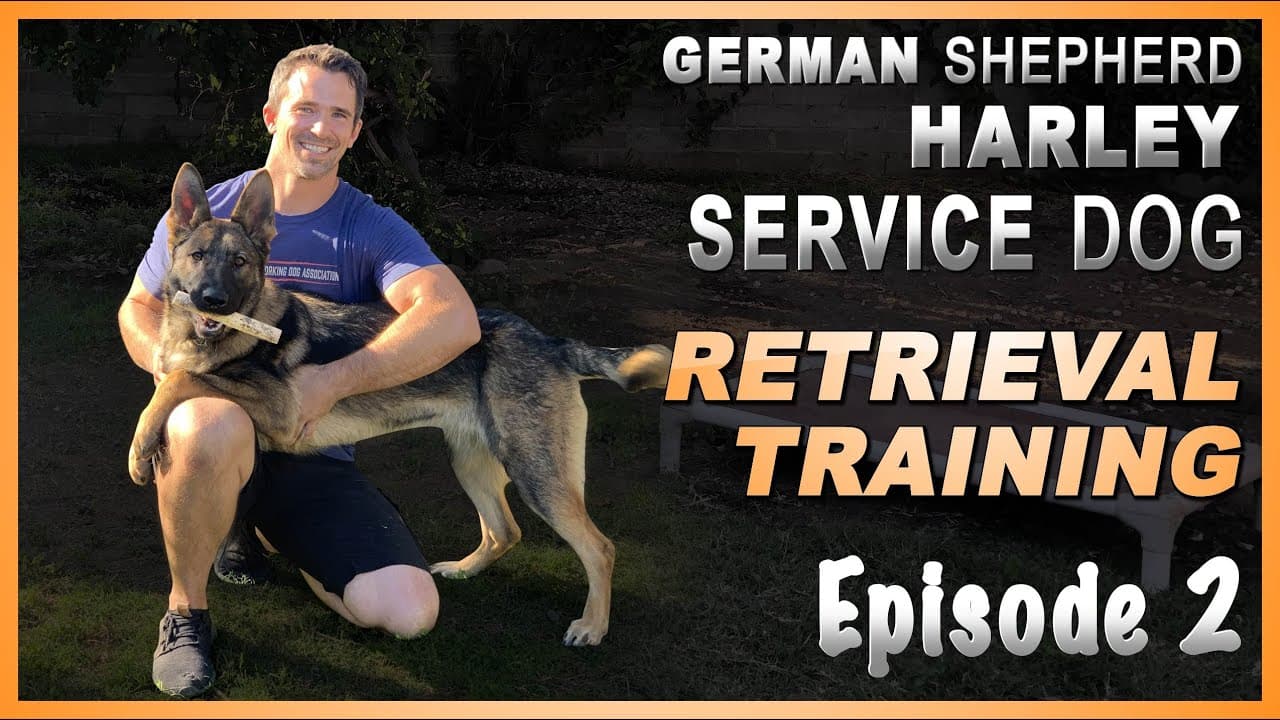
in today's video we're going to be teaching our dogs to retrieve now this isn't a retrieve when you're playing fetch and your dog brings back the tennis ball but rather retrieve where no matter what you drop whether it's your keys or your wallet or your phone your dog will pick it up and hand it back to you this is an important exercise for most se... Read More
Key Insights
- The video demonstrates how to train a service dog to retrieve items like keys or phones, which is a critical skill for service dogs.
- The training begins with using a simple wooden pole to teach the dog to bite and hold the item, gradually increasing the complexity of the task.
- The trainer emphasizes the importance of patience and repetition, noting that the training process can take several months to perfect.
- Using a terminal marker and rewards helps reinforce the desired behavior, while non-reinforcement markers indicate incorrect actions without punishment.
- The training progresses from stationary holding to walking with the item, and eventually to retrieving items from the ground and bringing them back.
- The trainer introduces commands only after the dog consistently performs the tasks correctly, ensuring the dog understands the behavior associated with the command.
- The video highlights the importance of practicing in distraction-free environments initially, gradually introducing more challenging scenarios as the dog improves.
- The trainer plans to expand the dog's retrieving skills to include various items, beyond the initial training object, in future videos.
Install to Summarize YouTube Videos and Get Transcripts
Explore YouTube Video Summarizer or Get YouTube Transcript Extractor
Questions & Answers
Q: What is the main goal of the training in the video?
The main goal of the training in the video is to teach a service dog to reliably retrieve various items for its owner. This skill is crucial for service dogs, as it enables them to assist individuals with disabilities by picking up and bringing back items like keys, phones, or wallets.
Q: What is the first step in the retrieve training process?
The first step in the retrieve training process involves using a simple wooden pole to teach the dog to bite the item. The trainer focuses on rewarding the dog each time it successfully bites the pole, using a terminal marker to reinforce the behavior and build upon the dog's success.
Q: How does the trainer handle incorrect actions by the dog?
The trainer handles incorrect actions by using non-reinforcement markers, such as the word 'wrong,' to indicate that the dog did not perform the task correctly. This approach does not involve punishment but rather communicates to the dog that it will not receive a reward for the incorrect action.
Q: When are commands introduced in the training process?
Commands are introduced in the training process only after the dog consistently performs the tasks correctly. This ensures that the dog understands the behavior associated with the command, allowing for more effective communication and training progression.
Q: Why is it important to practice in distraction-free environments initially?
Practicing in distraction-free environments initially is important because it helps the dog focus on learning the new behavior without being sidetracked by external stimuli. This controlled setting allows for more effective training and helps build the dog's confidence before introducing more challenging scenarios.
Q: What is the significance of using a terminal marker in training?
Using a terminal marker in training is significant because it clearly communicates to the dog when it has performed the desired behavior correctly. This immediate feedback, combined with a reward, reinforces the behavior and encourages the dog to repeat it, facilitating the learning process.
Q: How does the trainer plan to expand the dog's retrieving skills?
The trainer plans to expand the dog's retrieving skills by gradually introducing different items for the dog to retrieve, beyond the initial training object. This progression will help the dog learn to apply the retrieving behavior to various objects, increasing its ability to assist its owner in different situations.
Q: What is the role of patience in the training process?
Patience plays a crucial role in the training process, as teaching a dog to retrieve reliably can take several months. The trainer emphasizes the importance of being patient and consistent, allowing the dog to learn at its own pace and building its confidence through successful repetitions and positive reinforcement.
Summary & Key Takeaways
-
This video provides a detailed guide on training a service dog to retrieve items, emphasizing the importance of patience and repetition. The trainer uses a wooden pole to teach the dog to bite, hold, and eventually retrieve items, introducing commands only after the dog consistently performs the tasks correctly.
-
The training process involves rewarding the dog for successful attempts and using non-reinforcement markers for incorrect actions. The trainer gradually increases the complexity of the tasks, from stationary holding to walking with the item, and eventually retrieving items from the ground.
-
The video stresses the importance of practicing in distraction-free environments initially and plans to expand the dog's retrieving skills to include various items in future videos. The trainer also highlights the critical role of service dogs in assisting individuals with disabilities.
Read in Other Languages (beta)
Share This Summary 📚
Summarize YouTube Videos and Get Video Transcripts with 1-Click
Try YouTube Summary with ChatGPT & Claude or YouTube Transcript Generator
Explore More Summaries from Nate Schoemer 📚
Summarize YouTube Videos and Get Video Transcripts with 1-Click
Try YouTube Summary with ChatGPT & Claude or YouTube Transcript Generator