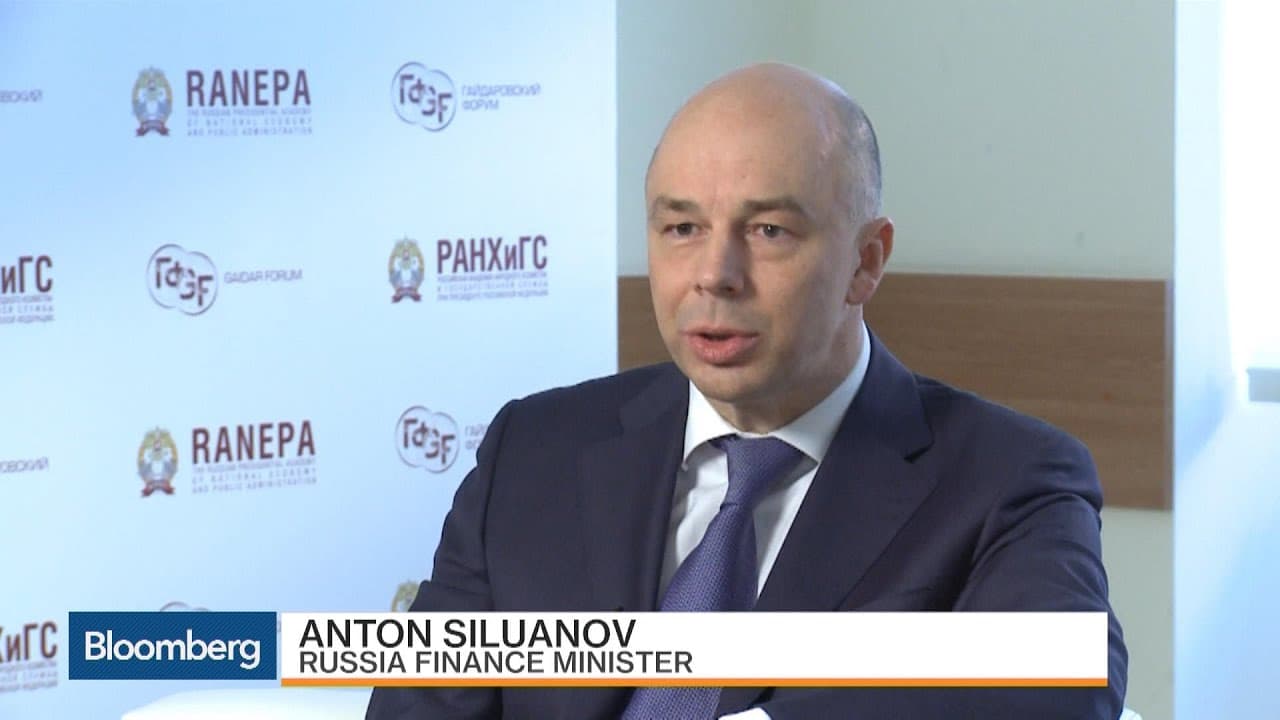
Russia Finance Minister: We Must Cut Budget by 10%
TL;DR
Russia must cut its budget by 10% to prevent a financial crisis.
Transcript
You've said that if the government doesn't cut the budget by 10%, Russians can expect a crisis like the one the country had in 1998. Explain that to me. If the state's finances aren't adjusted to the new conditions we find ourselves in, we can expect big deficits, a big inflation overhang, and the devaluation of our currency, as was the case in 199... Read More
Key Insights
- Russia's Finance Minister warns of a potential financial crisis similar to 1998 if the budget is not cut by 10%. The crisis would involve large deficits, inflation, and currency devaluation.
- The 1998 Russian financial crisis is highlighted as a historical precedent, marked by defaulting on debts, a threefold currency devaluation, rampant inflation, and high unemployment.
- The current budget is based on an oil price of $50 per barrel, but with oil at $30 per barrel, the deficit could double, necessitating budget cuts.
- A 10% budget cut is not sufficient to fully stabilize Russia's finances; it would only cover about a third of the necessary adjustments.
- Additional measures, such as privatization and reserve funds, are needed to bridge the financial gap and stabilize the economy.
- The Finance Minister emphasizes the need to plan beyond 2016, with financial strategies for 2017, 2018, and 2019 being crucial.
- Military and social expenditures are currently protected from cuts, but may be reconsidered if the economic situation does not improve.
- The Finance Minister indicates that while budget cuts may help in the short term, a comprehensive financial strategy is required for long-term stability.
Install to Summarize YouTube Videos and Get Transcripts
Explore YouTube Video Summarizer or Get YouTube Transcript Extractor
Questions & Answers
Q: What historical event is the Finance Minister comparing the current situation to?
The Finance Minister is comparing the current economic situation to the 1998 Russian financial crisis. During that time, Russia defaulted on its debts, experienced a threefold devaluation of its currency, and faced rampant inflation and high unemployment. The minister warns that without budget cuts, a similar crisis could occur.
Q: Why is a 10% budget cut deemed necessary by the Finance Minister?
A 10% budget cut is considered necessary by the Finance Minister to prevent a financial crisis similar to 1998. The budget is currently based on an oil price of $50 per barrel, but with oil prices at $30, the deficit could double. The cut is part of a strategy to stabilize the economy and avoid large deficits and inflation.
Q: Is a 10% budget cut sufficient to stabilize Russia's economy?
No, a 10% budget cut is not sufficient to fully stabilize Russia's economy. The Finance Minister indicates that this cut would only cover about a third of the necessary adjustments. Additional measures, such as privatization and the use of reserve funds, are required to bridge the financial gap and ensure economic stability.
Q: What additional measures are suggested to stabilize the economy?
In addition to a 10% budget cut, the Finance Minister suggests the need for privatization and the use of reserve funds to stabilize the economy. These measures are necessary to cover the financial gap that the budget cut alone cannot address. A comprehensive financial strategy is essential for long-term economic stability.
Q: Are military and social expenditures affected by the budget cuts?
Currently, military and social expenditures are protected from budget cuts. However, the Finance Minister indicates that if the economic situation does not improve, these areas may be reconsidered as options for cuts in the future. The focus is on making thoughtful decisions to stabilize public finances.
Q: What is the significance of oil prices in the current economic situation?
Oil prices play a significant role in the current economic situation because the budget is based on an oil price of $50 per barrel. With prices at $30, the deficit could double, making budget cuts necessary to prevent a financial crisis. Oil prices directly impact the revenue and financial stability of the country.
Q: How does the Finance Minister plan to address future financial challenges?
The Finance Minister plans to address future financial challenges by making budget cuts and implementing additional measures like privatization and reserve funds. The focus is on creating a comprehensive financial strategy for 2017, 2018, and 2019 to ensure long-term economic stability and avoid a crisis similar to 1998.
Q: What are the potential consequences if the budget is not adjusted?
If the budget is not adjusted, Russia risks facing a financial crisis similar to 1998, with large deficits, inflation, and currency devaluation. The Finance Minister warns that without cuts and additional measures, the economy could experience uncontrolled inflation and a significant devaluation of the currency, leading to severe economic instability.
Summary & Key Takeaways
-
Russia's Finance Minister warns that without a 10% budget cut, the country risks a crisis similar to 1998, characterized by large deficits, inflation, and currency devaluation. The current budget relies on an oil price of $50 per barrel, but with prices at $30, the deficit could double.
-
The 1998 crisis saw Russia default on its debts, with the currency devaluing threefold and inflation spiraling out of control. The Finance Minister stresses the importance of avoiding similar mistakes by making thoughtful budget cuts and financial adjustments.
-
A 10% budget cut alone will not suffice to stabilize Russia's economy. Additional measures like privatization and reserve funds are necessary. Military and social expenditures are currently protected, but may be reconsidered if the economic situation remains dire in the coming years.
Read in Other Languages (beta)
Share This Summary 📚
Summarize YouTube Videos and Get Video Transcripts with 1-Click
Try YouTube Summary with ChatGPT & Claude or YouTube Transcript Generator
Explore More Summaries from Bloomberg Originals 📚





Summarize YouTube Videos and Get Video Transcripts with 1-Click
Try YouTube Summary with ChatGPT & Claude or YouTube Transcript Generator