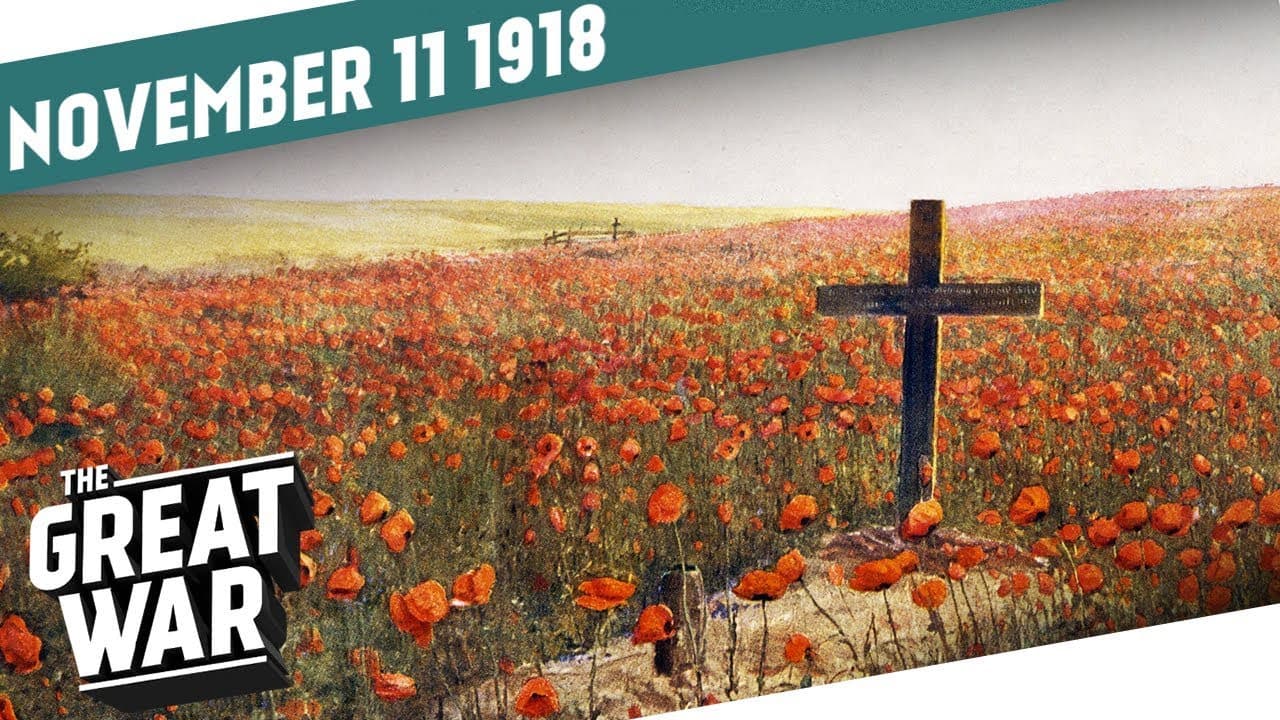
Armistice - But Peace? I THE GREAT WAR Week 225
TL;DR
The armistice ended WWI, but peace was uncertain amid revolutions.
Transcript
What can I say about this week this week the war ends I'm indy neidell. Welcome to the great war Last week what was left of the austro-hungarian Empire signed an armistice leaving Germany as the last man standing of the Central Powers the Allies advanced all week in the West and cut the Germans last lateral railway line there a Naval mutiny at Kiel... Read More
Key Insights
- The armistice on November 11, 1918, marked the end of WWI, but Germany faced internal chaos and revolution, complicating the peace process.
- The German delegation in Compiegne signed the armistice, leading to the evacuation of occupied territories and disarmament, but revolutions were spreading across German cities.
- Kaiser Wilhelm II faced a loss of military support and fled to the Netherlands as German cities fell under revolutionary control, marking a significant political shift.
- The Allies imposed strict armistice terms, requiring Germany to surrender significant military assets, including planes, artillery, and naval vessels.
- Despite the armistice, fighting continued on the morning of November 11, leading to unnecessary casualties and a congressional investigation in the United States.
- The end of the war was celebrated worldwide, but the joy was tempered by the immense loss of life and the challenges of postwar reconstruction.
- The Great War series, documenting WWI in real time, concludes with reflections on the war's impact and acknowledgments to the team and supporters.
- The series will continue with epilogues and special episodes to explore the aftermath and broader implications of the war.
Install to Summarize YouTube Videos and Get Transcripts
Explore YouTube Video Summarizer or Get YouTube Transcript Extractor
Questions & Answers
Q: What were the terms of the armistice signed on November 11, 1918?
The armistice required Germany to evacuate occupied territories, surrender military assets including planes, artillery, and naval vessels, and allow Allied occupation of the Rhineland. It also demanded reparations for damages in Belgium and northern France, reflecting the Allies' intent to weaken Germany's military capabilities.
Q: How did the German Revolution impact the signing of the armistice?
The German Revolution significantly influenced the armistice process, as revolutionary forces took control of major cities and the military refused to support Kaiser Wilhelm II. This internal chaos weakened Germany's negotiating position and forced the Kaiser into exile, leading to the establishment of a new government to sign the armistice.
Q: What challenges did Germany face immediately after the armistice?
Post-armistice, Germany faced political instability with ongoing revolutions, a power vacuum following the Kaiser's abdication, and the challenge of implementing the harsh armistice terms. The country was also grappling with economic hardships and the societal impact of the war, complicating efforts to establish a stable postwar government.
Q: Why did fighting continue on the morning of November 11, 1918, despite the armistice?
Fighting continued on the morning of November 11 due to delayed communication and orders for troops to maintain combat until the official ceasefire time at 11 a.m. This resulted in unnecessary casualties, sparking a congressional investigation into the circumstances of these final hours of combat.
Q: What was the global reaction to the end of World War I?
The end of World War I was met with widespread celebration as people around the world flooded the streets to rejoice. However, the joy was tempered by the immense loss of life, the economic devastation, and the challenges of rebuilding and securing a lasting peace, leaving a complex legacy.
Q: How did the armistice affect the Austro-Hungarian Empire?
The armistice accelerated the disintegration of the Austro-Hungarian Empire, which had already begun to collapse due to internal nationalist movements and military defeats. The empire's breakup created political chaos and instability in Central Europe, complicating postwar peace efforts and redrawing the region's political landscape.
Q: What role did the Allies' military superiority play in ending the war?
The Allies' military superiority was crucial in ending the war, as their successful offensives and overwhelming force broke Germany's military power. This superiority, rather than internal dissent or political intrigue, was the primary factor in forcing Germany to seek an armistice, as acknowledged by historians.
Q: What is the significance of the November 11 armistice in historical context?
The November 11 armistice is significant as it marked the cessation of hostilities in WWI, but it also laid the groundwork for future conflicts. The harsh terms and political upheaval in Germany contributed to the conditions that led to WWII, highlighting the complexities of achieving lasting peace after such a devastating conflict.
Summary & Key Takeaways
-
On November 11, 1918, the armistice was signed, ending WWI, but Germany was plunged into revolution and political upheaval. Kaiser Wilhelm II fled to the Netherlands as revolutionary forces took control of German cities, complicating peace efforts.
-
The Allies demanded significant disarmament from Germany, including the surrender of military equipment and occupation of the Rhineland. Despite the armistice, fighting continued on the morning of November 11, causing unnecessary casualties.
-
The Great War series concludes its real-time coverage of WWI, reflecting on the war's legacy and thanking the team and supporters. The series will continue with epilogues and special episodes exploring the postwar world.
Read in Other Languages (beta)
Share This Summary 📚
Summarize YouTube Videos and Get Video Transcripts with 1-Click
Try YouTube Summary with ChatGPT & Claude or YouTube Transcript Generator
Explore More Summaries from The Great War 📚
Summarize YouTube Videos and Get Video Transcripts with 1-Click
Try YouTube Summary with ChatGPT & Claude or YouTube Transcript Generator