The art of creating awe - Rob Legato
TL;DR
Film techniques manipulate viewer perception, altering memories and emotions.
Transcript
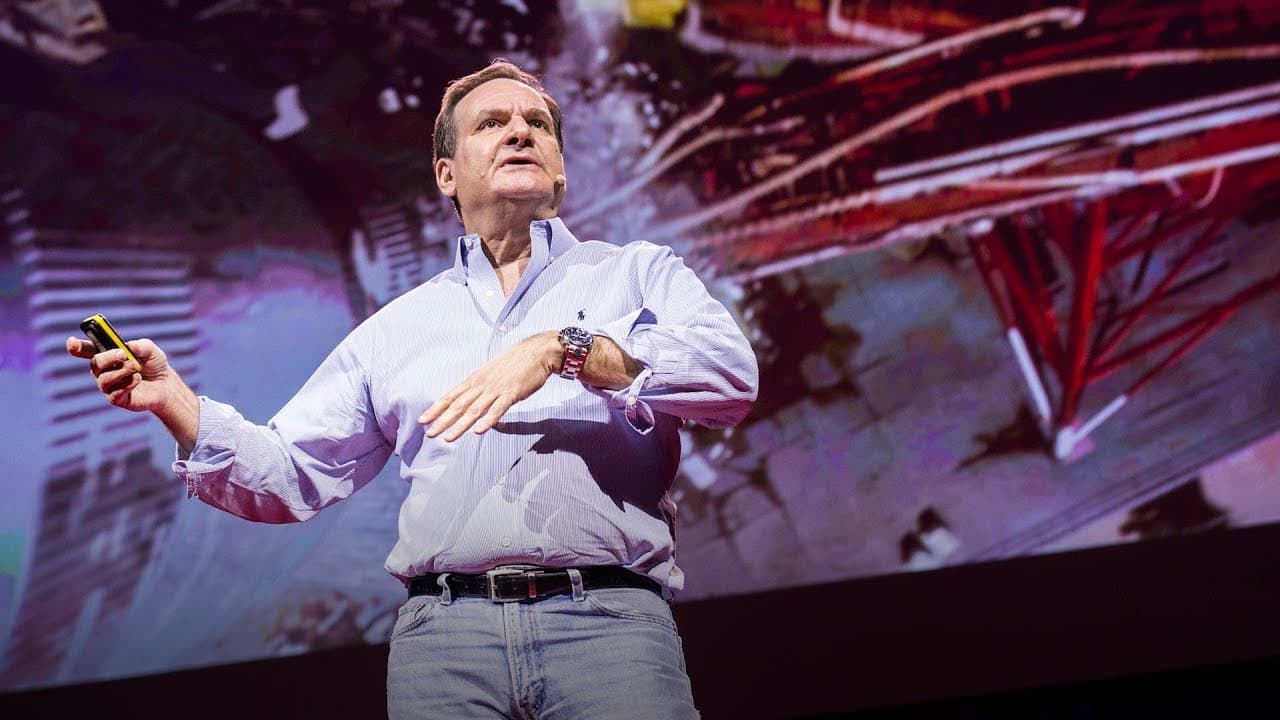
I worked on a film called Apollo 13 and when I worked on this film I discovered something about how our brains work and how our brains work is that when we're sort of infused with either enthusiasm or awe or fondness or whatever it changes in alters our perception of things it changes what we see changes what we remember and as an experiment becaus... Read More
Key Insights
- 🌂 Emotions like enthusiasm and awe alter perception and memory in film experiments.
- 🫵 Recreating memories of viewers rather than reality captures emotional essence in film creation.
- 🧑🚀 NASA astronaut's critique highlighted the subjective nature of memory.
- ❓ Visual tricks enhance storytelling by evoking specific emotions.
- 🎥 Use of camera movement and transitions adds depth to cinematic storytelling.
- 🫵 Subjectivity of memory influences how viewers perceive and remember visual content.
- 🫵 Emotions infused in footage can evoke complex emotional responses in viewers.
Install to Summarize YouTube Videos and Get Transcripts
Explore YouTube Video Summarizer or Get YouTube Transcript Extractor
Questions & Answers
Q: How did enthusiasm and awe impact viewers' memories in the film experiment?
Enthusiasm and awe infused in the stock footage altered viewers' perception, leading them to remember and describe the launch in ways that differed from reality. This showed how emotions shape memory.
Q: What was the purpose of replicating memories instead of reality in creating the footage for Apollo 13?
By replicating what viewers remembered rather than what they actually saw, the film captured the emotional essence and collective consciousness associated with the launch, highlighting the influence of memories on perception.
Q: How did the NASA astronaut consultant's reaction impact the creation of footage for Apollo 13?
The astronaut's critique of the design of the launch rocket prompted a realization that memories can twist reality. His perspective, based on personal experience, revealed the subjective nature of memory.
Q: How did visual tricks like camera movement affect storytelling in Titanic and Hugo?
Visual tricks like transitioning from one state to another seamlessly and using camera movement to simulate motion enhanced storytelling in Titanic and Hugo, creating a cinematic experience that engaged viewers emotionally.
Summary & Key Takeaways
-
Film experiments revealed how enthusiasm and awe influence memory and perception.
-
Created footage for Apollo 13 by blending memories of viewers to mimic their recollections.
-
Used visual tricks to enhance storytelling in Titanic and Hugo to evoke specific emotional responses.
Read in Other Languages (beta)
Share This Summary 📚
Summarize YouTube Videos and Get Video Transcripts with 1-Click
Try YouTube Summary with ChatGPT & Claude or YouTube Transcript Generator
Explore More Summaries from TED-Ed 📚


Summarize YouTube Videos and Get Video Transcripts with 1-Click
Try YouTube Summary with ChatGPT & Claude or YouTube Transcript Generator