How the Dirtiest Ships Are Cleaning Up Their Act
TL;DR
Shipping industry seeks greener technologies to cut CO2 emissions.
Transcript
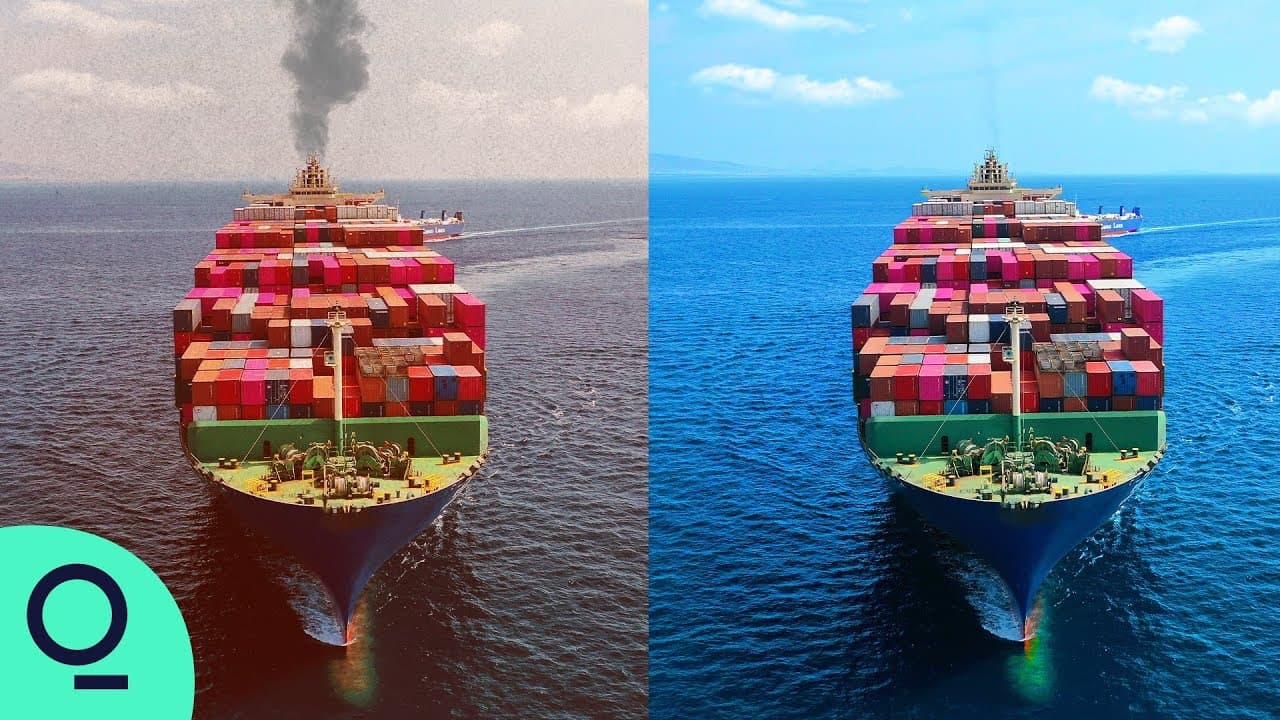
When you think of cutting edge technology at sea, you might be thinking of stuff like this. But there's an incoming revolution on the high seas that isn't quite as sexy, but could be significantly more impactful. Container shipping is the key component of global trade. About 80 or 90% of all the world's goods are transported at sea at some point. A... Read More
Key Insights
- Container shipping is a major component of global trade, responsible for 80-90% of goods transport and contributing significantly to CO2 emissions.
- The Yara Birkeland, an electric and autonomous ship, aims to reduce environmental impact despite its limited range and higher operating costs.
- Maersk is exploring methanol as a carbon-neutral fuel alternative to achieve its 2040 carbon neutrality goal, highlighting the limitations of current battery technology.
- Alternative fuels like ammonia and liquefied natural gas present challenges, including toxicity and non-neutral CO2 emissions, but offer potential CO2 reductions.
- Smaller autonomous vessels like Promare's Mayflower and Saildrone's electric drones are adopting hybrid technologies to gather marine data efficiently.
- The shipping industry is in a strong financial position due to supply chain issues, enabling investment in emission-reducing technologies.
- Renewable energy sources, such as wind and solar, are being harnessed to power maritime vessels, reducing reliance on carbon-emitting fuels.
- Urgent action is required to decarbonize existing and new ships to meet environmental targets and mitigate climate change impacts.
Install to Summarize YouTube Videos and Get Transcripts
Explore YouTube Video Summarizer or Get YouTube Transcript Extractor
Questions & Answers
Q: What is the main environmental concern associated with container shipping?
Container shipping is a major contributor to global CO2 emissions, accounting for about 3% of the world's total emissions. This is comparable to the entire CO2 output of Germany or all forms of aviation combined. The environmental impact is significant due to the reliance on fossil fuels for powering these massive ships.
Q: How does the Yara Birkeland aim to reduce environmental impact?
The Yara Birkeland is an electric and autonomous ship designed to reduce environmental impact by eliminating CO2 emissions. It operates without a crew and is intended for short, specific routes in Norway. Despite its higher operating costs and limited range, it serves as a catalyst for developing green maritime transport technologies.
Q: What is Maersk's approach to achieving carbon neutrality by 2040?
Maersk is pursuing carbon neutrality by 2040 by exploring alternative fuels like methanol. Methanol is considered CO2 neutral and is relatively simple to store and use. Maersk is modifying its engines to operate on different fuels, enabling a transition to greener alternatives and reducing reliance on traditional fossil fuels.
Q: What are the challenges associated with using alternative fuels like ammonia and LNG?
Alternative fuels like ammonia and liquefied natural gas (LNG) present challenges. Ammonia is highly toxic, posing risks to humans and marine life, while LNG is not CO2 neutral, only reducing emissions. Despite these drawbacks, they offer potential CO2 reductions and are being considered for future maritime applications.
Q: How are smaller autonomous vessels contributing to marine research?
Smaller autonomous vessels like Promare's Mayflower and Saildrone's electric drones are equipped with hybrid technologies to conduct marine research efficiently. They collect data on climate, water quality, and marine life, operating autonomously with hybrid propulsion systems that optimize renewable energy use, reducing the need for human presence and carbon emissions.
Q: Why is the shipping industry financially positioned to invest in emission-reducing technologies?
The shipping industry is financially strong due to recent supply chain issues, allowing companies to charge higher prices and generate substantial cash flow. This financial stability enables investment in new technologies that aim to reduce global emissions, aligning with environmental targets and fostering sustainable business practices.
Q: What role do renewable energy sources play in powering maritime vessels?
Renewable energy sources like wind and solar are crucial for powering maritime vessels sustainably. They reduce reliance on carbon-emitting fuels by providing clean energy for propulsion and onboard systems. Utilizing renewable sources minimizes mechanical load on vessels, extending their operational lifespan and enhancing environmental sustainability.
Q: Why is urgent action necessary to decarbonize the shipping industry?
Urgent action is needed to decarbonize the shipping industry to meet environmental targets and mitigate climate change impacts. Delaying action risks exacerbating global warming and its consequences. Both new and existing ships must transition to cleaner technologies swiftly to achieve significant emission reductions and ensure a sustainable future.
Summary & Key Takeaways
-
Container shipping is crucial to global trade, but it contributes significantly to CO2 emissions. The industry is exploring greener technologies, like electric and autonomous ships, to mitigate environmental impact while maintaining trade efficiency.
-
Maersk and other shipping giants are exploring alternative fuels, such as methanol, to achieve carbon neutrality. Despite challenges like toxicity and non-neutrality, these fuels offer potential CO2 reductions and are being integrated into new vessel designs.
-
Smaller, autonomous vessels are adopting hybrid technologies for efficient marine data collection. The industry is financially positioned to invest in emission-reducing technologies, emphasizing renewable energy sources to power vessels and reduce carbon emissions.
Read in Other Languages (beta)
Share This Summary 📚
Summarize YouTube Videos and Get Video Transcripts with 1-Click
Try YouTube Summary with ChatGPT & Claude or YouTube Transcript Generator
Explore More Summaries from Bloomberg Originals 📚





Summarize YouTube Videos and Get Video Transcripts with 1-Click
Try YouTube Summary with ChatGPT & Claude or YouTube Transcript Generator