The Surveillance Firm Recording Crimes From Baltimore's Skies
TL;DR
Ross McNutt's aerial surveillance sparks privacy debates.
Transcript
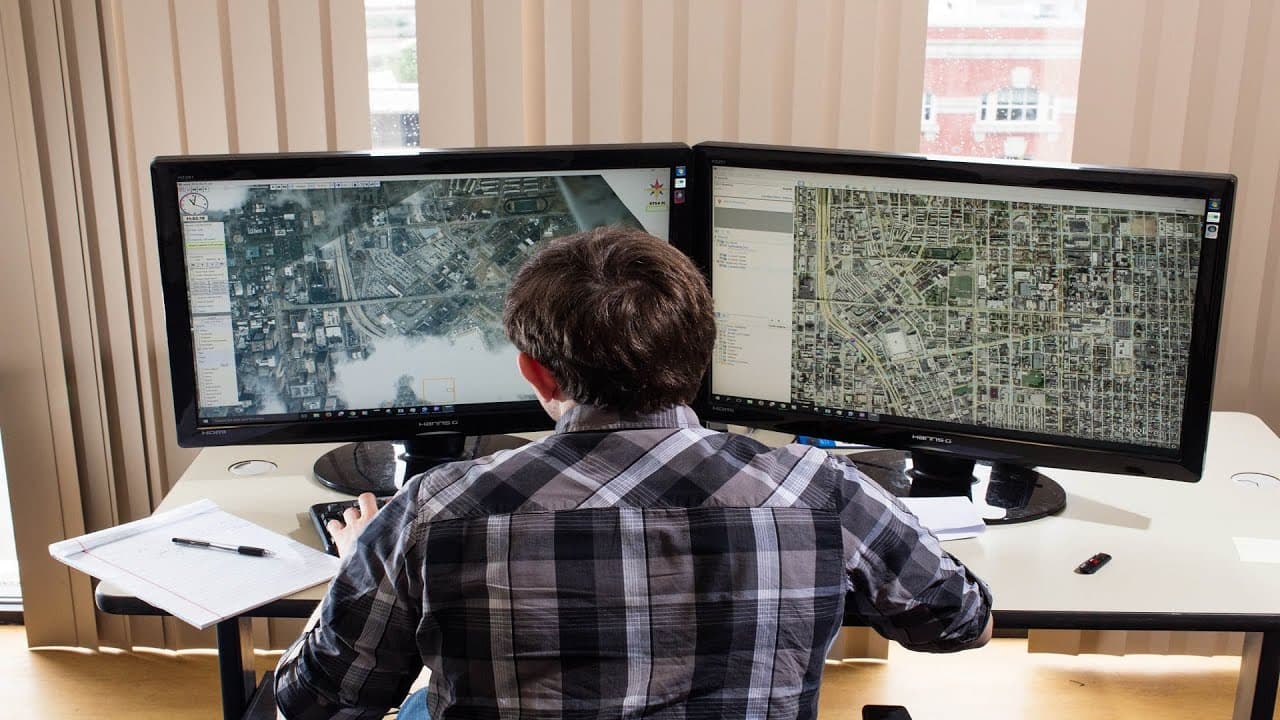
Ross Mcnut is trying out a new goatee. He likes to quote Monty Python. What is the terminal velocity of a fully laden sparrow? But spend some time with him and sooner or later he's going to start talking about murder. There was just a shooting on Gilmore Street yesterday. Uh Lawrence and Pressman, there was a shooting on that uh nearby here. I thin... Read More
Key Insights
- Ross McNutt operates surveillance planes that capture entire cities, providing police with tools to track criminals effectively.
- The surveillance system captures images with a 192 million pixel camera, equivalent to 800 video cameras, covering 30 miles every second.
- Despite its effectiveness in crime-solving, McNutt's technology faces resistance due to privacy concerns and societal implications.
- The cost of a year-long surveillance contract is $2 million, less than maintaining a police helicopter, but no city has committed long-term.
- Privacy advocates, like the ACLU, argue the technology poses significant risks to individual privacy and civil liberties.
- McNutt's surveillance method involves tracking movements from crime scenes backward and forward to gather evidence for police reports.
- The technology's limitations include the inability to identify individuals from aerial images, relying on cross-referencing ground cameras.
- The societal debate centers on whether the benefits of reduced crime outweigh the potential for mass surveillance and privacy invasion.
Install to Summarize YouTube Videos and Get Transcripts
Explore YouTube Video Summarizer or Get YouTube Transcript Extractor
Questions & Answers
Q: How does Ross McNutt's surveillance technology work?
Ross McNutt's surveillance technology involves planes equipped with high-resolution cameras capturing images over a 30-mile radius every second. The images are transmitted live to analysts who track movements to and from crime scenes, providing valuable data for police investigations. This method allows for efficient tracking of criminal activities, though it raises privacy concerns.
Q: What are the privacy concerns associated with this surveillance method?
The primary privacy concern is the potential for mass surveillance, as the technology captures images of entire cities continuously. Privacy advocates argue that this capability poses significant risks to individual privacy and civil liberties, sparking debates on whether the benefits of crime reduction justify such widespread surveillance.
Q: Why haven't cities committed to long-term contracts for this technology?
Despite its effectiveness in crime-solving, no city has committed to long-term contracts primarily due to privacy concerns and financial considerations. The annual cost of $2 million, though less than a police helicopter, is a significant investment. Additionally, societal debates on privacy and civil liberties further complicate long-term adoption.
Q: How does the surveillance system assist law enforcement?
The system assists law enforcement by providing real-time data on criminal activities. Analysts track movements to and from crime scenes, compiling reports for police investigations. This method enhances the ability to solve crimes efficiently, though it requires balancing with privacy considerations and societal values.
Q: What are the limitations of the surveillance technology?
The technology's limitations include the inability to identify individuals from aerial images, as the resolution only allows for tracking movements. Cross-referencing with ground cameras is necessary for identification, but this process is not always reliable. These limitations highlight the need for careful consideration of privacy and effectiveness.
Q: What is the societal debate surrounding this technology?
The societal debate centers on the trade-offs between enhanced security and privacy invasion. While the technology can reduce crime, it raises concerns about mass surveillance and the potential erosion of civil liberties. Society must decide the extent to which government surveillance is acceptable for public safety.
Q: How do privacy advocates view this technology?
Privacy advocates, like the ACLU, view this technology as a significant threat to individual privacy. They argue that the potential for mass surveillance outweighs the benefits of crime reduction, emphasizing the need to protect civil liberties and prevent government overreach in monitoring citizens' movements.
Q: What is the cost comparison between this technology and traditional methods?
The annual cost of Ross McNutt's surveillance technology is $2 million, which is less than maintaining a police helicopter. Despite the cost-effectiveness, cities remain hesitant to adopt the technology long-term due to privacy concerns and the societal implications of widespread surveillance, highlighting the complexity of balancing costs and privacy.
Summary & Key Takeaways
-
Ross McNutt's aerial surveillance technology aims to assist law enforcement by capturing wide-area images of cities, tracking criminal activities efficiently. However, this approach raises significant privacy concerns, leading to societal debates on the trade-offs between security and civil liberties.
-
The surveillance system uses a high-resolution camera to capture images over a 30-mile radius every second, providing valuable data for police investigations. Despite its potential, long-term adoption by cities remains elusive due to privacy concerns and financial considerations.
-
Privacy advocates, particularly the ACLU, argue that such widespread surveillance poses threats to individual privacy, sparking discussions on societal values and the extent of acceptable government surveillance. The debate continues as cities weigh the benefits against potential privacy invasions.
Read in Other Languages (beta)
Share This Summary 📚
Summarize YouTube Videos and Get Video Transcripts with 1-Click
Try YouTube Summary with ChatGPT & Claude or YouTube Transcript Generator
Explore More Summaries from Bloomberg Originals 📚






Summarize YouTube Videos and Get Video Transcripts with 1-Click
Try YouTube Summary with ChatGPT & Claude or YouTube Transcript Generator