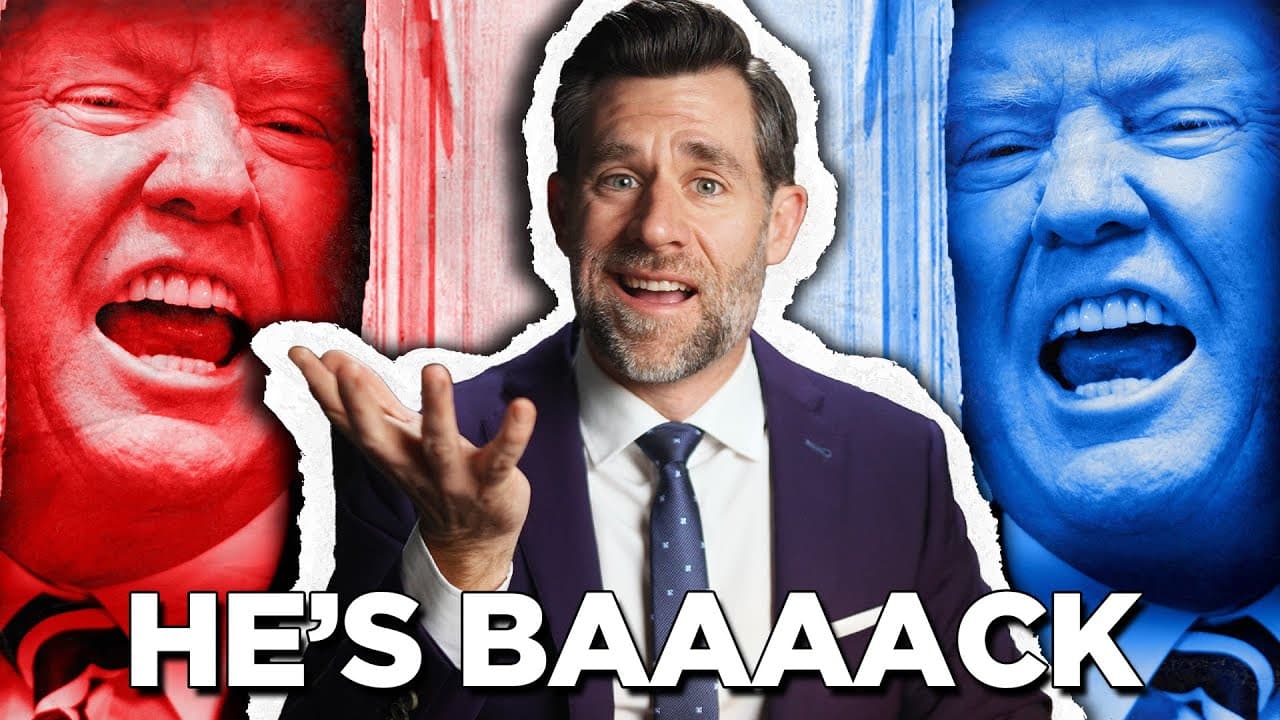
Why Everyone Hates the Supreme Court's Decision on Insurrection & the 14th Amendment
TL;DR
Trump can stay on the Colorado ballot after the Supreme Court ruling on insurrection charges.
Transcript
- We knew it was coming, but now we know how. Trump is back on the ballot, baby. And in related news, a bunch of journalists were not laid off. Yes, Donald Trump gets to stay on the ballot in Colorado's Republican primary. The U.S. Supreme Court reversed the Colorado Supreme Court's ruling that Trump committed insurrection and was therefore barred ... Read More
Key Insights
- 👻 The Supreme Court's ruling allows Trump to stay on the Colorado ballot by overturning the insurrection charges.
- ❓ The decision clarifies that only Congress can enforce the disqualification clause under Section 3 of the 14th Amendment.
- ✊ The ruling has implications for future elections and the power of states to exclude candidates based on federal requirements.
Install to Summarize YouTube Videos and Get Transcripts
Explore YouTube Video Summarizer or Get YouTube Transcript Extractor
Questions & Answers
Q: What was the basis for the Colorado Supreme Court's ruling to bar Trump from the ballot?
The Colorado Supreme Court determined that Trump engaged in insurrection, violating Section 3 of the 14th Amendment, which bars individuals who commit insurrection from holding federal office.
Q: How did the U.S. Supreme Court's ruling affect Trump's eligibility to run for office?
The U.S. Supreme Court overturned the Colorado Supreme Court's decision, allowing Trump to stay on the Colorado ballot by ruling that only Congress has the authority to disqualify federal candidates based on insurrection charges.
Q: Why did the Court's decision create a potential loophole for individuals involved in the January 6th riot?
The Court's decision opened the door for individuals involved in the January 6th riot to run for federal office, as it determined that only Congress can enforce the Insurrection Clause and no legislation currently exists for disqualification.
Q: How did the liberal justices dissent from the majority opinion?
The liberal justices disagreed with the majority's ruling that only Congress can enforce Section 3 of the 14th Amendment, arguing that it was inconsistent with other constitutional rights and that the majority improperly acted like a legislature.
Summary & Key Takeaways
-
The U.S. Supreme Court allowed Trump to remain on Colorado's Republican primary ballot, overturning a ruling that he committed insurrection.
-
Section 3 of the 14th Amendment bars individuals who engage in insurrection from holding public office, but the Court ruled that only Congress can enforce this disqualification.
-
The ruling has implications for future elections and the power of states to exclude candidates based on federal requirements.
Read in Other Languages (beta)
Share This Summary 📚
Summarize YouTube Videos and Get Video Transcripts with 1-Click
Try YouTube Summary with ChatGPT & Claude or YouTube Transcript Generator
Explore More Summaries from LegalEagle 📚




Summarize YouTube Videos and Get Video Transcripts with 1-Click
Try YouTube Summary with ChatGPT & Claude or YouTube Transcript Generator