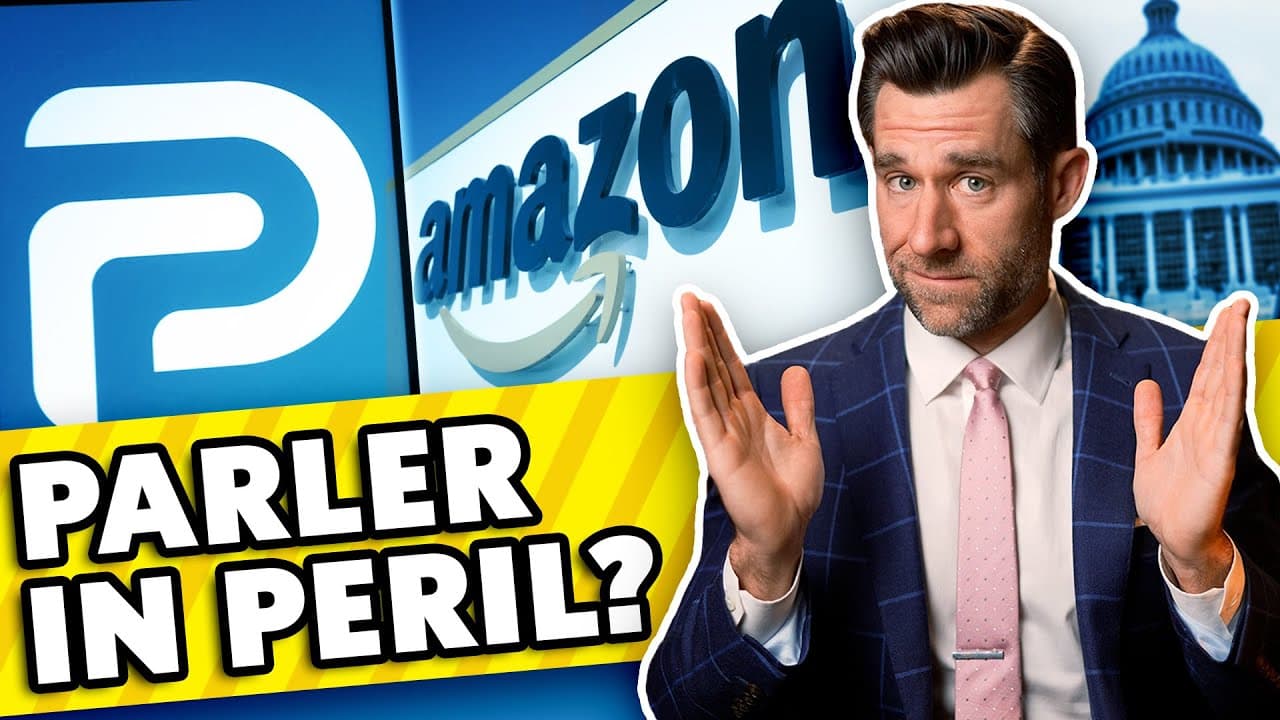
Parler v. Amazon Dies. Is Reborn!
TL;DR
Parler sues Amazon for suspension, lawsuit dismissed, refiled in state court.
Transcript
- In the wake of the mass hysteria, that was the January 6th riots at the US Capitol, a lot of people felt something anything had to be done and social media was the immediate first target, first President Trump was banned from using Facebook and Twitter, then Google and Apple made the decision to remove Parler from their app stores, some billed Pa... Read More
Key Insights
- Parler was removed from Amazon Web Services due to inadequate content moderation, leading to a legal battle.
- Amazon justified its actions by citing Parler's failure to adhere to content moderation agreements.
- Parler's lawsuit against Amazon included claims of antitrust violations and breach of contract.
- The Sherman Antitrust Act claim required evidence of conspiracy, which Parler failed to provide.
- Amazon's contract allowed immediate termination for breaches, weakening Parler's breach of contract claim.
- Parler dismissed its federal lawsuit and refiled in Washington state court, adding new claims.
- Amazon cited Section 230 of the Communications Decency Act as a defense against Parler's claims.
- The legal proceedings highlight complexities in content moderation and platform liability.
Install to Summarize YouTube Videos and Get Transcripts
Explore YouTube Video Summarizer or Get YouTube Transcript Extractor
Questions & Answers
Q: Why did Amazon suspend Parler's access to their web services?
Amazon suspended Parler's access due to Parler's failure to effectively moderate violent and illegal content on its platform. This lack of moderation violated Amazon's terms of service, which required Parler to ensure that its content did not pose security risks or violate applicable laws.
Q: What were the main legal claims in Parler's lawsuit against Amazon?
Parler's lawsuit against Amazon included claims of antitrust violations under the Sherman Antitrust Act, breach of contract, and intentional interference with prospective economic advantage. Parler alleged that Amazon conspired with Twitter to de-platform Parler and unfairly terminated their agreement.
Q: How did Amazon defend itself against Parler's claims?
Amazon defended itself by arguing that Parler failed to provide evidence of a conspiracy under the Sherman Antitrust Act. Amazon also cited its contractual right to terminate services immediately for breaches, and invoked Section 230 of the Communications Decency Act, which protects companies moderating harmful content.
Q: What is the significance of Section 230 in this case?
Section 230 of the Communications Decency Act is significant because it provides legal protection to online service providers, like Amazon, when they take actions in good faith to restrict access to harmful or objectionable content. This protection was a key defense against Parler's claims in the lawsuit.
Q: Why was Parler's lawsuit dismissed in federal court?
Parler's lawsuit was dismissed in federal court because it failed to demonstrate a likelihood of success on the merits of its claims. The court found that Parler did not provide sufficient evidence of conspiracy or breach of contract, and that Amazon acted within its contractual rights.
Q: What actions did Parler take after the dismissal of their federal lawsuit?
After the dismissal of their federal lawsuit, Parler voluntarily dismissed the case and refiled it in Washington state court. The refiled complaint included additional claims, such as defamation and violations of Washington's Consumer Protection Act, in an attempt to find a more favorable legal forum.
Q: What is the role of conscious parallelism in this legal scenario?
Conscious parallelism refers to businesses independently adopting similar actions without explicit agreement, often in response to market conditions. In this case, Amazon, along with Apple and Google, independently decided to sever ties with Parler due to its content moderation issues, without any proven collusion.
Q: What are the potential outcomes of the ongoing legal battle between Parler and Amazon?
The ongoing legal battle between Parler and Amazon could result in further litigation, including discovery and motions to dismiss in state court. If Parler's new claims survive initial legal challenges, the case may proceed to trial. However, Amazon's defenses and the strength of Parler's evidence will heavily influence the outcome.
Summary & Key Takeaways
-
Parler was removed from Amazon Web Services due to its failure to moderate violent content, leading to a lawsuit. The lawsuit alleged antitrust violations and breach of contract, but Parler failed to provide sufficient evidence for its claims. Amazon's contract allowed for immediate termination, weakening Parler's position.
-
Amazon defended its actions by citing Section 230 of the Communications Decency Act, which shields companies from liability when moderating harmful content. Parler's lawsuit was initially dismissed in federal court, but it was refiled in Washington state court with additional claims including defamation.
-
The legal battle between Parler and Amazon underscores the challenges of content moderation and platform liability in the digital age. The case also highlights the complexities of antitrust law and contractual agreements between tech companies.
Read in Other Languages (beta)
Share This Summary 📚
Summarize YouTube Videos and Get Video Transcripts with 1-Click
Try YouTube Summary with ChatGPT & Claude or YouTube Transcript Generator
Explore More Summaries from LegalEagle 📚





Summarize YouTube Videos and Get Video Transcripts with 1-Click
Try YouTube Summary with ChatGPT & Claude or YouTube Transcript Generator