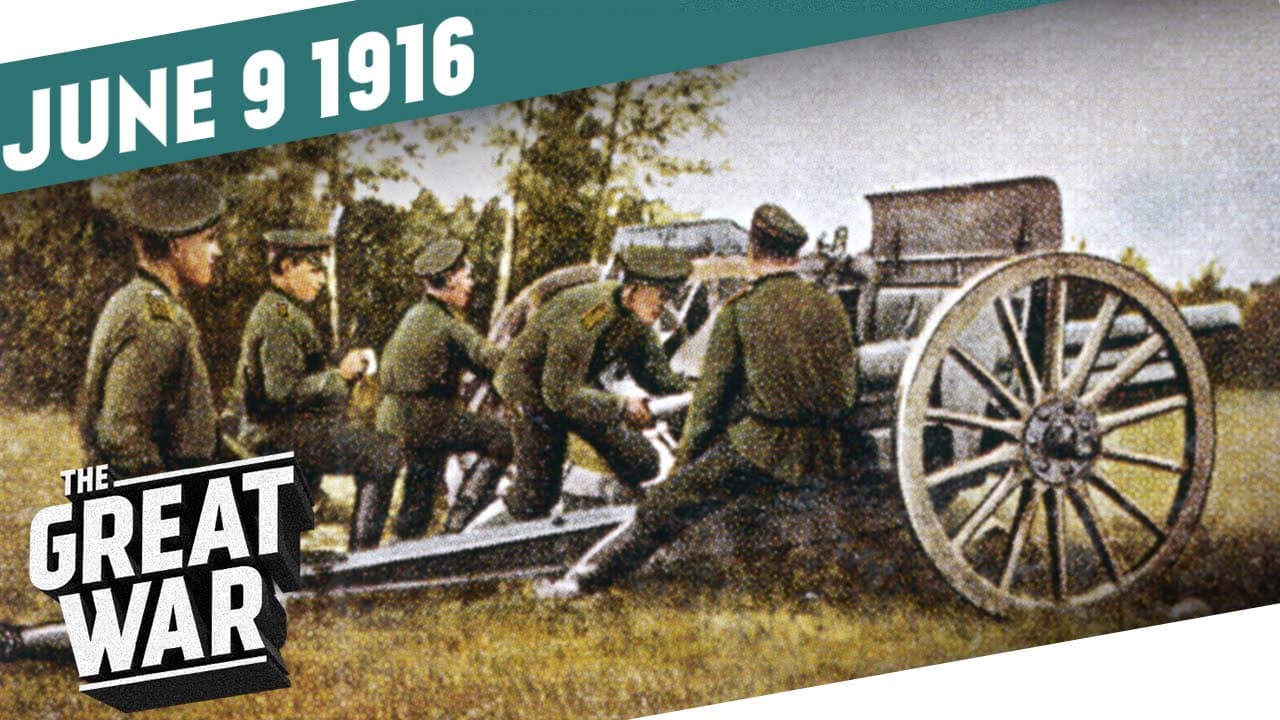
The Brusilov Offensive - The Arab Revolt I THE GREAT WAR Week 98
TL;DR
The Brusilov Offensive begins, impacting the Eastern Front significantly.
Transcript
Russia had suffered devastating defeats over the course of the war, from Tannenberg in 1914 to the Austro-German Offensives of last year, which cost the Russians thousands of miles of land and hundreds of thousands of men. And after the disastrous Russian March offensive this year the general belief among the Central Powers was that Russia was no l... Read More
Key Insights
- The Brusilov Offensive marked a turning point on the Eastern Front, as Russia launched a well-planned attack against Austria-Hungary, showcasing improved military tactics.
- General Alexei Brusilov's strategy involved attacking on a wide front, preventing the enemy from massing reserves effectively and utilizing storm troops to exploit weak points.
- The offensive began on June 4, 1916, with a massive artillery barrage, followed by a strategic infantry advance, which caught the Austrians off guard.
- The Austro-Hungarian forces suffered significant losses, with entire units surrendering and many troops captured, leading to a retreat across the Styr River.
- The Arab Revolt also commenced this week, with Sharif Hussein proclaiming the revolt outside Medina, although initial actions were unsuccessful.
- In the west, the Germans captured Fort Vaux at Verdun, while in Italy, the Austro-Hungarian Trentino Offensive began to falter.
- The week saw significant changes in British military policy, with the introduction of conscription replacing voluntary enlistment.
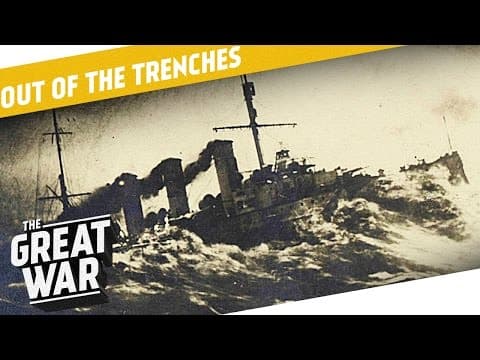
- The HMS Hampshire was mined off the Scottish coast, resulting in the death of British Secretary of State for War, Lord Kitchener.
Install to Summarize YouTube Videos and Get Transcripts
Explore YouTube Video Summarizer or Get YouTube Transcript Extractor
Questions & Answers
Q: What was the significance of the Brusilov Offensive?
The Brusilov Offensive was significant because it marked a turning point on the Eastern Front during World War I. It demonstrated Russia's ability to launch a successful and well-coordinated attack against the Austro-Hungarian forces, using innovative tactics such as attacking on a wide front and employing storm troops. This offensive resulted in substantial Austro-Hungarian losses and highlighted the potential for Russia to regain its military prowess.
Q: How did General Alexei Brusilov plan the offensive?
General Alexei Brusilov planned the offensive by focusing on attacking on a wide front, which would prevent the enemy from effectively massing reserves. He also advanced his lines as close as possible to the enemy by digging saps. Brusilov utilized storm troops to probe and harass the enemy's weak spots, which allowed the Russian forces to exploit vulnerabilities and achieve significant breakthroughs against the Austro-Hungarian defenses.
Q: What were the outcomes of the Brusilov Offensive for the Austro-Hungarian forces?
The outcomes of the Brusilov Offensive for the Austro-Hungarian forces were devastating. They suffered significant losses, with entire units surrendering and many troops captured. The offensive forced them into a retreat across the Styr River, and they lost a substantial amount of artillery. This offensive further weakened the Austro-Hungarian military position on the Eastern Front and highlighted their vulnerabilities against a well-coordinated Russian attack.
Q: What was the Arab Revolt, and how did it begin?
The Arab Revolt was a military uprising against the Ottoman Empire, led by Sharif Hussein of Mecca. It began on June 8, 1916, outside Medina. Despite having 50,000 men, only 10,000 were armed with rifles, leading to initial failures against the Ottoman forces. The revolt aimed to establish independent Arab states and was supported by British advisors, including T.E. Lawrence, who played a crucial role in its development.
Q: What happened at Fort Vaux during this week?
During this week, the Germans captured Fort Vaux at Verdun after a prolonged siege. The French defenders fought valiantly in difficult conditions, including subterranean passages filled with the stench of rotting corpses and a shortage of water. Despite their efforts, the fort eventually fell to the Germans, marking a significant development in the ongoing Battle of Verdun on the Western Front.
Q: How did the Austro-Hungarian Trentino Offensive progress?
The Austro-Hungarian Trentino Offensive initially made some gains, but by this week, it began to falter. The Sardinian Grenadiers were driven off the Asiago plateau, but this was the last significant achievement for the Austro-Hungarian forces. The offensive started to lose momentum, and by June 9, a division was withdrawn to reinforce the eastern front against the new Russian offensive, indicating the challenges faced by Austria-Hungary on multiple fronts.
Q: What change occurred in British military policy this week?
This week, a significant change in British military policy occurred with the introduction of conscription, replacing voluntary enlistment. This policy shift was in response to the need for more troops to sustain the war effort. Conscription was a contentious issue but ultimately deemed necessary to ensure a steady supply of soldiers for the British military as World War I continued to demand significant manpower.
Q: What was the impact of Lord Kitchener's death?
The death of Lord Kitchener, the British Secretary of State for War, had a significant impact as he was a major figure in the British war effort. He drowned when the HMS Hampshire was mined off the Scottish coast. Kitchener's death created a leadership vacuum and was a morale blow to the British public and military. His loss necessitated a reorganization of the British military leadership during a critical period of World War I.
Summary & Key Takeaways
-
The Brusilov Offensive began on June 4, 1916, marking a significant shift on the Eastern Front as Russia launched a successful attack against the Austro-Hungarian forces. General Alexei Brusilov's strategy involved attacking on a wide front, preventing the enemy from massing reserves effectively.
-
The offensive resulted in significant Austro-Hungarian losses, with entire units surrendering and many troops captured, leading to a retreat across the Styr River. The Arab Revolt also commenced this week, with Sharif Hussein proclaiming the revolt outside Medina, although initial actions were unsuccessful.
-
In the west, the Germans captured Fort Vaux at Verdun, while in Italy, the Austro-Hungarian Trentino Offensive began to falter. The week also saw changes in British military policy, with the introduction of conscription, and the death of British Secretary of State for War, Lord Kitchener.
Read in Other Languages (beta)
Share This Summary 📚
Summarize YouTube Videos and Get Video Transcripts with 1-Click
Try YouTube Summary with ChatGPT & Claude or YouTube Transcript Generator
Explore More Summaries from The Great War 📚

Summarize YouTube Videos and Get Video Transcripts with 1-Click
Try YouTube Summary with ChatGPT & Claude or YouTube Transcript Generator