Italian Proto-Fascists Occupy Fiume - The Adriatic Question I THE GREAT WAR 1920
TL;DR
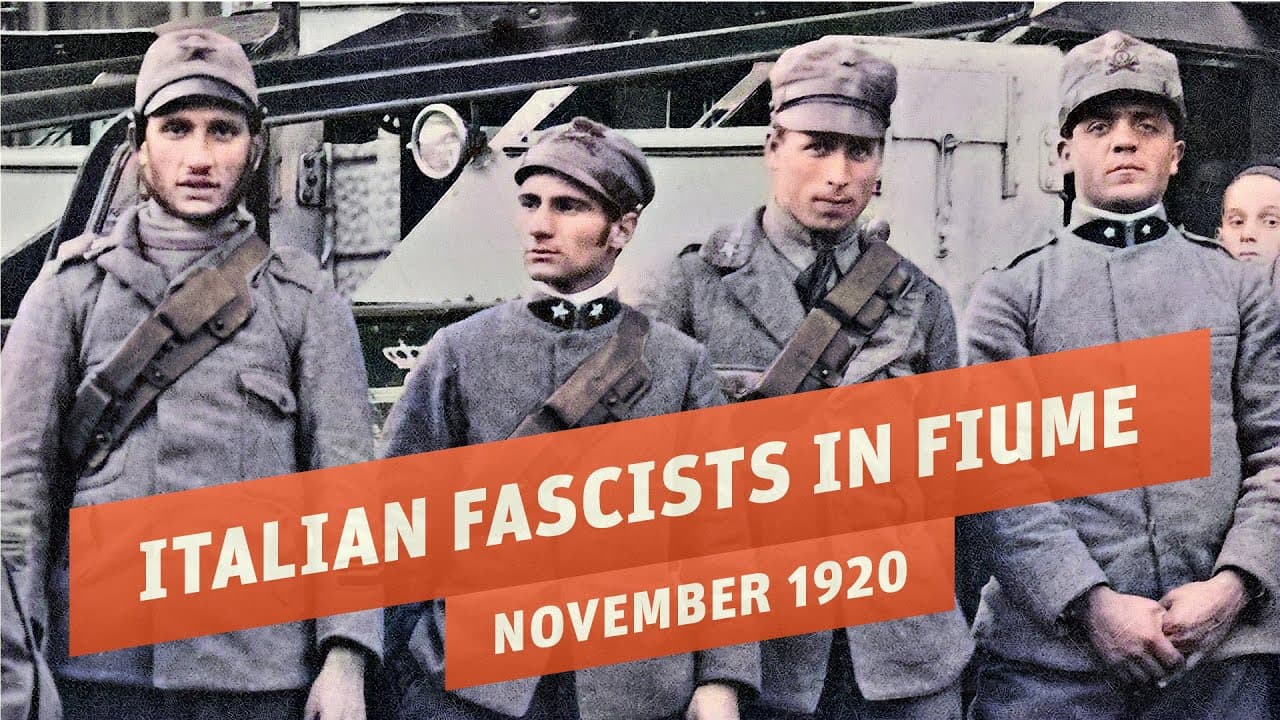
Italian proto-fascists occupy Fiume, causing international tensions.
Transcript
hi I'm Jesse Alexander and welcome to the Great War as 1920 began to draw to a close a new postwar order was beginning to take shape in Europe and one of the heartly debated borders was between Italy and the new state of the kingdom of serbs croats and slovin now the Italians and the serbs had been allies during the Great War but that didn't stop a... Read More
Key Insights
- The Treaty of Rapallo in 1920 resolved the territorial dispute between Italy and the Kingdom of Serbs, Croats, and Slovenes, but left both countries dissatisfied with the outcome.
- Italy faced significant political and economic turmoil post-WWI, including strikes and occupations by workers and peasants, known as the 'Two Red Years'.
- The rise of nationalist sentiments in Italy was fueled by dissatisfaction with the outcomes of the Paris Peace Conference and the perception of a 'mutilated victory'.
- Gabriele D'Annunzio, an Italian nationalist poet, led the occupation of Fiume in 1919, challenging both the Italian government and international agreements.
- The Kingdom of Serbs, Croats, and Slovenes, later Yugoslavia, faced internal divisions and external threats, complicating its post-war recovery and border negotiations.
- The Adriatic question was a critical issue in post-WWI Europe, involving strategic territorial claims and the principle of self-determination.
- Allied powers were divided in their support for Italy and Yugoslavia, with the United States advocating for self-determination, while Britain and France were more ambivalent.
- The occupation of Fiume by D'Annunzio's forces highlighted the fragility and complexity of post-war peace settlements and foreshadowed the rise of fascism in Italy.
Install to Summarize YouTube Videos and Get Transcripts
Explore YouTube Video Summarizer or Get YouTube Transcript Extractor
Questions & Answers
Q: What was the Treaty of Rapallo?
The Treaty of Rapallo, signed in 1920, was an agreement between Italy and the Kingdom of Serbs, Croats, and Slovenes to resolve territorial disputes following WWI. It established new borders, with Fiume becoming an independent state, but left both countries dissatisfied with the allocation of territories.
Q: Who was Gabriele D'Annunzio?
Gabriele D'Annunzio was an Italian nationalist poet and war hero who led the occupation of Fiume in 1919. His actions were driven by nationalist sentiments and dissatisfaction with the post-war peace settlements. D'Annunzio's occupation of Fiume was a significant precursor to the rise of fascism in Italy.
Q: What challenges did the Kingdom of Serbs, Croats, and Slovenes face post-WWI?
The Kingdom of Serbs, Croats, and Slovenes, later Yugoslavia, faced numerous challenges post-WWI, including internal divisions among its diverse ethnic groups, economic difficulties, and external threats from neighboring countries. The new state struggled to establish stable governance and secure its borders amidst these challenges.
Q: How did the Paris Peace Conference affect Italy?
The Paris Peace Conference left Italy dissatisfied, as the territorial gains promised in the Treaty of London were not fully realized. This led to a sense of betrayal and a 'mutilated victory' narrative, fueling nationalist and proto-fascist sentiments. Italy's political landscape became increasingly unstable as a result.
Q: What was the 'Two Red Years' in Italy?
The 'Two Red Years' (Biennio Rosso) in Italy refers to the period of 1919-1920, characterized by widespread social unrest, strikes, and occupations by workers and peasants. This period of political and economic crisis highlighted the deep divisions within Italian society and contributed to the rise of nationalist movements.
Q: What was the significance of the Adriatic question?
The Adriatic question was a significant post-WWI issue involving territorial disputes between Italy and Yugoslavia over regions like Fiume. It highlighted the challenges of reconciling national aspirations with international diplomacy and the principle of self-determination, impacting the broader stability of post-war Europe.
Q: How did the Allies respond to the occupation of Fiume?
The Allies were divided in their response to the occupation of Fiume by D'Annunzio's forces. The United States advocated for self-determination, while Britain and France were more ambivalent. The occupation strained Allied relations and complicated the peace negotiations, ultimately leaving the resolution to Italy and Yugoslavia.
Q: What impact did D'Annunzio's occupation of Fiume have on Italy?
D'Annunzio's occupation of Fiume had a profound impact on Italy, highlighting the government's inability to control nationalist movements and foreshadowing the rise of fascism. It exposed the deep divisions within Italian society and the dissatisfaction with the post-war settlement, setting the stage for future political upheaval.
Summary & Key Takeaways
-
In the aftermath of WWI, Italy and the Kingdom of Serbs, Croats, and Slovenes were embroiled in a territorial dispute over Fiume, leading to significant political and social unrest in both countries. The Treaty of Rapallo in 1920 attempted to resolve the conflict but left both sides dissatisfied.
-
Italian nationalist Gabriele D'Annunzio occupied the city of Fiume, challenging the Italian government and international peace agreements. His actions were part of a broader nationalist movement in Italy, which felt betrayed by the outcomes of the Paris Peace Conference.
-
The post-war period was marked by significant instability in Europe, with newly formed states like Yugoslavia facing internal divisions and external threats. The Adriatic question exemplified the challenges of balancing national aspirations with international diplomacy in the wake of WWI.
Read in Other Languages (beta)
Share This Summary 📚
Summarize YouTube Videos and Get Video Transcripts with 1-Click
Try YouTube Summary with ChatGPT & Claude or YouTube Transcript Generator
Explore More Summaries from The Great War 📚
Summarize YouTube Videos and Get Video Transcripts with 1-Click
Try YouTube Summary with ChatGPT & Claude or YouTube Transcript Generator