Contract Law 39 III Sherwood v Walker (pregnant cow)
TL;DR
A legal case in late nineteenth-century Michigan explores what happens when a contract is based on a mutual mistaken understanding.
Transcript
the case of Sherwood V Walker which comes from late nineteenth-century Michigan asks the question what happens when both parties to a contract based their agreement to the contract on a mistaken understanding of the situation mr. Sherwood was a banker and he wanted to buy some cattle from mr. Walker who imported and bred Black Angus cattle like the... Read More
Key Insights
- 🥰 The Sherwood v Walker case explores the repercussions of a mutual mistaken assumption in a contract, specifically relating to a cow's fertility and value.
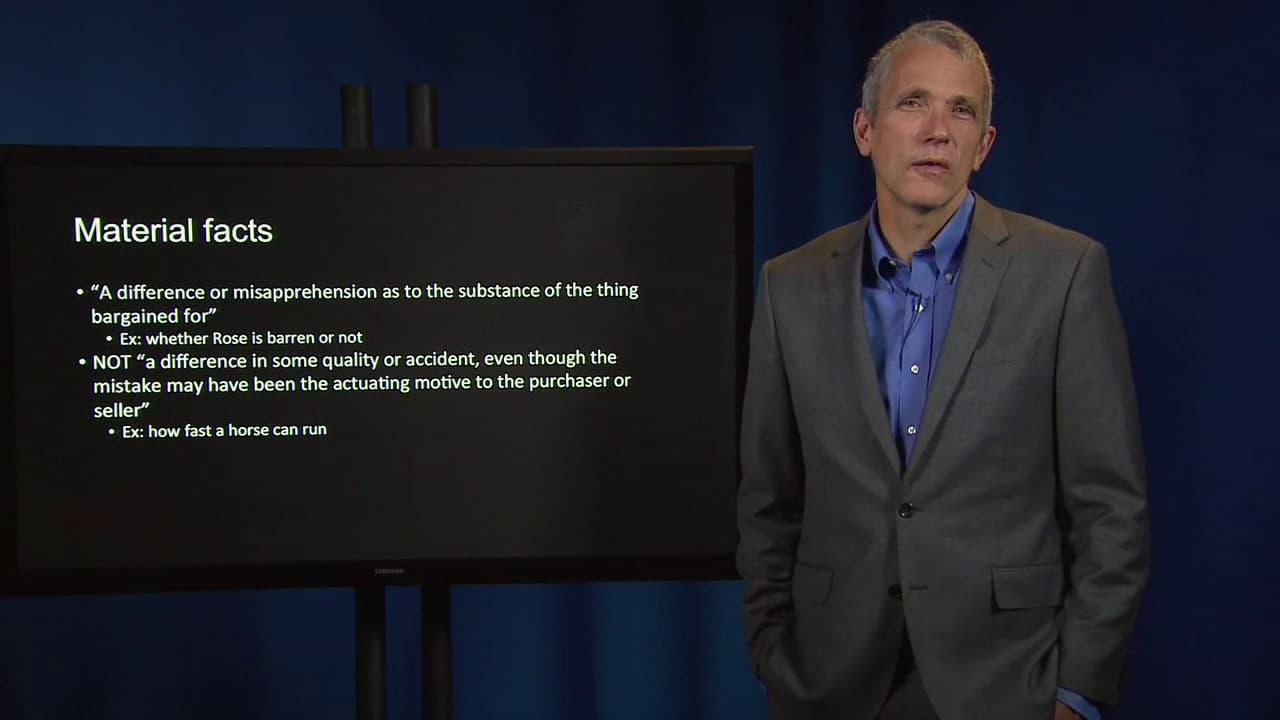
- ❓ Justice Moore's distinction between substance and condition/value determines whether a contract can be voided due to a mistake.
- 🦮 Section 152 and 154 of the Restatement guide the court in determining voidability and exceptions to the mutual mistake doctrine.
Install to Summarize YouTube Videos and Get Transcripts
Explore YouTube Video Summarizer or Get YouTube Transcript Extractor
Questions & Answers
Q: What was the disagreement in the Sherwood v Walker case?
The disagreement centered around whether Walker could back out of selling a cow, Rose, to Sherwood after discovering she was pregnant, even though they both believed she was barren when making the deal.
Q: How did the majority opinion and dissenting opinion differ in their interpretation of the case?
The majority argued that both parties were mistaken about Rose's condition, justifying Walker's refusal to sell. However, Sherwood's dissent suggests he may have suspected Rose's fertility all along.
Q: According to Justice Moore, what determines whether a contract can be voided due to a mistaken assumption?
Justice Moore's distinction is based on whether the mistake concerns the substance or the condition/value of the object. If it relates to the substance, the contract can be voided; otherwise, it remains enforceable.
Q: How does Section 154 of the Restatement provide exceptions to the mutual mistake doctrine?
Section 154 allows the parties to allocate the risk of specific mistakes to a particular party, either through contractual provisions or through the court's determination of reasonableness. This helps eliminate the default voidability of contracts due to mutual mistakes.
Summary & Key Takeaways
-
Sherwood, a banker, wants to buy cattle from Walker but is initially unhappy with the selection. They agree on a price for a specific cow named Rose, but Walker later refuses to sell when Rose is found to be pregnant.
-
The majority opinion argues that both parties believed Rose was barren, leading to a lower price based on her meat value. However, Sherwood's dissent suggests that he had suspicions about Rose's fertility.
-
The court must determine if Walker can back out of the contract now that both parties know the cow's true value.
-
Justice Moore's opinion hinges on whether the mistake relates to the substance or condition/value of the object, allowing Walker to refuse selling Rose.
Read in Other Languages (beta)
Share This Summary 📚
Summarize YouTube Videos and Get Video Transcripts with 1-Click
Try YouTube Summary with ChatGPT & Claude or YouTube Transcript Generator
Explore More Summaries from YaleCourses 📚


Summarize YouTube Videos and Get Video Transcripts with 1-Click
Try YouTube Summary with ChatGPT & Claude or YouTube Transcript Generator