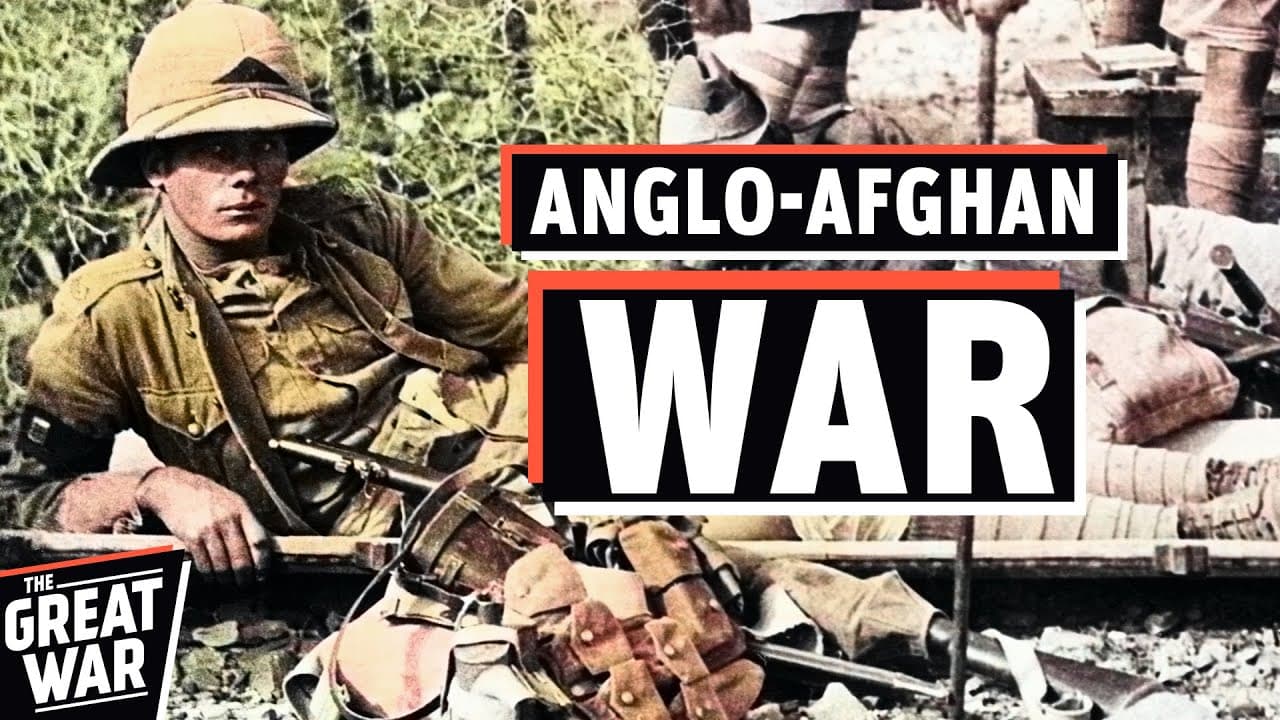
The Graveyard of Empires Strikes Back - 3rd British-Afghan War (Documentary)
TL;DR
Afghanistan's strategic victory despite tactical defeat in 1919 war.
Transcript
remote region of Waziristan. This revolt has been going on since May, when the Third Anglo-Afghan War and Afghanistan’s fight for independence began. Hi, I’m Jesse Alexander and this is The Great War. The Third Anglo-Afghan War of May 1919 is a fascinating conflict that we just had to cover. But it happened to occur in a rather remote area for deta... Read More
Key Insights
- The Third Anglo-Afghan War began in May 1919, driven by Afghanistan's desire for independence from British control.
- Emir Amanullah declared war to force recognition of Afghan independence and leveraged anti-British sentiments.
- Afghanistan's military, though large, was poorly trained and equipped, relying on frontier tribes to bolster their forces.
- British forces, although superior, faced logistical challenges and unrest within India, complicating their military efforts.
- The war saw the effective use of air power by the British, marking a significant development in military strategy.
- The Treaty of Rawalpindi ended the conflict, granting Afghanistan independence but ceasing British subsidies.
- The war weakened British control in the region, necessitating increased garrisoning and highlighting the militia system's collapse.
- Despite military setbacks, Afghanistan emerged with strategic gains, prompting Amanullah to pursue reforms amidst internal opposition.
Install to Summarize YouTube Videos and Get Transcripts
Explore YouTube Video Summarizer or Get YouTube Transcript Extractor
Questions & Answers
Q: What prompted the Third Anglo-Afghan War?
The Third Anglo-Afghan War was prompted by Afghanistan's desire for independence from British control. Emir Amanullah declared war in April 1919, aiming to force the British to recognize Afghan sovereignty. The decision was influenced by anti-British sentiments within Afghanistan and a miscalculation of military capabilities.
Q: How did Afghanistan's military capabilities compare to the British forces?
Afghanistan's military, though numbering around 50,000 men with 280 guns, was poorly trained and equipped. The British forces, despite facing logistical challenges and unrest in India, enjoyed clear military superiority. However, the British also faced difficulties due to the weakened Indian army post-World War I and the region's harsh conditions.
Q: What role did air power play in the conflict?
Air power played a significant role in the Third Anglo-Afghan War, marking a development in military strategy. The British effectively used aircraft to bomb and strafe Afghan forces, including key locations like Jalalabad and Kabul. This demonstrated air power's potential as a force multiplier in remote and challenging terrains.
Q: What were the terms of the Treaty of Rawalpindi?
The Treaty of Rawalpindi, signed on August 8, 1919, ended the Third Anglo-Afghan War. The treaty granted Afghanistan independence, with Britain relinquishing control over Afghan foreign policy. However, the British stopped paying subsidies to Afghanistan. The treaty also confirmed the Durand Line as the border between Afghanistan and British India.
Q: How did the war affect British control in the region?
The Third Anglo-Afghan War weakened British control in the region. The collapse of the militia system and the loss of Afghanistan as a client state necessitated a heavier British military presence. The war also highlighted the limitations of British power in the face of internal unrest and logistical challenges in India.
Q: What strategic gains did Afghanistan achieve despite military setbacks?
Despite tactical setbacks, Afghanistan achieved strategic gains by securing independence through the Treaty of Rawalpindi. The war demonstrated Afghanistan's resolve for sovereignty and prompted Emir Amanullah to pursue reforms. These reforms aimed to modernize Afghanistan but also set the stage for internal conflicts with conservative factions.
Q: How did the British respond to the Afghan invasion?
The British responded to the Afghan invasion with a combination of military force and strategic negotiations. Despite logistical challenges, they mobilized a significant number of troops and effectively used air power. The British were keen to end the conflict swiftly to prevent further tribal revolts and maintain stability in the region.
Q: What were the long-term effects of the war on Afghanistan and British India?
The long-term effects of the war included Afghanistan's independence and subsequent internal reforms initiated by Amanullah. For British India, the war exposed vulnerabilities in British control and highlighted the need for increased military presence. The conflict also marked a shift in military tactics, with air power gaining prominence in strategic planning.
Summary & Key Takeaways
-
The Third Anglo-Afghan War in 1919 was a pivotal conflict where Afghanistan sought independence from British control. Emir Amanullah's declaration of war aimed to force recognition of Afghan sovereignty. Despite military setbacks, Afghanistan achieved strategic success, leading to the Treaty of Rawalpindi, which granted independence.
-
Afghanistan's military, though substantial, was undertrained and ill-equipped, relying on the support of frontier tribes. The British, despite their military superiority, faced logistical challenges and internal unrest in India. The conflict highlighted the effective use of air power by British forces, influencing military strategies.
-
The Treaty of Rawalpindi concluded the war, with Britain relinquishing control over Afghan foreign policy. However, the British ceased financial subsidies to Afghanistan. The war's outcome weakened British influence in the region, necessitating increased military presence and revealing the limitations of the militia system.
Read in Other Languages (beta)
Share This Summary 📚
Summarize YouTube Videos and Get Video Transcripts with 1-Click
Try YouTube Summary with ChatGPT & Claude or YouTube Transcript Generator
Explore More Summaries from The Great War 📚

Summarize YouTube Videos and Get Video Transcripts with 1-Click
Try YouTube Summary with ChatGPT & Claude or YouTube Transcript Generator