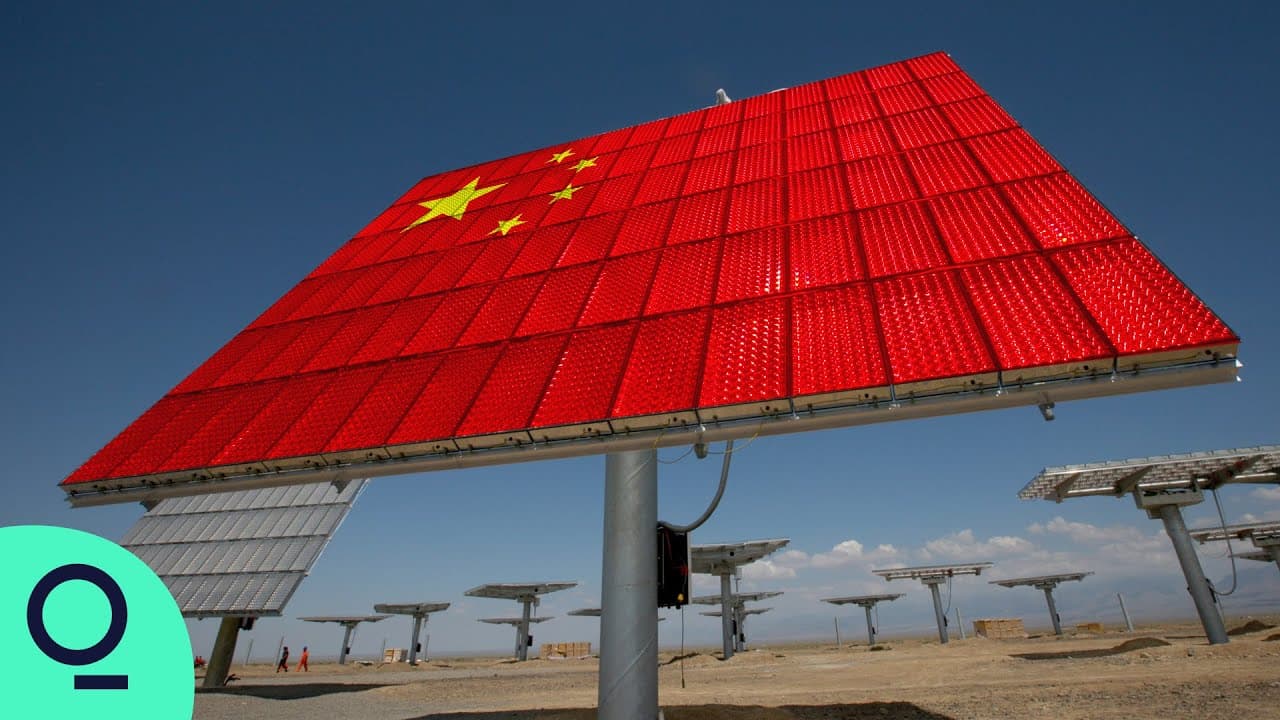
Why Secrecy Haunts China’s Solar Factories in Xinjiang
TL;DR
Xinjiang's solar industry is clouded by secrecy and human rights concerns.
Transcript
so yeah they're definitely following us so this could put an end to our video on photograph very quickly so the security apparatus in xinjiang was pretty intense you know before i went to xinjiang i was in my head i was saying things like well you know it's probably uh exaggerated somewhat but it was actually a little bit more those are two of the ... Read More
Key Insights
- Xinjiang is central to China's solar industry, producing a significant portion of the world's polysilicon, a key material for solar panels.
- The region's solar industry is driven by cheap coal-based electricity, making polysilicon production cost-effective.
- There are allegations of forced labor linked to state-run programs in Xinjiang's polysilicon factories, raising ethical concerns globally.
- Bloomberg reporters faced intense surveillance and obstruction while attempting to investigate these factories in Xinjiang.
- Researchers have uncovered documents suggesting government involvement in labor programs, potentially amounting to forced labor.
- The global demand for solar panels creates a moral dilemma as consumers may indirectly support human rights abuses.
- Western countries have imposed sanctions on China over alleged human rights abuses, potentially affecting solar panel imports.
- The situation highlights the growing geopolitical tensions between China and Western nations, with little resolution in sight.
Install to Summarize YouTube Videos and Get Transcripts
Explore YouTube Video Summarizer or Get YouTube Transcript Extractor
Questions & Answers
Q: What is the significance of Xinjiang in the global solar industry?
Xinjiang is a pivotal region for the global solar industry due to its substantial production of polysilicon, a critical component in solar panels. The region's access to cheap coal-based electricity makes it an ideal location for cost-effective polysilicon manufacturing, contributing to China's dominance in the global solar supply chain.
Q: What challenges did Bloomberg reporters face while investigating in Xinjiang?
Bloomberg reporters encountered significant challenges, including intense surveillance and obstruction by authorities, while investigating in Xinjiang. They were followed by agents, their attempts to speak with locals were blocked, and their photos were deleted. These actions highlight the region's strict control over information and the difficulties in obtaining firsthand insights.
Q: What are the allegations surrounding labor practices in Xinjiang's polysilicon factories?
There are serious allegations that Xinjiang's polysilicon factories are linked to state-run employment programs that may involve forced labor. Researchers have found documents suggesting government involvement in labor transfers of ethnic minorities, raising concerns about the ethical implications of supporting these industries.
Q: How have Western countries responded to the situation in Xinjiang?
In response to alleged human rights abuses in Xinjiang, Western countries, including the US, EU, and Canada, have imposed sanctions on China. These measures aim to pressure China to address the concerns, but they also risk affecting the global supply chain for solar panels, as the region is a major producer of polysilicon.
Q: What ethical dilemma does the global solar industry face regarding Xinjiang?
The global solar industry faces an ethical dilemma as the demand for renewable energy grows. Consumers and companies are concerned that purchasing solar panels may indirectly support human rights abuses in Xinjiang, where forced labor allegations persist. This situation complicates the transition to green energy with ethical considerations.
Q: What role does cheap electricity play in Xinjiang's polysilicon production?
Cheap coal-based electricity in Xinjiang plays a crucial role in making polysilicon production cost-effective. This low-cost energy source attracts solar manufacturers to the region, enabling China to maintain a competitive edge in the global solar supply chain and produce a significant portion of the world's polysilicon.
Q: What has research revealed about government involvement in labor programs in Xinjiang?
Research has uncovered documents indicating government involvement in labor programs in Xinjiang. These programs allegedly involve transferring ethnic minority workers to factories, potentially under coercive conditions. The documents suggest a systematic approach to labor transfers, raising concerns about forced labor and human rights violations.
Q: How does the situation in Xinjiang affect global geopolitical tensions?
The situation in Xinjiang exacerbates global geopolitical tensions, particularly between China and Western nations. Allegations of human rights abuses and the resulting sanctions have strained relations, with little indication of a resolution. This tension reflects broader conflicts over trade, human rights, and political ideologies, complicating international cooperation.
Summary & Key Takeaways
-
Xinjiang's polysilicon production is crucial for the global solar industry, but the region is marred by allegations of human rights abuses. Bloomberg reporters faced significant challenges while attempting to investigate these factories, encountering heavy surveillance and restricted access.
-
The region's reliance on cheap coal electricity makes it an attractive hub for polysilicon production. However, the alleged use of forced labor in these factories raises ethical concerns for consumers and companies worldwide.
-
Western nations have responded with sanctions against China, highlighting the broader geopolitical tensions. The situation presents a moral dilemma as the global push for renewable energy collides with human rights issues in Xinjiang.
Read in Other Languages (beta)
Share This Summary 📚
Summarize YouTube Videos and Get Video Transcripts with 1-Click
Try YouTube Summary with ChatGPT & Claude or YouTube Transcript Generator
Explore More Summaries from Bloomberg Originals 📚



Summarize YouTube Videos and Get Video Transcripts with 1-Click
Try YouTube Summary with ChatGPT & Claude or YouTube Transcript Generator