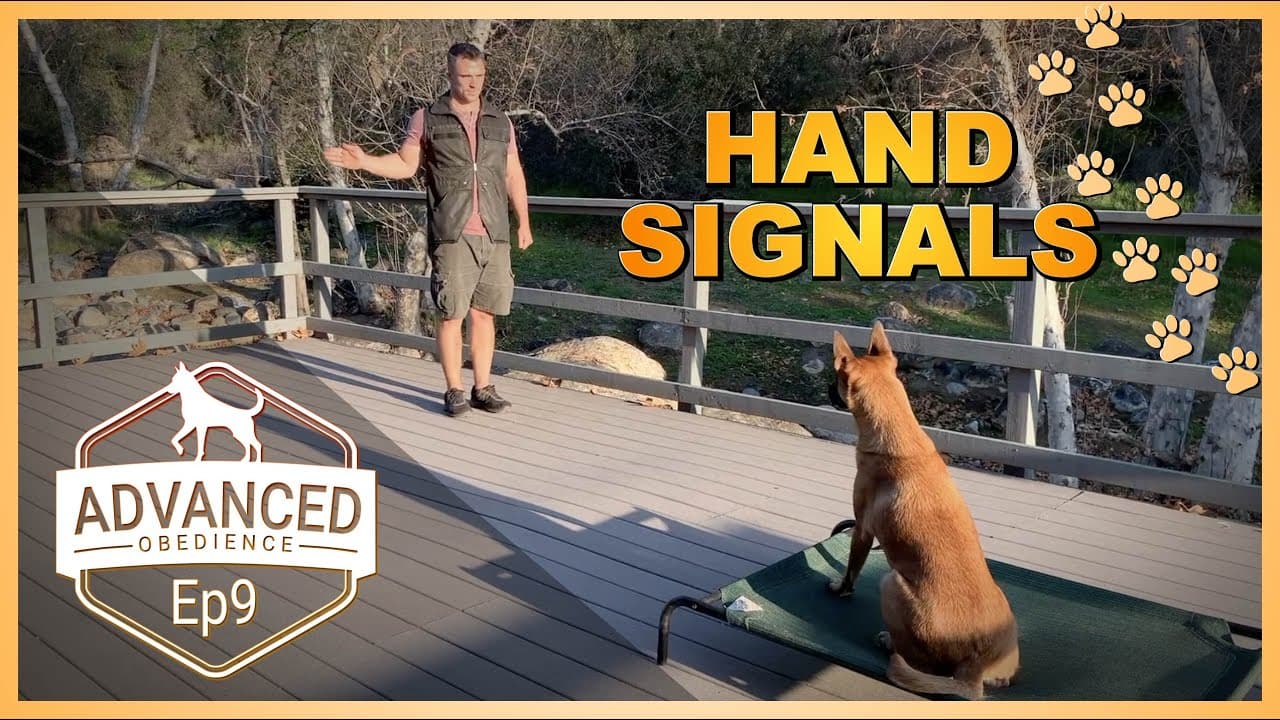
How to Teach Your Dog Hand Signals from a Distance.
TL;DR
Learn to teach your dog hand signals using reward and pressure-based training.
Transcript
yes yes this is actually much easier to teach than you may think so the two ways that we're going to be teaching this is one using reward-based training and the other one using pressure based training so with the reward based training there's certain things you already have to have in place one the dog already has to know the markers the dog alread... Read More
Key Insights
- Teaching dogs hand signals is simpler than it seems, using both reward-based and pressure-based training techniques.
- Reward-based training requires the dog to already understand verbal commands and markers for effective learning.
- Predictability and pattern recognition are crucial in teaching dogs hand signals, enhancing communication and reducing miscommunication.
- The process involves showing the hand signal first, followed by the verbal command, reinforcing the pattern for the dog.
- Pressure-based training uses leash pressure to guide the dog into the desired position, followed by a reward.
- Consistency in the sequence of cues and commands helps dogs anticipate actions and respond correctly over time.
- Short training sessions can significantly improve a dog's understanding of hand signals when using these methods.
- These techniques are also applicable for training service dogs and deaf dogs, emphasizing the importance of conditioning and understanding commands.
Install to Summarize YouTube Videos and Get Transcripts
Explore YouTube Video Summarizer or Get YouTube Transcript Extractor
Questions & Answers
Q: What are the two main methods for teaching hand signals?
The two main methods for teaching hand signals are reward-based training and pressure-based training. Reward-based training requires the dog to already understand verbal commands and markers, allowing the trainer to use predictability and pattern recognition to teach the signals. Pressure-based training involves using leash pressure to guide the dog into the desired position, followed by a reward.
Q: Why is predictability important in training dogs?
Predictability is important in training dogs because it helps them recognize patterns and anticipate actions. By consistently showing a hand signal before giving a verbal command, dogs learn to associate the signal with the desired action, reducing miscommunication and enhancing their ability to respond correctly to commands. This approach makes training more effective and efficient.
Q: How can pressure-based training be implemented?
Pressure-based training can be implemented by using leash pressure to guide the dog into the desired position. For example, to teach a dog to sit, the trainer can raise their hand and gently pull the leash upwards, encouraging the dog to sit. Once the dog is in the correct position, a reward is given to reinforce the behavior, helping the dog learn through physical guidance.
Q: What prerequisites are necessary for reward-based training?
For reward-based training to be effective, the dog must already know verbal commands and markers. This prerequisite ensures that the dog can understand the initial verbal cues, allowing the trainer to introduce hand signals as part of the training process. The dog's familiarity with commands and markers helps facilitate the learning of new signals through predictability and pattern recognition.
Q: How do hand signals benefit service and deaf dogs?
Hand signals benefit service and deaf dogs by providing a visual form of communication that does not rely on verbal commands. For service dogs, hand signals can enhance their ability to perform tasks in various environments. For deaf dogs, hand signals are crucial for effective communication, allowing them to understand and respond to commands without needing to hear them.
Q: What role does consistency play in dog training?
Consistency plays a crucial role in dog training by helping dogs learn and anticipate actions. By consistently following the same sequence of cues and commands, dogs can recognize patterns and respond correctly over time. This consistency reduces confusion and enhances the effectiveness of training sessions, making it easier for dogs to learn new behaviors and signals.
Q: What additional resources does the video offer?
The video offers additional resources such as a dog training course titled 'From Novice to Pro: The Ultimate Guide To Dog Training,' available on Sit Stay Learn. It also promotes membership benefits for channel supporters, including priority responses to comments, access to live Q&As, custom emojis, badges, and more. These resources aim to enhance viewers' training skills and support the channel's growth.
Q: How can short training sessions be effective?
Short training sessions can be effective by focusing on specific behaviors and using consistent cues and rewards. These sessions allow dogs to learn and practice new skills without becoming overwhelmed or fatigued. By keeping sessions brief and engaging, trainers can maintain the dog's attention and reinforce learning, leading to significant improvements in understanding and executing commands over time.
Summary & Key Takeaways
-
Teaching dogs hand signals involves using reward-based and pressure-based training methods. Reward-based training requires the dog to know verbal commands and markers, while pressure-based training utilizes leash guidance. Both methods rely on predictability and pattern recognition to help dogs understand and respond to signals effectively.
-
The training process involves showing a hand signal before giving a verbal command, reinforcing the pattern for the dog. Consistency in the sequence of cues and commands helps the dog anticipate actions and respond correctly. These methods are effective for both competitive obedience and training service dogs.
-
Incorporating these techniques into short training sessions can significantly improve a dog's understanding of hand signals. The video also promotes a dog training course and offers membership benefits, including priority responses and access to exclusive content, to support ongoing learning and channel growth.
Read in Other Languages (beta)
Share This Summary 📚
Summarize YouTube Videos and Get Video Transcripts with 1-Click
Try YouTube Summary with ChatGPT & Claude or YouTube Transcript Generator
Explore More Summaries from Nate Schoemer 📚




Summarize YouTube Videos and Get Video Transcripts with 1-Click
Try YouTube Summary with ChatGPT & Claude or YouTube Transcript Generator