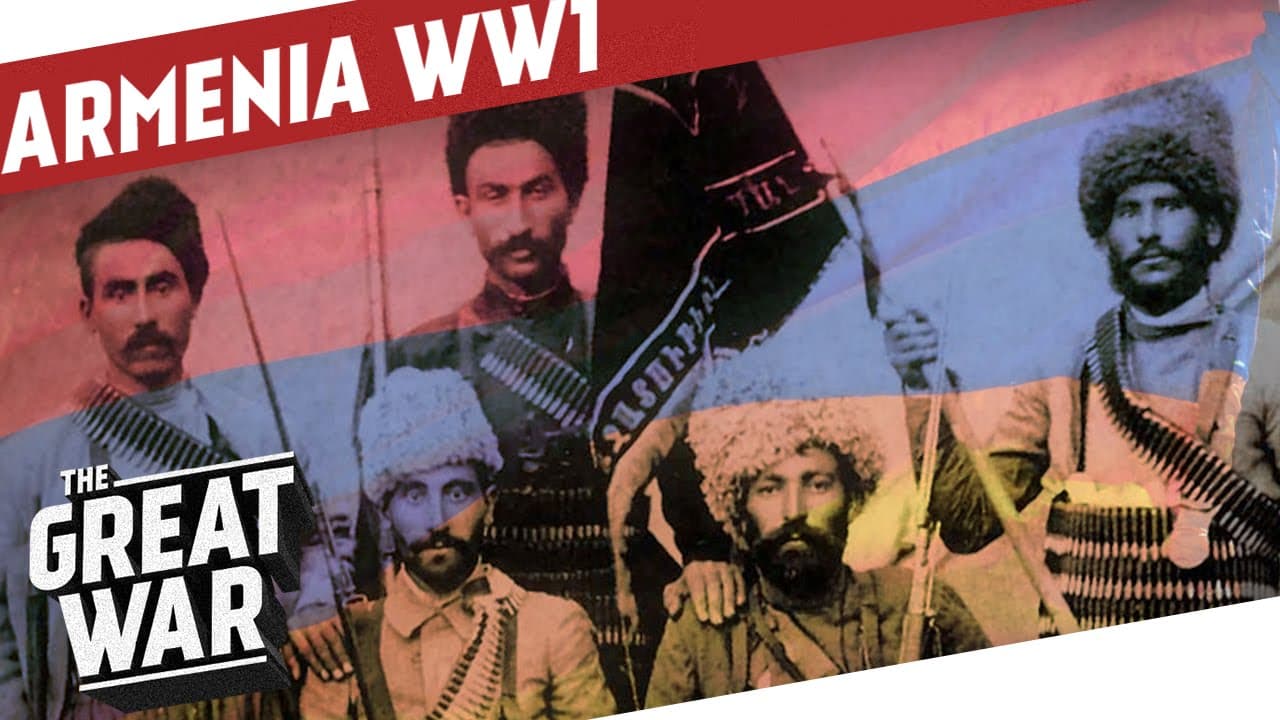
Beyond The Genocide - Armenia in WW1 I THE GREAT WAR Special
TL;DR
Explores Armenia's historical and political background leading to the Armenian Genocide.
Transcript
During the Armenian Genocide hundreds and hundreds of thousands of people died. We’ve mentioned the progress of the Armenian genocide several times in our regular episodes, but what we haven’t talked about is the region of Armenia itself, and the cultural and political background that led to the slaughter, and that’s what I’m going to talk about to... Read More
Key Insights
- The Armenian Genocide resulted in the deaths of hundreds of thousands, yet the region's historical context is often overlooked.
- Armenia's strategic location made it a battleground between the Ottomans, Persians, and later, the Russian Empire.
- By the 19th century, Eastern Armenia was under Russian control, while Western Armenia remained with the Ottoman Empire.
- The Armenians, under the Millet system, had autonomy but faced increasing hostility as the Ottoman Empire weakened.
- The Russo-Turkish war intensified anti-Armenian sentiment due to Armenian support for Russia against the Ottomans.
- The Young Turks' rise to power led to further massacres of Armenians, culminating in the Armenian Genocide during WWI.
- Despite the genocide, Armenians resisted through battles like Musa Dagh and Van, showcasing their resilience.
- Post-WWI, the Republic of Armenia was short-lived due to Soviet annexation, leaving territorial disputes unresolved.
Install to Summarize YouTube Videos and Get Transcripts
Explore YouTube Video Summarizer or Get YouTube Transcript Extractor
Questions & Answers
Q: What was the Millet system under the Ottoman Empire?
The Millet system was a framework within the Ottoman Empire that allowed faith-based communities, including Muslims, Christians, and Jews, to have a significant degree of autonomy. This system enabled these communities to govern their own religious and cultural affairs. For the Armenians, this meant maintaining their own churches and communities within the Empire, although they still faced systemic discrimination and were subject to the overarching authority of the Ottoman rulers.
Q: How did the Russo-Turkish war affect Armenian relations with the Ottoman Empire?
The Russo-Turkish war significantly strained relations between the Armenians and the Ottoman Empire. During the conflict, many Armenians sided with Russia, hoping for better treatment and autonomy under Russian rule. This alignment with a Christian power against the Muslim Ottoman Empire fueled anti-Armenian sentiment, leading to increased suspicion and hostility towards the Armenian population within the Ottoman territories, setting the stage for further conflict and eventual genocide.
Q: What role did the Armenian Revolutionary Federation play in Armenian history?
The Armenian Revolutionary Federation (ARF) was a significant political and revolutionary organization that emerged in response to the oppressive policies of the Ottoman Empire. It aimed to protect Armenian rights and sought autonomy or independence for Armenians through political and armed struggle. The ARF played a crucial role in organizing resistance against Ottoman oppression, advocating for Armenian self-determination, and later participating in the formation of the First Republic of Armenia in 1918.
Q: How did the Battle of Sarikamish impact the Ottoman Empire during WWI?
The Battle of Sarikamish was a catastrophic defeat for the Ottoman Empire during World War I. Led by Minister of War Enver Pasha, the Ottoman forces suffered immense losses, with many soldiers perishing due to harsh winter conditions and inadequate preparation. This defeat not only weakened the Ottoman military presence in the Caucasus but also intensified internal scapegoating, with Armenians being unjustly blamed for the failure, further fueling the genocidal policies against them.
Q: What was the significance of the Musa Dagh resistance?
The resistance at Musa Dagh was a significant episode during the Armenian Genocide, symbolizing Armenian resilience and defiance. For 53 days, Armenians from several villages held out against Ottoman forces on the mountain of Musa Dagh. Their successful defense and eventual evacuation by Allied warships to Egypt saved approximately 4,200 Armenians. This event inspired the novel 'The Forty Days of Musa Dagh,' highlighting the courage and determination of the Armenian people amidst the genocide.
Q: What were the consequences of the Russian Revolution for Armenia?
The Russian Revolution of 1917 had profound consequences for Armenia. The collapse of the Russian Empire led to the withdrawal of Russian support from the Caucasus region, leaving Armenia vulnerable to Ottoman advances. This geopolitical shift forced Armenia to fend for itself, eventually leading to the declaration of the First Republic of Armenia in 1918. However, the lack of Russian backing also meant that Armenia faced significant territorial losses and challenges in establishing a stable, independent state.
Q: How did the First Republic of Armenia come to an end?
The First Republic of Armenia, established in 1918, faced numerous challenges, including territorial disputes, economic hardship, and political instability. The end of World War I and the subsequent geopolitical changes left Armenia isolated. In 1920, the Soviet Union, seeking to expand its influence, invaded Armenia, leading to the establishment of Soviet control. The Republic was absorbed into the Soviet Union, marking the end of Armenia's brief independence and the beginning of decades under Soviet rule.
Q: What is the lasting impact of the Armenian Genocide on Armenian identity?
The Armenian Genocide has had a profound and lasting impact on Armenian identity, shaping the collective memory and national consciousness of Armenians worldwide. It represents a historical trauma that has influenced Armenian politics, culture, and diaspora relations. The genocide is a central element of Armenian historical narrative, serving as a symbol of resilience and survival. It continues to drive efforts for recognition, justice, and the preservation of Armenian heritage and identity in the face of adversity.
Summary & Key Takeaways
-
The video delves into the historical and political backdrop of Armenia leading to the Armenian Genocide, highlighting the region's strategic importance and the power struggles between the Ottomans, Persians, and Russians. It also discusses the Armenians' quest for autonomy amidst rising hostilities.
-
Armenia, divided between the Ottoman and Russian empires, faced increasing anti-Christian sentiment, especially after the Russo-Turkish war. The Armenians' alignment with Russia during WWI exacerbated tensions, leading to the Armenian Genocide orchestrated by the Young Turks.
-
Despite the genocide, Armenians displayed remarkable resistance, notably at Musa Dagh and Van. The post-war period saw the brief establishment of the Republic of Armenia, but territorial disputes and Soviet annexation soon followed, leaving a lasting impact on Armenian history.
Read in Other Languages (beta)
Share This Summary 📚
Summarize YouTube Videos and Get Video Transcripts with 1-Click
Try YouTube Summary with ChatGPT & Claude or YouTube Transcript Generator
Explore More Summaries from The Great War 📚
Summarize YouTube Videos and Get Video Transcripts with 1-Click
Try YouTube Summary with ChatGPT & Claude or YouTube Transcript Generator