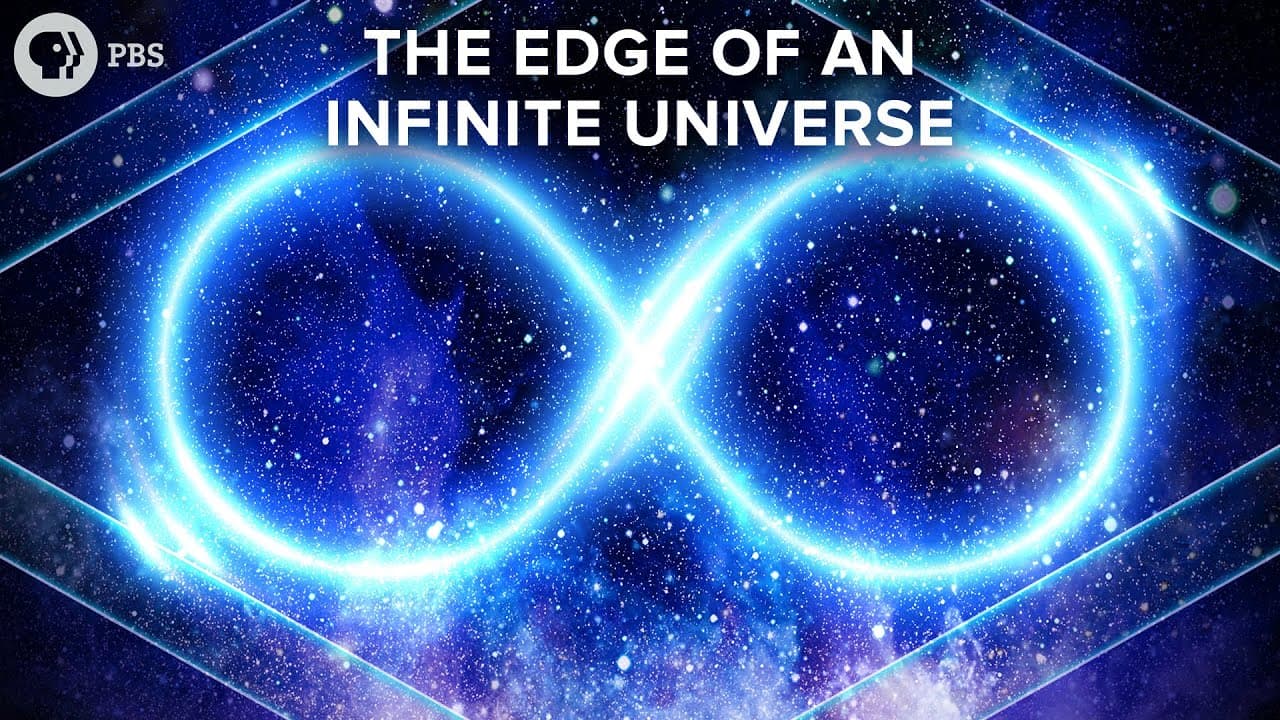
The Edge of an Infinite Universe
TL;DR
The universe may have boundaries despite being infinite.
Transcript
Have you ever asked “what is beyond the edge of the universe?” And have you ever been told that an infinite universe that has no edge? You were told wrong. In a sense. We can define a boundary to an infinite universe, at least mathematically. And it turns out that boundary may be as real or even more real than the universe it contains. Our universe... Read More
Key Insights
- The universe is often considered infinite, but mathematical boundaries can define its limits, potentially making these boundaries more real than the universe itself.
- The observable universe is a small part of the entire universe, defined by the particle horizon, beyond which light hasn't reached us yet.
- Einstein's general relativity describes three types of universes: closed (positive curvature), flat (Minkowski space), and negatively curved (anti-de Sitter space).
- Penrose diagrams help understand infinite boundaries by compactifying space and time, preserving angles, and allowing calculations at infinite distances.
- Hawking used Penrose diagrams to study black holes, leading to the discovery of Hawking radiation by connecting quantum fields across infinite distances.
- The holographic principle suggests that our universe can be described by a lower-dimensional boundary, with the AdS/CFT correspondence linking quantum field theory and quantum gravity.
- Hyperbolic space can be compactified into a finite disk using conformal transformations, preserving shapes and angles, and serving as a model for an infinite universe.
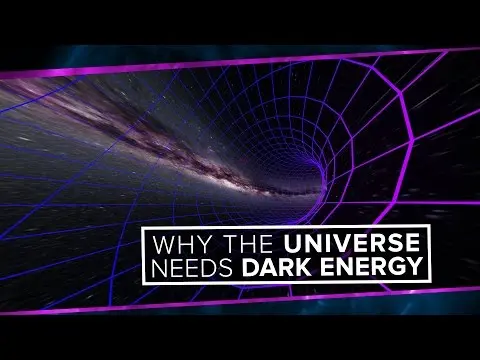
- Dark energy challenges the conservation of energy due to the universe's time asymmetry, allowing energy to seemingly be created from nothing.
Install to Summarize YouTube Videos and Get Transcripts
Explore YouTube Video Summarizer or Get YouTube Transcript Extractor
Questions & Answers
Q: What is the observable universe?
The observable universe is the portion of the entire universe that we can see or observe. It is defined by the particle horizon, which is the boundary beyond which light has not yet had time to reach us. This makes our observable universe a tiny patch in the vast expanse of the cosmos, surrounded by potentially infinite regions.
Q: How does the holographic principle relate to the universe?
The holographic principle suggests that our universe can be described by a lower-dimensional boundary. It implies that the information contained in a volume of space can be represented as a hologram on its boundary. This principle is connected to the AdS/CFT correspondence, which relates quantum field theory in a lower-dimensional space to quantum gravity in a higher-dimensional space.
Q: What are Penrose diagrams used for?
Penrose diagrams are used to understand the infinite boundaries of the universe. They compactify space and time into a finite representation, preserving angles and allowing physicists to perform calculations at infinite distances. These diagrams are particularly useful for studying black holes and the behavior of quantum fields in curved spacetime.
Q: What did Hawking discover using Penrose diagrams?
Using Penrose diagrams, Stephen Hawking discovered Hawking radiation. By connecting quantum fields across infinite distances and placing a black hole between them, he calculated how the black hole perturbed the quantum field balance. This led to the conclusion that black holes must emit particles, now known as Hawking radiation, challenging previous notions about black holes.
Q: How does dark energy affect the universe?
Dark energy is thought to cause the accelerated expansion of the universe. It challenges traditional conservation of energy principles because the universe is not time symmetric on large scales. This means energy can seemingly be created from nothing, as dark energy increases over time, potentially leading to scenarios like the Big Rip, where the universe tears itself apart.
Q: What is the AdS/CFT correspondence?
The AdS/CFT correspondence is a theoretical framework that relates a conformal field theory (CFT) in a lower-dimensional Minkowski space to a string theory with gravity in a higher-dimensional anti-de Sitter (AdS) space. This correspondence suggests a deep connection between quantum mechanics and gravity, providing insights into the structure of the universe and the nature of quantum gravity.
Q: What are the three types of universes described by general relativity?
General relativity describes three types of universes: closed (positive curvature), flat (Minkowski space), and negatively curved (anti-de Sitter space). A closed universe curves back on itself, a flat universe extends infinitely with parallel lines, and a negatively curved universe has diverging parallel lines, resembling an infinite saddle or hyperbolic surface.
Q: How does compactification relate to infinite boundaries?
Compactification is a mathematical process that allows physicists to map infinite spacetime into finite representations, making it possible to study infinite boundaries. By fusing space and time into new coordinates, compactification suppresses infinities, enabling calculations and understanding of phenomena like black holes and the universe's structure, as seen in Penrose diagrams.
Summary & Key Takeaways
-
The universe, while often thought of as infinite, can have mathematically defined boundaries that may hold more reality than the universe they contain. These boundaries help us understand complex concepts like the observable universe and cosmic horizons.
-
Einstein's relativity describes three universe types: closed, flat, and negatively curved. Penrose diagrams and compactification techniques help physicists study infinite boundaries, leading to significant discoveries like Hawking radiation.
-
The holographic principle suggests a connection between lower-dimensional boundaries and higher-dimensional spaces. This principle, along with the AdS/CFT correspondence, provides insights into quantum gravity and the universe's structure.
Read in Other Languages (beta)
Share This Summary 📚
Summarize YouTube Videos and Get Video Transcripts with 1-Click
Try YouTube Summary with ChatGPT & Claude or YouTube Transcript Generator
Explore More Summaries from PBS Space Time 📚
Summarize YouTube Videos and Get Video Transcripts with 1-Click
Try YouTube Summary with ChatGPT & Claude or YouTube Transcript Generator