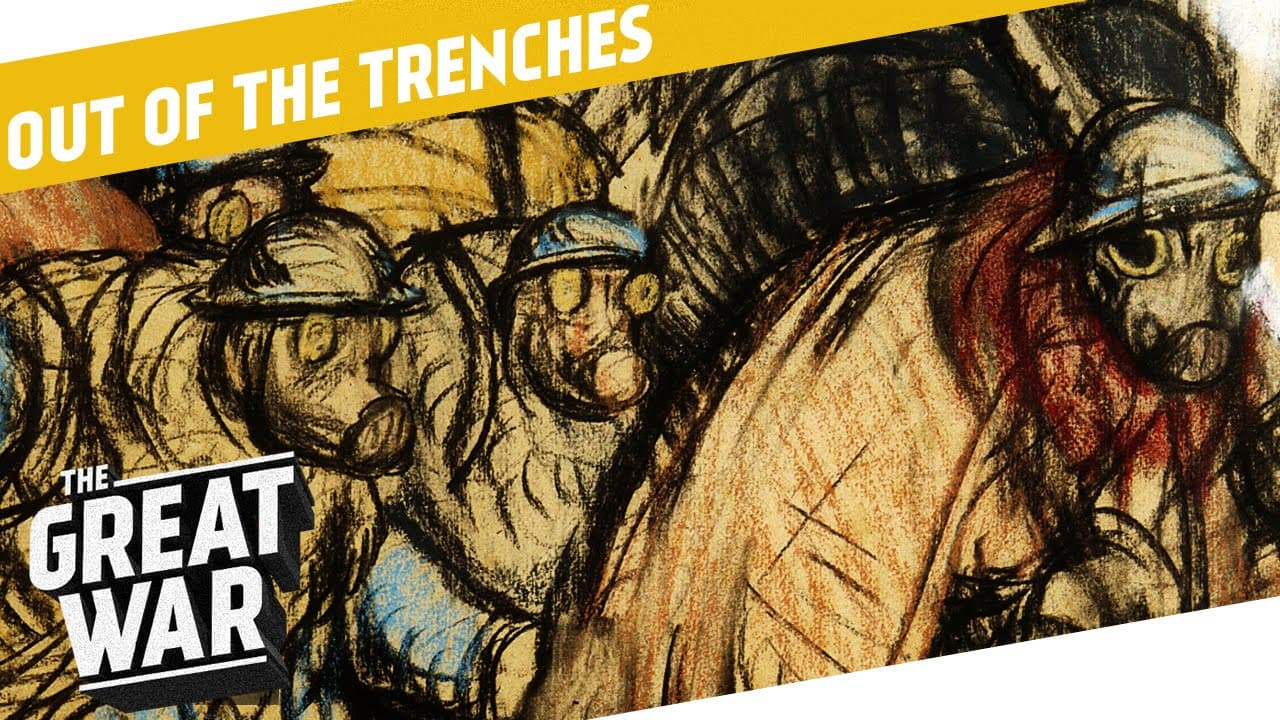
How Did Gas Shells Work in WW1? I OUT OF THE TRENCHES
TL;DR
Indy discusses gas warfare and Spain's neutrality in WW1.
Transcript
I'm Indie Naidell and this is another exciting edition of the Great War channels out of the trenches where I sit here in the chair of wisdom and answer your questions about the First World War. Jack Thompson writes, "Here's a question for you guys. Why can't I get enough of these videos?" Unfortunately, Jack, addictions like that are untreatable. Y... Read More
Key Insights
- Gas warfare in WW1 initially relied on pressurized cylinders, but the wind's unpredictability often led to friendly casualties, as seen in the British gas attack at Loos.
- Bicycles were used in WW1 by several nations, including Britain, Germany, and Italy, primarily for scouting and messaging due to their mobility and low maintenance.
- Disillusionment with the war effort was widespread across nations, with pacifists and media mishaps contributing to public skepticism about military and political leadership.
- Spain maintained neutrality during WW1, supplying goods to France and benefiting economically, despite losing significant shipping tonnage to U-boat attacks.
- The internal political landscape in Spain during the war was tumultuous, with frequent governmental changes due to labor strife and the pressures of maintaining neutrality.
- The assassination of Archduke Franz Ferdinand coincided with the start of the 1914 Tour de France, marking a historical intersection of sports and conflict.
- The first British soldier killed in WW1 was reportedly John Parr, a reconnaissance cyclist, highlighting the diverse roles bicycles played in the war.
- Spain's King Alfonso XIII actively worked to improve the treatment of prisoners of war, showcasing Spain's humanitarian efforts despite its neutral stance.
Install to Summarize YouTube Videos and Get Transcripts
Explore YouTube Video Summarizer or Get YouTube Transcript Extractor
Questions & Answers
Q: How was poison gas deployed during WW1?
Poison gas was initially deployed using pressurized cylinders, relying on favorable wind conditions to carry the gas towards enemy lines. This method was risky, as changes in wind direction could cause the gas to blow back onto the deploying troops, resulting in friendly casualties, as seen in the British attack at Loos.
Q: Were bicycles used in World War I, and if so, how?
Yes, bicycles were used extensively during World War I. They were employed primarily for reconnaissance, communication, and as messengers due to their speed and low maintenance compared to horses or motor vehicles. Many nations, including Britain, Germany, and Italy, formed bicycle battalions to enhance mobility on the battlefield.
Q: What factors contributed to public disillusionment during WW1?
Public disillusionment during World War I arose from several factors, including the high casualty rates, prolonged conflict, and media mishaps. Pacifist movements gained traction, and skepticism towards military and political leaders grew as the war dragged on. The disconnect between the front lines and civilian life also fueled discontent.
Q: What was Spain's role in World War I?
Spain maintained a neutral stance throughout World War I, playing a significant role as a supplier of goods and equipment, particularly to France. The neutrality allowed Spain to boost its economy, notably in industries like steel. However, it faced challenges, such as losing shipping to U-boat attacks and dealing with internal political strife.
Q: How did Spain's neutrality impact its internal politics during WW1?
Spain's commitment to neutrality during World War I led to internal political instability, with frequent changes in government. This was partly due to labor unrest and political strife, exacerbated by the economic pressures of remaining neutral while neighboring countries were embroiled in conflict. The situation required careful management to maintain stability.
Q: What humanitarian efforts did Spain undertake during WW1?
Despite its neutral position, Spain engaged in humanitarian efforts during World War I. King Alfonso XIII was notably active in advocating for better treatment of prisoners of war across Europe. His efforts helped improve conditions for many soldiers detained during the conflict, showcasing Spain's commitment to humanitarian principles despite the war's challenges.
Q: How did the start of WW1 coincide with the Tour de France?
The 1914 Tour de France began on the same day as the assassination of Archduke Franz Ferdinand, an event that triggered World War I. This coincidence marked a significant intersection between the world of sports and the onset of a global conflict, highlighting the abrupt transition from peacetime activities to wartime realities.
Q: Who was the first British soldier killed in WW1?
The first British soldier reportedly killed in World War I was John Parr, a reconnaissance cyclist. His death underscores the diverse roles that bicycles played during the war, not only in transportation and communication but also in reconnaissance missions, highlighting their strategic importance in the early days of the conflict.
Summary & Key Takeaways
-
Indy Neidell explores various aspects of World War I, focusing on the use of gas warfare and the role of bicycles in troop movements. He also addresses public disillusionment with the war and the political and economic stance of neutral Spain, highlighting its contributions and challenges.
-
Gas warfare during World War I faced challenges due to the reliance on wind direction, which sometimes led to unintended casualties. Meanwhile, bicycles were effectively used for reconnaissance and communication, proving to be a versatile tool for several countries involved in the conflict.
-
Spain remained neutral throughout World War I, benefiting economically by supplying goods to France and managing internal political strife. Despite neutrality, Spain lost significant shipping to U-boat attacks but still played a humanitarian role under King Alfonso XIII's guidance.
Read in Other Languages (beta)
Share This Summary 📚
Summarize YouTube Videos and Get Video Transcripts with 1-Click
Try YouTube Summary with ChatGPT & Claude or YouTube Transcript Generator
Explore More Summaries from The Great War 📚
Summarize YouTube Videos and Get Video Transcripts with 1-Click
Try YouTube Summary with ChatGPT & Claude or YouTube Transcript Generator